Beyond the Playbook How to Build an Adaptive SEO Strategy with AI

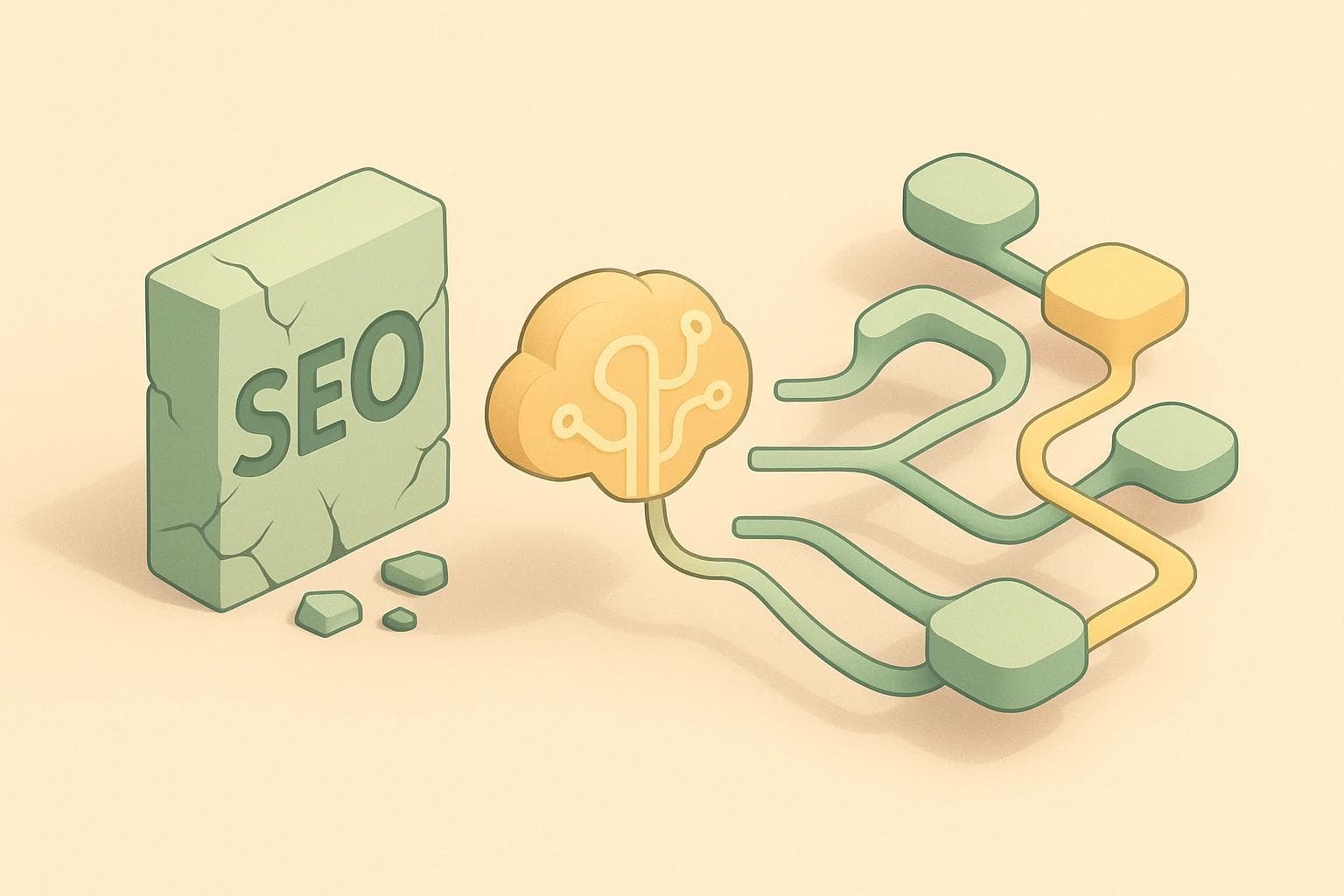
Beyond the Playbook: How to Build an Adaptive SEO Strategy with AI
Is your SEO strategy built for yesterday’s search engine? You've meticulously researched keywords, built a content calendar, and secured backlinks, only to see performance plateau or drop after a surprise algorithm update. It feels like you're playing a game where the rules change without notice. This isn't just a feeling; it's the reality of modern SEO, where 99% of experts agree Google's algorithm is only getting more complex.
The problem isn't your execution—it's the static playbook you're forced to use. A winning strategy today requires more than a plan; it requires the ability to adapt. This guide will show you how to move from a rigid, reactive approach to a dynamic, predictive SEO framework powered by AI insights, ensuring your organic growth is resilient and sustainable.
The Flaw in Fixed Strategies
For years, the standard approach to SEO has been to create a documented strategy and execute it over 6-12 months. Yet, data shows that only 40% of marketers actually have a documented content strategy, and of those who do, 57% struggle to produce content that truly resonates.
Why the disconnect? Because a fixed plan can't keep pace with a fluid digital landscape.
- Algorithm Volatility: Search engines are constantly evolving. A tactic that works today might be obsolete tomorrow.
- Shifting User Intent: What your audience searches for and why they search for it changes based on trends, seasonality, and market shifts.
- Competitive Pressure: Your competitors are also fighting for visibility, constantly changing the landscape you're trying to rank in.
Relying on a static plan is like navigating a new city with an old map. You'll eventually get lost. The alternative is to build a living strategy—one that uses AI to anticipate changes and pivot intelligently.
The Three Pillars of an AI-Powered Adaptive Strategy
An adaptive SEO framework doesn't abandon the fundamentals. Instead, it enhances them with predictive intelligence across three core pillars: content, technical SEO, and link building. This is crucial when executives are on board, with 84% believing AI is necessary to achieve their growth objectives.
1. Dynamic Content Planning
Content is the engine of SEO, but it's also where many strategies stall. The top challenge for marketers isn't just creating content; it's knowing what content to create. In fact, 48% of SEO professionals cite keyword research as a primary struggle.
AI transforms this process from guesswork into a data-driven science.
- Predictive Keyword Analysis: Instead of just finding keywords with high volume, AI analyzes trend data to predict which topics will gain traction. It identifies "opportunity gaps" where user intent is high but competitor content is weak.
- Automated Topic Clustering: AI can group related keywords into strategic topic clusters, helping you build authority and ensuring your content covers a subject comprehensively—a key factor for demonstrating E-E-A-T (Experience, Expertise, Authoritativeness, Trust).
- Content Refresh Cadence: An AI strategist can monitor the performance of your existing articles, automatically identifying content decay and flagging pieces that need a refresh to maintain their ranking. For businesses focused on specific regions, understanding the nuances of geo and seo becomes critical, and AI can tailor content strategies to local search patterns for maximum impact.
2. Proactive Technical SEO
Technical SEO is the foundation of your website's performance, but it’s often reactive. You find a problem, then you fix it. AI flips the script.
By continuously monitoring your site's health against thousands of data points, AI can predict potential issues before they impact your rankings. Think of it as an early warning system for:
- Crawl Budget Optimization: Identifying inefficient pages that waste Googlebot's time.
- Internal Linking Gaps: Finding orphaned pages and suggesting relevant internal links to distribute authority.
- Core Web Vitals Predictions: Analyzing site speed and user experience metrics to flag potential slowdowns before they become penalties.
3. Intelligent Link Building
Link building is consistently ranked as the most difficult part of SEO, with 52% of marketers calling it their biggest challenge. The traditional approach of manual outreach is time-consuming and has a low success rate.
AI introduces a layer of predictive analytics to make link building more efficient and effective. It can:
- Identify High-Authority Prospects: Analyze competitor backlink profiles and industry trends to find domains most likely to link to your content.
- Personalize Outreach at Scale: Generate context-aware outreach emails that reference the prospect's recent content or interests.
- Monitor Unlinked Brand Mentions: Set up alerts to find mentions of your brand that don't include a link, creating easy "quick win" opportunities.
Making the Right Strategic Moves: From Evaluation to Action
Shifting to an adaptive model feels like a big step. How do you choose the right priorities and prove the value of this new approach? You do it by systematically evaluating your options, projecting the ROI, and planning a phased implementation.
Evaluation: Comparing Strategic Paths
Your first step is to decide where to focus your resources. Should you prioritize a content-led strategy, a technical overhaul, or an aggressive link-building campaign? An AI-driven platform can model the potential outcomes of each path, allowing you to make an informed decision rather than a gut call.

This side-by-side analysis helps you see not just the potential upside but also the resources required and the confidence level in the projection, empowering you to choose the most resilient approach for your business.
Evidence: Projecting Performance and ROI
Securing buy-in for any new strategy requires a clear business case. This is especially true for SEO, where 55% of marketers admit they can't accurately measure their content ROI. AI helps bridge this gap by translating strategic decisions into tangible financial forecasts.

By modeling the projected increase in organic traffic and converting that traffic into leads or revenue, you can present a clear, compelling argument for investment. This moves the conversation from "we should do SEO" to "investing in this adaptive strategy will generate X% more revenue."
Decision: Sequencing Your Implementation
An adaptive strategy isn't implemented overnight. It's a phased process of building capabilities and momentum. A clear implementation map shows stakeholders exactly what will happen and when, building confidence and managing expectations.

This roadmap turns an abstract strategy into a concrete action plan, showing how each phase—from initial analysis to full-scale content production—builds on the last to create compounding organic growth.
Frequently Asked Questions about AI-Driven SEO
As you evaluate this new approach, some common questions are likely to arise.
### Will AI replace our existing SEO team or agency?
Not at all. The goal of AI in SEO is augmentation, not replacement. It handles the repetitive, data-intensive tasks that consume up to 40% of a marketer's day. This frees up your human experts to focus on higher-value activities like brand storytelling, creative campaign development, and building strategic partnerships.
### How can we trust the recommendations from an AI?
Trust is built on transparency and results. A reliable AI platform should be able to show you the data behind its recommendations—the search trends, competitor weaknesses, and performance metrics driving its logic. You start by validating its initial insights and, as you see the positive impact on your rankings, you build confidence in its strategic guidance.
### Is an AI-powered strategy too complex for a small business?
It's actually the opposite. For SMEs with limited resources, AI is a force multiplier. It automates the work that would normally require a dedicated team of analysts, writers, and SEO specialists. Platforms like Fonzy ai are designed to act as an autonomous SEO team in a single dashboard, making enterprise-level strategy accessible to everyone.
### How quickly will we see results from an adaptive SEO strategy?
SEO is a long-term investment, and that principle still holds true. However, an adaptive strategy can accelerate results by focusing efforts on the highest-impact opportunities first. You'll likely see early momentum from technical fixes and content updates within the first 60-90 days, with more significant organic growth compounding over 6-12 months as your content library and authority grow.
Your Next Move: From Static to Strategic
The era of "set it and forget it" SEO is over. The future of organic growth belongs to businesses that can adapt to the ever-changing search landscape. By leveraging AI, you can transform your strategy from a static document into a living, breathing system that anticipates trends, identifies opportunities, and continuously optimizes for performance.
You no longer have to react to Google's changes. You can start anticipating them.
Ready to see what an autonomous, adaptive SEO strategy can do for your business? Explore our blog to learn more about how AI is reshaping the future of digital marketing.
Roald
Founder Fonzy — Obsessed with scaling organic traffic. Writing about the intersection of SEO, AI, and product growth.
Stop writing content.
Start growing traffic.
You just read about the strategy. Now let Fonzy execute it for you. Get 30 SEO-optimized articles published to your site in the next 10 minutes.
No credit card required for demo. Cancel anytime.

Examples of AI-Friendly High-Utility Paragraphs
Learn what makes a paragraph clear and useful for AI extraction and how to write content that both humans and AI find valuable.

Beyond the Dashboard How to Turn AI Audit Insights into Business Strategy
Learn to convert AI audit SEO insights into clear strategies that boost traffic, sales, and ROI for your business growth.

Beyond Write More Your Guide to Automating Content Update Strategies with AI
Learn how to automate content updates with AI to boost rankings, save time, and keep your content relevant and authoritative.