
Is ChatGPT Using Your Content? 3 DIY Tests to Find Out
You spent weeks creating the definitive guide on sustainable container gardening. It’s packed with unique tips, original data, and a proprietary soil mix you developed. A month later, out of curiosity, you ask ChatGPT for a beginner's guide to the same topic.
The answer it gives is… familiar. Eerily familiar. It outlines a process that mirrors your unique method and even mentions a soil mix that sounds suspiciously like yours—all without a single link or credit back to your site.
If this scenario feels unsettling, you’re not alone. In this new era of AI-powered answer engines, one of the biggest questions for marketers is: "Is my content being used to train these models, and am I getting any credit for it?" The hard truth is, often the answer is no. Groundbreaking research highlighted by Search Engine Journal found that ChatGPT's search feature had a staggering 76.5% error rate in attribution.
Your content is likely being absorbed into the vast digital ocean that AI models learn from, but you’re left wondering if you’re a ghost in the machine. Before you invest in expensive tracking tools, there are simple, low-cost experiments you can run right now to get a clearer picture. These DIY tests are your first step toward understanding and influencing your visibility in the age of AI.

The New Visibility Challenge: Why Your Content Fades into the Background
To understand why your content might be used without credit, it helps to think of AI models like ChatGPT as incredibly well-read students who rarely take good notes on their sources. They are trained on a massive snapshot of the internet, absorbing facts, styles, and concepts.
However, there’s a crucial difference between this initial training data and how ChatGPT often answers questions today. When you ask it something, it doesn't just rely on its static memory; it can also access more current information to formulate an answer. The problem is, it often fails to connect that final answer back to the specific articles it referenced. This is the "attribution problem" that leaves creators and marketers in the dark.
Your meticulously crafted content might be the foundation for an answer, but if the AI doesn’t cite you, your brand authority and potential traffic vanish into thin air. That's why learning to proactively test for your content's presence is no longer a "nice-to-have"—it's a critical part of modern content strategy.
Your DIY Toolkit: A Step-by-Step Guide to Testing Your ChatGPT Visibility
While powerful commercial tools exist to track AI presence, you don’t need a big budget to get started. These three experiments, progressing from simple to more advanced, will help you become a detective and uncover clues about where your content is—and isn't—showing up.

Experiment 1: Simple Prompt Variants (The Quick Check)
The goal here is to test the AI's recall of information that is highly unique to your content. If it can accurately reproduce these "digital fingerprints," there's a good chance it has processed your page.
How to do it:
What is "Aero-Pruning Pot Stacking"?
Experiment 2: Source-Checking Replies (The Cross-Examination)
This experiment is designed to push ChatGPT to reveal its sources, testing the limits of its attribution capabilities. Be prepared for it to be evasive or even incorrect, but its response is still valuable data.
How to do it:
After you get an answer from one of the prompts in Experiment 1, follow up with direct questions about its origins.
Where did you get that information?Can you provide the source for that specific statistic?
Your analysis: Look at the response. Does it provide a link? Is the link real, or is it a "hallucination" (a made-up URL)? Does it vaguely attribute the information to "general knowledge" or "multiple sources on the internet"? The more vague the answer, the more likely it is that your content was synthesized without direct credit.
Experiment 3: Versioned Prompts Over Time (The Long Game)
This is the most advanced DIY test. It helps you understand if and when the AI updates its knowledge based on changes you make to your website. It’s the ultimate test of whether your content is being actively referenced.
How to do it:
- Establish a Baseline: Run a query from Experiment 1 and save the response. For example, ask about a statistic on your page:
"What is the average yield for hydroponic basil per square foot?" - Update Your Content: Go to the source page on your website and update that specific statistic with new information.
- Wait: Give it a few weeks. This allows time for search engines to recrawl your page and for that new information to potentially filter into AI models.
- Test Again: Run the exact same prompt from step 1.
Your analysis: Did the answer change? If ChatGPT now provides the updated statistic, it’s one of the strongest possible signals that it is actively using your page as a source of truth. If the answer remains the same, your content may not be seen as authoritative enough to influence its knowledge base yet.
What Do Your Results Mean? From Paraphrase to Radio Silence
After running these experiments, your findings will likely fall into one of three categories. Here’s how to interpret them.

Scenario 1: Direct Mention or Strong Paraphrase
What it means: Congratulations! ChatGPT sees your content as a credible source. Your unique phrases, data, or structures are distinct enough to be recalled.
What to do: Double down. Continue creating high-quality, data-rich content with unique frameworks. Your goal is to become so authoritative that you are a go-to source for AI models.
Scenario 2: Vague Similarities
What it means: The AI may have been trained on your content, but it's not currently referencing it as a primary source. Your ideas are part of its general knowledge, but they aren't standing out.
What to do: Sharpen your edge. Make your data points more specific. Give your frameworks proprietary names. Make your step-by-step guides more definitive and clearly structured.
Scenario 3: No Mention At All
What it means: This isn't a failure—it's your biggest opportunity. It’s a clear signal that your content isn't structured in a way that AI models can easily parse and trust. This could be due to a number of factors, from unclear language to a confusing page layout.
What to do: This is where you shift from testing to optimizing. Start by examining your content's foundation. Often, the reason AI struggles to extract information is a simple matter of organization. Understanding what’s the impact of heading structure on AI extractability? is a crucial first step to making your content more "AI-friendly" and ensuring your expertise gets the visibility it deserves.
Frequently Asked Questions (FAQ)
What is ChatGPT visibility, really?
ChatGPT visibility is the extent to which your brand, data, or unique concepts appear in the answers generated by AI models like ChatGPT. It's not just about links; it's about being the source of truth that informs the AI's response, establishing your authority even without a direct citation.
Are these DIY tests 100% accurate?
Think of them as a vital first diagnostic, not a definitive final verdict. They provide strong directional evidence. A positive result (like the AI recalling a unique stat) is a very strong signal. A negative result indicates a high probability that you have a visibility gap that needs to be addressed.
How often should I run these tests?
A good cadence is to perform quick checks after publishing a major new piece of content or conducting a quarterly audit of your cornerstone pages. The "Versioned Prompts" experiment is best used strategically after you've made significant updates to key articles.
If my content isn't showing up, what's the first thing I should do?
Start with structure. Ensure your content uses clear, hierarchical headings (H1, H2, H3), lists, and tables. Make your key data points and definitions stand out. Answering questions directly in an FAQ format on your page can also make your content much easier for AI to digest and use.
Your First Step into the World of Answer Engines
The line between a search engine and an answer engine is blurring. Proactively testing how your content performs in this new landscape isn't just about protecting your work—it's about positioning your brand as an authority for the next generation of discovery.
Don't just wonder if you're a ghost in the machine. Open a new tab, grab a unique phrase from your best-performing article, and run your first experiment today. The answers you find will be the foundation of your content strategy for tomorrow.

Roald
Founder Fonzy — Obsessed with scaling organic traffic. Writing about the intersection of SEO, AI, and product growth.
Stop writing content.
Start growing traffic.
You just read about the strategy. Now let Fonzy execute it for you. Get 30 SEO-optimized articles published to your site in the next 10 minutes.
No credit card required for demo. Cancel anytime.
Get Your Content Cited by ChatGPT
Learn how to build authoritative, AI-optimized content that ranks on Google and gets cited by ChatGPT to reach high-intent customers.
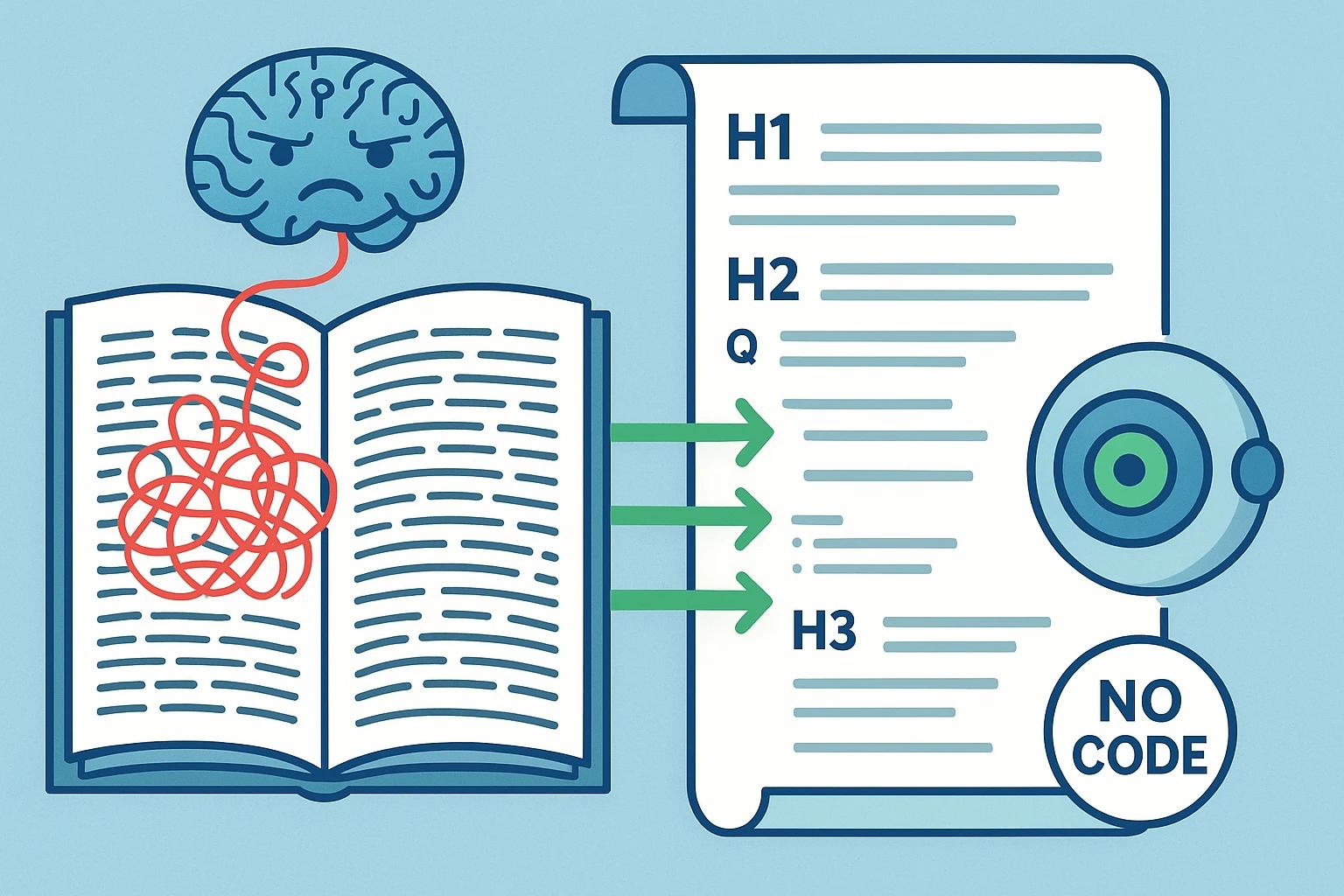
Guide to Structuring Content for AI Conversational Retrieval
Learn how to structure pages using headings, Q&A, and micro-answers to improve AI search without coding or schema.
Content freshness and update cadence for AI answer selection
Discover how content recency and update frequency impact AI answer rankings and why freshness is crucial for visibility.