Global Content Strategy An Insider's Guide to Evaluating AI Platforms for Multi-Language SEO

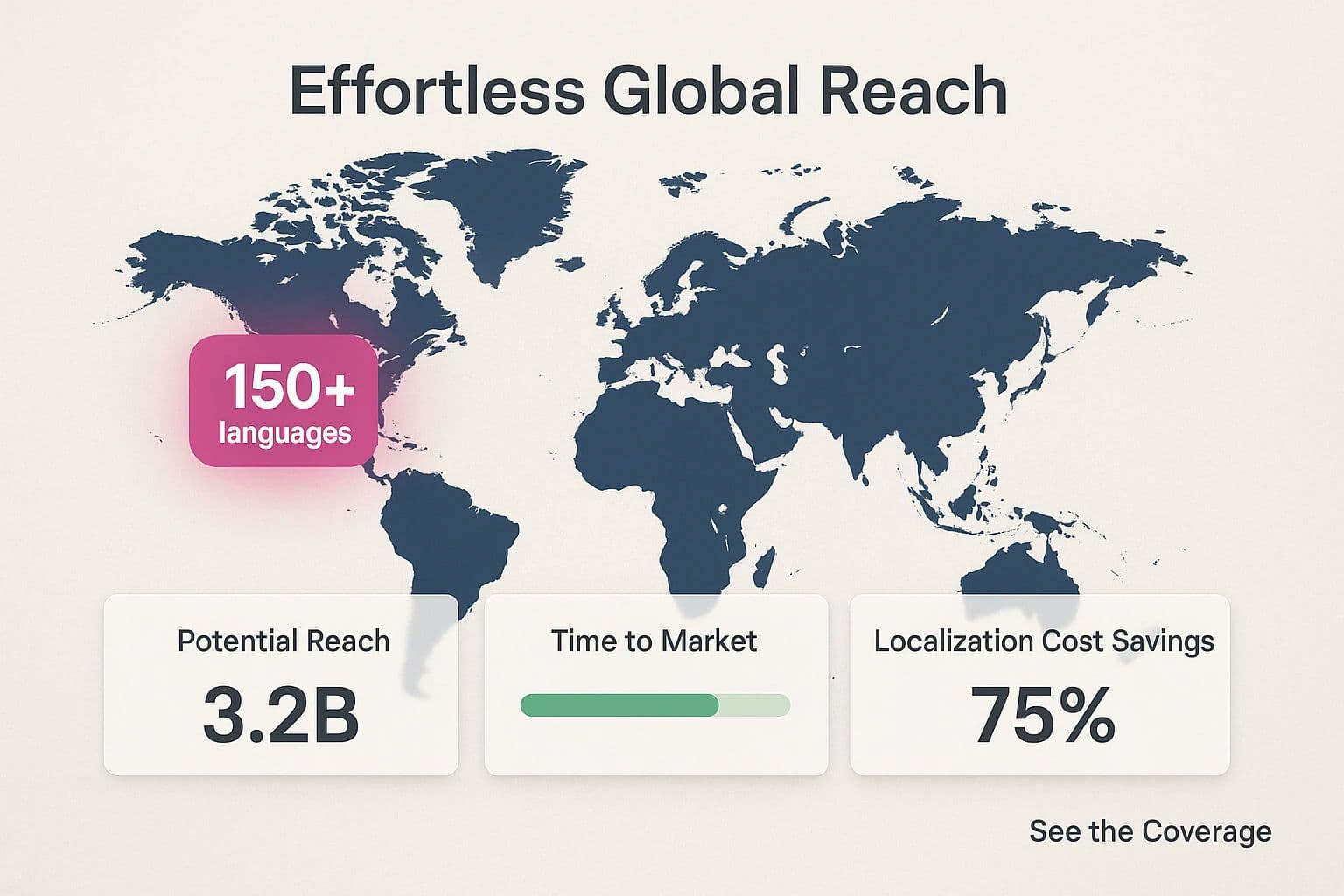
Global Content Strategy: An Insider's Guide to Evaluating AI Platforms for Multi-Language SEO
You're standing at the edge of a massive opportunity. You know that expanding into international markets is the next logical step for growth, but the path forward seems complicated. How do you replicate your domestic success in a dozen new languages and cultures without hiring an army of translators, local marketers, and SEO specialists?
The promise of AI is tantalizing. But as you evaluate platforms, a critical concern emerges: most tools treat "global" as a simple translation exercise. They can swap words, but can they capture nuance, adapt to local search behavior, and handle the technical complexities of international SEO? This is where most global content strategies fail before they even begin.
Choosing the right AI partner isn't just about finding a tool; it's about finding a platform that can act as your automated, in-market expert, everywhere at once. This guide provides the decision framework you need to move beyond basic translation and select an AI platform truly built for global reach.
The New Global Landscape: Why AI Localization is Non-Negotiable
The data paints a clear picture: a multilingual online presence is no longer a "nice-to-have"—it's a fundamental driver of growth in the age of AI search. Businesses that effectively localize their content see a staggering 25-70% increase in sales. More importantly, as search engines evolve into answer engines, the rewards for localized content are multiplying. Translated websites experience up to 327% more visibility in AI-driven search results like Google's AI Overviews.
This isn't a trend on the horizon; it's happening now. The global AI SEO software market is set to explode to $4.97 billion by 2033, and 82% of enterprise SEO specialists are already planning to increase their investment in AI tools.
But here's the critical insight many businesses miss: simply translating your English content isn't enough. Your prospects in Tokyo don't search like your customers in Berlin. The cultural triggers that resonate in São Paulo might fall flat in Seoul. Success requires a deeper level of intelligence—a shift from translation to true localization.
This is the primary gap in the market. Many AI platforms boast "multilingual support," but they lack the sophisticated architecture to handle what truly matters:
- Cultural Nuance: Adapting tone, idioms, and examples to feel native to each market.
- Regional Intent: Understanding that the "why" behind a search query changes dramatically across borders.
- Technical SEO Automation: Managing the complex web of hreflang tags, localized metadata, and schema markup that tells search engines exactly who your content is for.
Your evaluation process needs a framework that looks beyond the language count and scrutinizes these core capabilities.
The Anatomy of a World-Class Global AI Platform
When you're comparing solutions, you need to move past the marketing claims and analyze the underlying technology. A truly global AI content platform must deliver on four critical pillars. Use these as your evaluation checklist.
1. Beyond Translation: Deep Contextual Localization
This is the most important differentiator. Basic machine translation can lead to awkward phrasing, cultural missteps, and a brand voice that feels alien to local audiences. An advanced platform must demonstrate:
- Contextual Understanding: The AI should grasp the underlying meaning and intent, not just the literal words. It should use models that preserve tone and cultural relevance.
- Semantic SEO Adaptation: The platform must identify and target locally relevant keywords and phrases, not just direct translations of your English keywords.
- Cultural Resonance: It needs to adapt content to local customs, holidays, and social norms, making your brand feel familiar and trustworthy.
2. Automated International SEO Features
Managing the technical side of global SEO manually is a recipe for errors and missed opportunities. A top-tier AI platform automates these complex tasks seamlessly in the background. Look for:
- Automated Hreflang Management: Correctly implemented hreflang tags are crucial for telling search engines which language version of a page to show to which user. The platform should handle this automatically.
- Localized Metadata Generation: It should create unique, optimized titles, descriptions, and headers for each language and region.
- Multi-Search Engine Awareness: While Google dominates many markets, it's not the only player. A platform with true global reach considers optimization for engines like Baidu, Yandex, and Naver where relevant.
3. Effortless Scalability and Efficiency
The promise of AI is to do more with less. Your chosen platform should empower you to expand from one language to ten, or even a hundred, without a proportional increase in your team's workload or budget.
- Broad Language Support: The platform should offer a vast library of languages. For example, Fonzy.ai's support for over 150 languages provides a runway for nearly limitless global expansion.
- Centralized Workflow: You should be able to manage your entire global content strategy, from planning to publishing, within a single interface.
- Rapid Content Generation: The system must be able to produce high-quality, localized articles at a pace that keeps you competitive in every market.
4. AI-Human Synergy for Quality Control
Automation provides scale, but human oversight ensures quality and brand alignment. The best platforms aren't designed to replace your team but to augment their capabilities.
- Review and Approval Workflows: Your team should have the final say, with easy-to-use interfaces for reviewing, editing, and approving AI-generated content before it goes live.
- Brand Voice Consistency: The AI should be trainable on your brand's style guide to maintain a consistent voice, even across dozens of languages.
- Actionable Analytics: The platform must provide clear data on how your content is performing in each market, enabling you to refine your strategy based on real-world results.
A solid grasp of International SEO best practices is foundational, but your AI platform should be the engine that executes those practices flawlessly at scale.
Comparing the Contenders: An Honest Look at the AI Landscape
Most reviews you'll find online offer a surface-level comparison of features. They'll list pros and cons but fail to analyze these tools through the specific lens of a business with global ambitions. Let's address the gap.
| Evaluation Criteria | Standard AI Content Tools | Specialized Translation Tools | Fonzy.ai (End-to-End Global Platform) |
| :--- | :--- | :--- | :--- |
| Localization Depth | Superficial. Often relies on basic machine translation. Fails to adapt cultural nuance or local user intent. | Strong in linguistics, weak in SEO. Excellent for accurate translation but lacks understanding of keywords or search behavior. | Deep. AI is trained for contextual and cultural localization, adapting content to resonate authentically in each market. |
| Int'l SEO Automation | Minimal to None. Requires manual implementation of hreflang, localized schema, and other technical elements. | Non-existent. These are translation tools, not SEO platforms. Technical SEO is entirely outside their scope. | Fully Automated. Manages hreflang, generates localized metadata, and optimizes for region-specific search engines seamlessly. |
| Scalability | Limited. Adding new languages is often a cumbersome, manual process. Quality degrades as you scale. | Scalable for words, not for strategy. Can translate massive volumes, but each market still requires a separate SEO strategy. | Built for Scale. Effortlessly expand your strategy across 150+ languages from a single, unified platform. |
| Workflow | Fragmented. Requires multiple tools for research, writing, translation, optimization, and publishing. | Siloed. Creates a disconnect between content creation and organic growth strategy. | Integrated. A complete, automated ecosystem from site analysis and content planning to publishing and optimization. |
The critical vulnerability for most platforms is the assumption that "multilingual support" equals an effective global strategy. This overlooks the most important part of the equation: localizing your content for cultural relevance and impact. Without this, you're just publishing content that no one will find or connect with.
Fonzy.ai was designed to solve this exact problem. It doesn't just translate; it rebuilds your content strategy from the ground up for each new market, ensuring every article is culturally fluent, technically sound, and strategically optimized to win local search.
Your Global Content Blueprint: A MOFU Decision Framework
As you finalize your decision, use this framework to cut through the noise and assess which platform truly aligns with your international growth objectives.
Ask these critical questions of any provider:
- On Localization: "Can you show me an example of how your AI adapts a single piece of content for two culturally distinct markets, like Japan and Brazil, beyond direct word-for-word translation?"
- On Technical SEO: "How does your platform automate the implementation and ongoing management of hreflang tags and localized schema across hundreds or thousands of pages?"
- On Scalability: "What is the exact workflow for launching a new language? How much manual intervention is required from my team to go from 5 languages to 50?"
- On ROI: "How does your platform track content performance on a per-market basis, and how do you connect content production to tangible business outcomes like traffic, leads, and sales in each region?"
A confident provider will have clear, compelling answers. A provider who falters is likely offering a repackaged translation service, not a true global content solution. Your initial step of choosing the right languages for your global content expansion strategy is vital, and your platform must be able to execute on that choice flawlessly.
Frequently Asked Questions for Global Decision-Makers
We've worked with hundreds of businesses on the cusp of global expansion. Here are the most common questions and concerns we hear.
Will AI-generated content sound robotic or unnatural in other languages?
This is a valid fear born from experiences with older translation technology. Modern, sophisticated AI platforms like Fonzy.ai use advanced contextual models. The goal isn't translation; it's native content generation. The AI writes for a specific language and culture from the start, resulting in fluid, natural-sounding content that connects with local audiences.
### How do we ensure cultural accuracy and avoid embarrassing mistakes?
The best approach is an AI-Human synergy. Fonzy.ai’s platform automates 95% of the heavy lifting—research, drafting, and technical optimization—but builds in a simple approval step. This allows your in-market team or a native-speaking reviewer to provide a quick final check, ensuring 100% brand alignment and cultural appropriateness without slowing down the content pipeline.
### Is a global content strategy affordable for a small to medium-sized business?
Traditionally, it wasn't. The cost of hiring agencies, translators, and SEOs for every new market was prohibitive. This is the paradigm AI is shattering. With a platform like Fonzy.ai, you can launch and maintain a sophisticated, multi-language SEO strategy for a fraction of the cost of hiring a single marketing manager. The automation creates an economy of scale that makes global reach accessible to everyone.
### How quickly can we expect to see results from an international SEO campaign?
SEO is a long-term strategy, but AI significantly accelerates the process. By automating content creation and publishing daily, Fonzy.ai builds your site's topical authority in new markets much faster than manual methods. While significant results typically take 3-6 months, you'll start seeing early indicators like keyword impressions and initial rankings much sooner.
The Next Step: From Evaluation to Effortless Expansion
You've done the research. You understand that true global reach requires more than translation—it demands deep localization, technical precision, and massive scale. You now have a framework to evaluate platforms not on their stated features, but on their ability to deliver tangible results in international markets.
The complexity you feared is a solvable problem. With the right AI partner, you can automate your global growth engine, allowing you to get found in Google and AI answers in every market, automatically.
If you're ready to see how an end-to-end platform can transform your international ambitions into a reality, it’s time to see Fonzy.ai in action.
Roald
Founder Fonzy — Obsessed with scaling organic traffic. Writing about the intersection of SEO, AI, and product growth.
Stop writing content.
Start growing traffic.
You just read about the strategy. Now let Fonzy execute it for you. Get 30 SEO-optimized articles published to your site in the next 10 minutes.
No credit card required for demo. Cancel anytime.
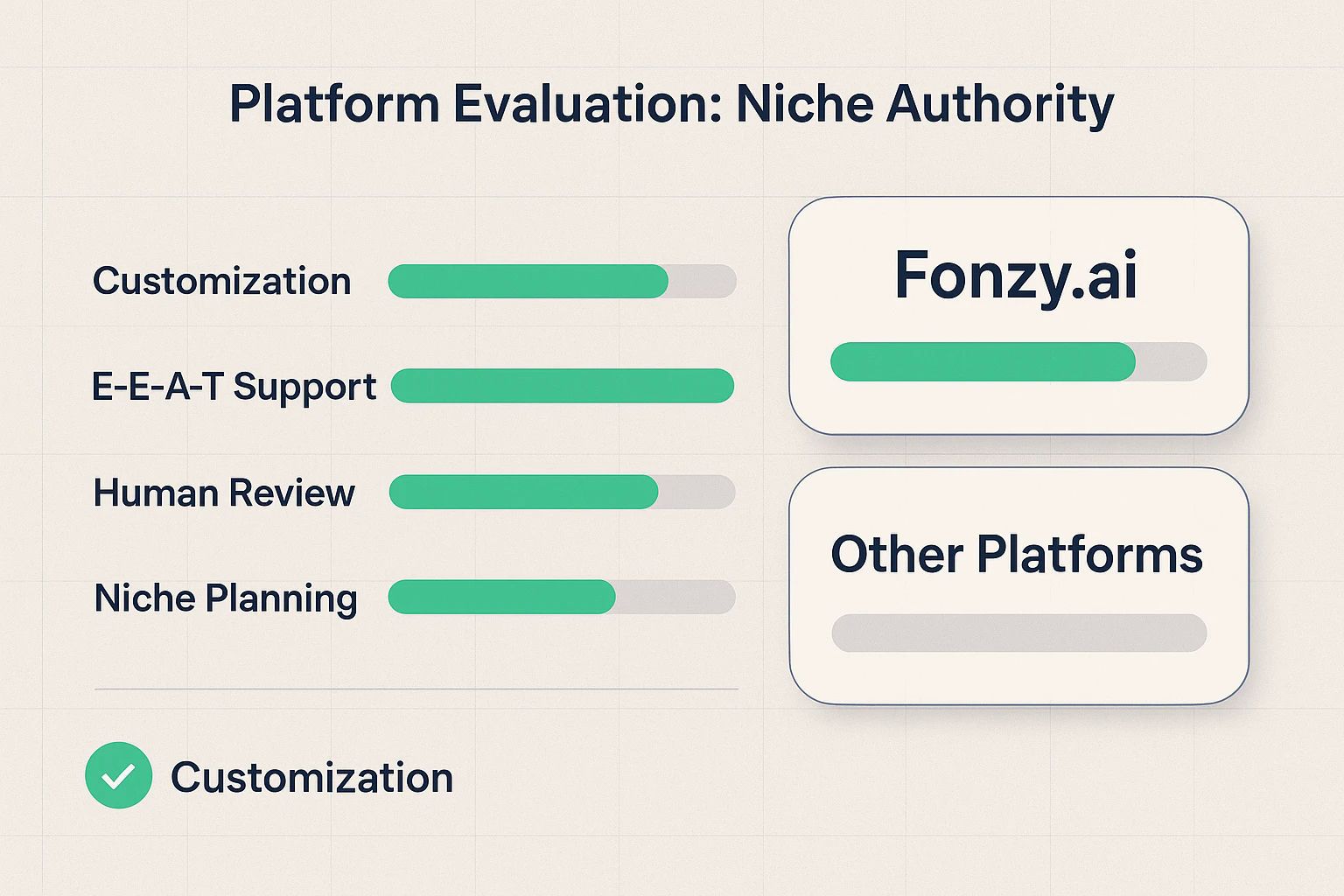
Becoming an Industry Authority How AI Content Platforms Drive Niche Expertise & Trust
Discover how AI content platforms help you build authentic niche authority and trust by combining your expertise with strategic AI support.
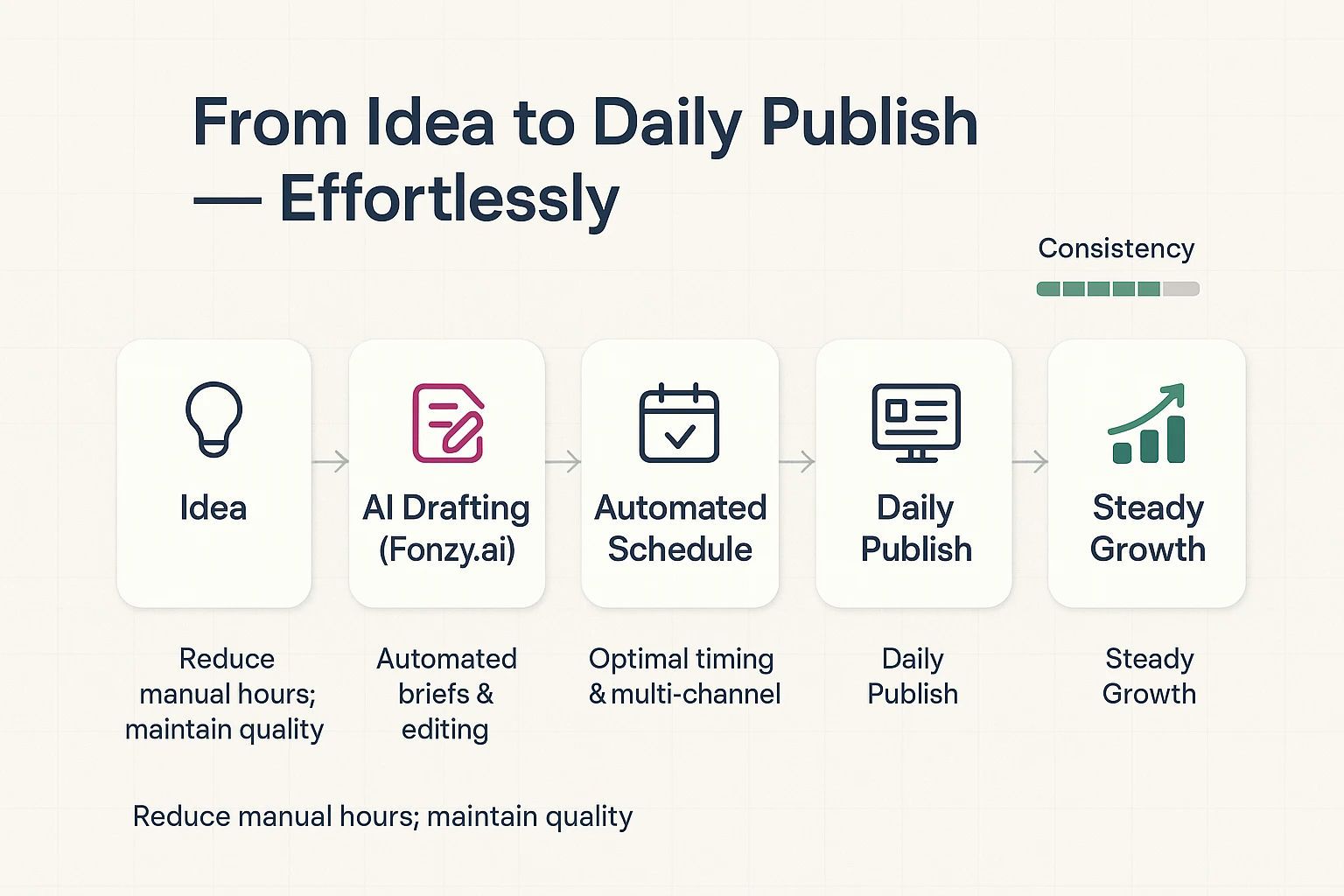
The Daily Content Dilemma How to Achieve Consistent Growth
Discover how to publish daily without burnout using automation for steady growth and higher SEO impact.
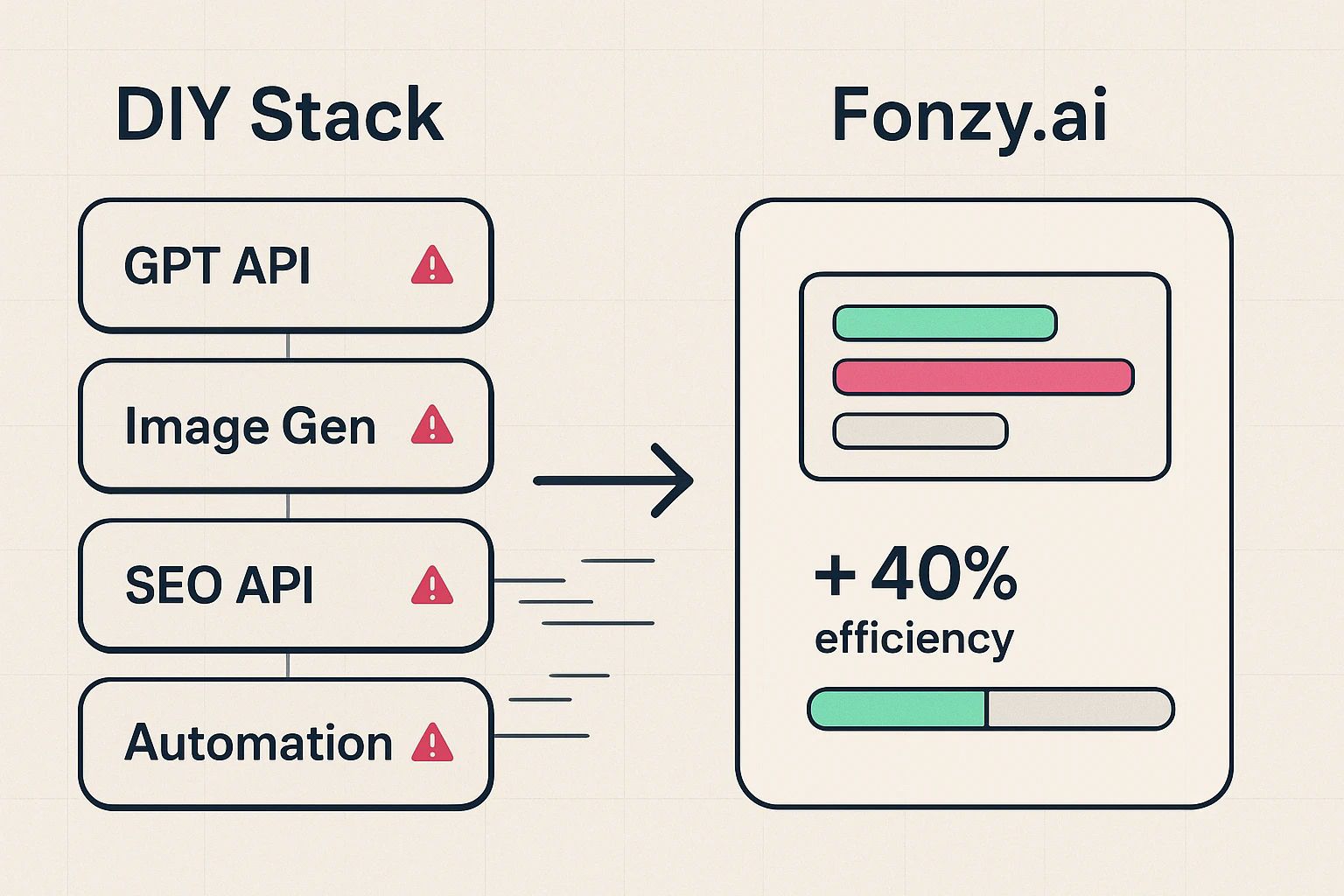
Fonzy.ai vs Building Your Own AI Content Stack Complexity vs Simplicity
Compare Fonzy.ai with DIY AI content stacks to find a simpler, scalable solution that saves time and cuts hidden costs for your SEO growth.