
The Definitive Guide to Measuring AI SEO ROI (And Justifying the Investment)
You've seen the headlines. You've heard the buzz. AI isn't just coming for SEO—it's here, and it's reshaping the competitive landscape. But as a decision-maker, you’re past the point of fascination. You’re at the critical evaluation stage, asking the only question that truly matters: What's the actual, measurable return on this investment, and how do I prove it?
This isn't about chasing trends. It's about making a strategic decision that drives growth. The AI SEO software market is projected to skyrocket to $4.97 billion by 2033 for one simple reason: when implemented correctly, it delivers substantial ROI. The challenge is moving from a vague sense of "this could be big" to a concrete, data-backed business case.
This guide provides the framework to do just that. We'll walk through the exact methodologies for calculating the ROI of an AI SEO platform, arming you with the data and arguments needed to make a confident, justifiable decision.
Part 1: Quantifying the Impact of AI SEO
Before you can calculate ROI, you need to understand the new value drivers. AI SEO doesn't just make old processes faster; it introduces new efficiencies and performance metrics that directly translate to your bottom line.
Efficiency Gains: Reclaiming Your Most Valuable Asset—Time
The most immediate return from AI SEO comes from automating high-effort, low-creativity tasks. Instead of spending dozens of hours on keyword research, content briefing, and manual optimization, your team can focus on high-level strategy.
The numbers are compelling. Businesses report that AI saves 60-70% of the time typically spent on content research and optimization tasks. For a single SEO role, this can translate into an annual labor cost reduction of $30,000 to $40,000. Think of it not just as a cost saving, but as reinvested time—hours that can now be spent on customer-facing activities, strategic planning, and creative initiatives that AI can't replicate.
Performance Uplift: Driving Tangible Growth Metrics
Efficiency is only half the story. The ultimate goal is growth, and this is where AI SEO platforms move from a nice-to-have to a strategic necessity. By analyzing data at a scale no human team can match, AI identifies content opportunities that lead to significant performance boosts.
Businesses adopting AI-driven SEO report game-changing results:
- Up to 45% growth in organic traffic
- 38% higher conversion rates from better-targeted content
- Nearly 50% improvement in keyword rankings
For the vast majority of companies (83%), integrating AI leads to demonstrably better SEO performance, with many seeing profitability jumps between 30% and 50%.

Part 2: The Step-by-Step AI SEO ROI Calculation Framework
Generic ROI formulas won't cut it. To build a bulletproof business case, you need a model that accounts for the specific costs and benefits of an AI-powered content strategy.
Phase 1: Establish Your Baseline
Before you can measure improvement, you need a clear snapshot of your current performance. Gather data for the last 6-12 months on these core metrics:
- Organic Traffic: Monthly unique visitors from search.
- Keyword Rankings: Your average position for a basket of target keywords.
- Conversion Rate: The percentage of organic visitors who complete a goal (e.g., purchase, form fill, sign-up).
- Average Order Value (AOV) / Customer Lifetime Value (CLV): The average revenue per conversion.
- Content Costs: Your total monthly spend on content creation (freelancers, agency fees, in-house salaries, and time).
Phase 2: Analyze Your AI SEO Investment
Next, outline the "Cost" side of the equation. This is more than just the subscription fee.
- Platform Costs: The monthly or annual fee for the AI SEO tool.
- Implementation & Training: The one-time cost of setting up the tool and training your team (though modern platforms like Fonzy.ai are designed for minimal setup).
- Operational Time: The hours your team will spend managing the platform (e.g., approving content plans, reviewing performance).
Phase 3: Quantify the Return
This is where you connect the platform's output to financial value. The return is a combination of cost savings and new revenue generated.
Formula for Cost Savings:
Cost Savings = (Hours Saved per Month on Content Tasks × 0.70) × Average Hourly Employee Cost
This formula calculates the direct value of reclaimed time, using a conservative 70% efficiency gain.
Formula for Incremental Revenue:
Incremental Revenue = (Incremental Organic Traffic × Conversion Rate) × Average Order Value
This formula directly links the traffic growth driven by the AI SEO platform to new revenue. In the new era of Generative Engine Optimization, you can refine this further by tracking AI-specific metrics. As you explore the relationship between GEO and SEO, you'll find that metrics like citation frequency in AI Overviews become powerful leading indicators of future traffic and authority.
Phase 4: Calculate the Final ROI
With your costs and returns quantified, the final calculation is simple:
ROI (%) = [ (Incremental Revenue + Cost Savings) - AI SEO Investment ] / AI SEO Investment × 100
A positive ROI means the investment is profitable. An ROI over 100% means you’re more than doubling your investment. Given that nearly 70% of marketers report a positive ROI from AI SEO, a well-chosen platform should deliver a clear and compelling return.

Part 3: Building the Business Case for Stakeholders
Data is your foundation, but the story you tell with it is what secures buy-in. Different stakeholders care about different outcomes. You need to tailor your justification to their priorities.
- For the CFO / Finance Team (The Bottom Line): Focus on the numbers. Lead with the ROI calculation, cost savings, and projected revenue growth. Frame it as a financial instrument: "This isn't a marketing expense; it's a capital investment with a projected 3-5x return within 12 months."
- For the CEO / Leadership (The Strategic Advantage): Focus on market position and competitive differentiation. Highlight scalability, speed to market, and the risk of being outpaced by competitors who are already leveraging AI. "This platform allows us to dominate search at a scale our competitors can't match manually, securing long-term market share."
- For the Marketing Manager (The Operational Impact): Focus on team efficiency and performance enablement. Emphasize how automation frees up the team for higher-value strategic work, improves key metrics like traffic and conversions, and provides predictable content velocity. "This automates our entire content engine, allowing us to hit our traffic and lead goals consistently every month without burning out the team."

Part 4: Frequently Asked Questions About AI SEO Investment
Even with a strong business case, stakeholders will have questions. Here are answers to the most common objections.
### Is AI-generated content safe for SEO?
Yes, when done correctly. Google's guidance is clear: they reward high-quality content, regardless of how it's produced. The key is to use AI platforms that focus on creating helpful, expert-level content that satisfies user intent, not just churn out low-quality articles. Platforms like Fonzy.ai are built on this principle, generating comprehensive, 2,000+ word articles that are researched, formatted, and optimized for both readers and search engines.
### Isn't it too expensive for a small or medium-sized business?
Compare the cost of an AI SEO platform to the alternatives. Hiring a single content writer or a small agency can cost thousands of dollars per month for just a handful of articles. An autonomous AI platform provides a full content strategy and daily publishing for a fraction of that price, making enterprise-level SEO accessible to businesses of all sizes. The ROI often becomes clear within the first few months.
### What if we don't have the expertise to manage another complex tool?
This is a critical evaluation point. The best AI SEO solutions are not just tools; they are autonomous systems. Look for platforms that handle the entire workflow—from strategy and keyword research to writing, publishing, and ongoing optimization. Fonzy.ai, for example, operates as an "SEO team in a dashboard," requiring minimal user input beyond initial setup and plan approval. This eliminates the need for deep in-house SEO expertise and complex "one tab, zero copy paste" workflows.
### How quickly can we expect to see results?
SEO is a long-term strategy, but AI significantly accelerates the timeline. While foundational results can take 3-6 months, the consistent daily publishing from an AI platform builds topical authority much faster than manual efforts. Early indicators like keyword ranking improvements can often be seen within weeks, providing tangible proof of progress long before the full traffic and revenue impact is realized.
The Confident Path Forward
Measuring the ROI of AI SEO is no longer a guessing game. By using a structured framework, you can move beyond hype and build a data-driven case that clearly demonstrates financial value, strategic advantage, and operational efficiency.
The question is no longer if you should invest in AI SEO, but how you can leverage it to create an unbeatable competitive edge. The right platform doesn't just add another tool to your stack—it delivers a fully autonomous growth engine.
Ready to see what an automated SEO strategy can do for your business? See how Fonzy.ai builds your content plan, writes expert-level articles, and publishes to your blog every single day—effortlessly driving the organic growth you need.

Roald
Founder Fonzy — Obsessed with scaling organic traffic. Writing about the intersection of SEO, AI, and product growth.
Stop writing content.
Start growing traffic.
You just read about the strategy. Now let Fonzy execute it for you. Get 30 SEO-optimized articles published to your site in the next 10 minutes.
No credit card required for demo. Cancel anytime.

AI SEO Pricing Unlocked A Practical Guide
Explore AI SEO pricing models, analyze costs, and learn how to calculate ROI to choose the best platform for your business growth.
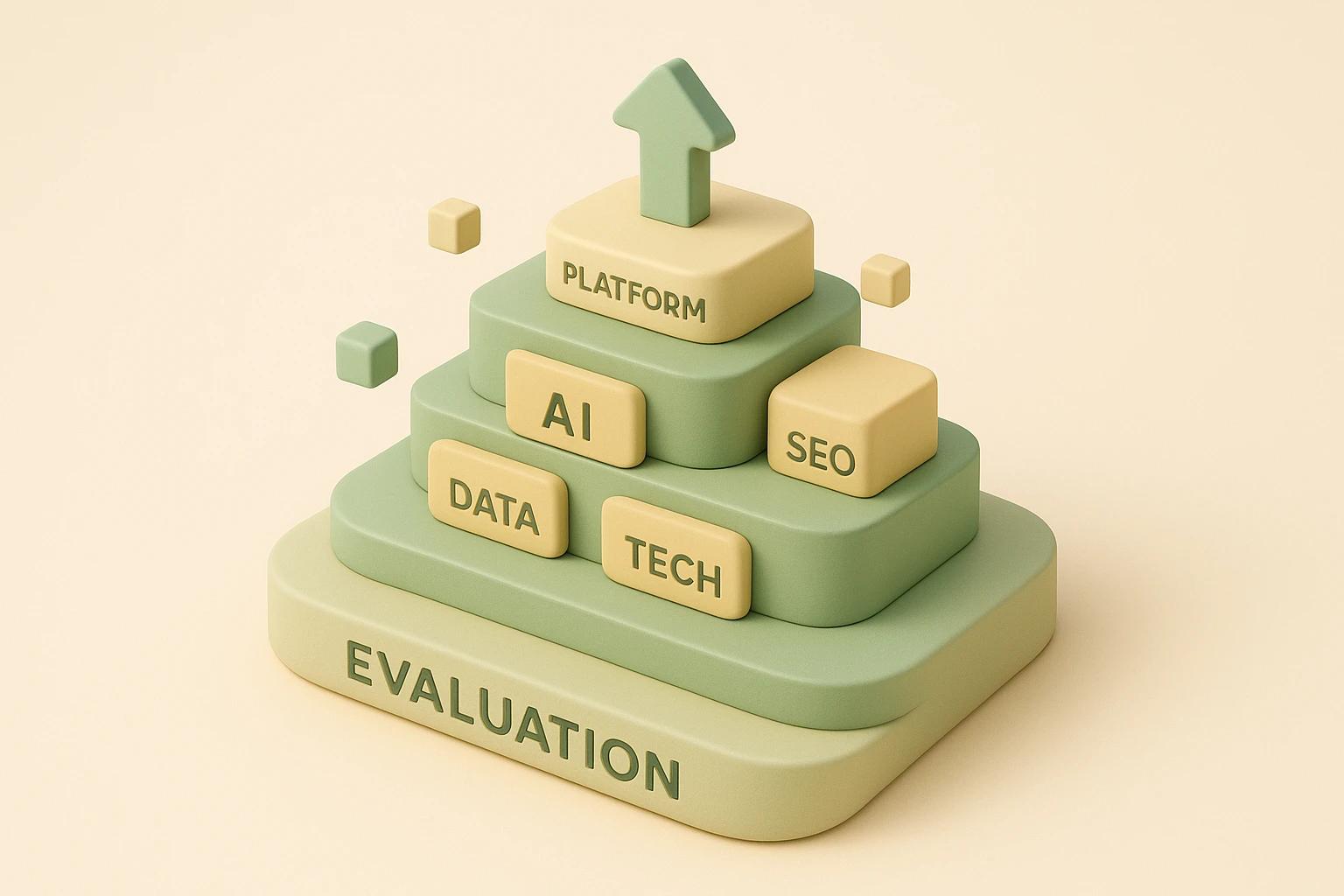
The Definitive Framework for Evaluating AI SEO Platforms
Use a proven framework to assess AI SEO platforms with six key pillars and pick the right partner to boost your organic growth confidently.

Beyond Automation The Ethical Framework for AI Content That Actually Converts
Discover how ethical AI content boosts trust and conversions with transparency, authenticity, and human oversight for superior middle-funnel results.