Seamless SEO Content Publishing A Guide to AI CMS Integration

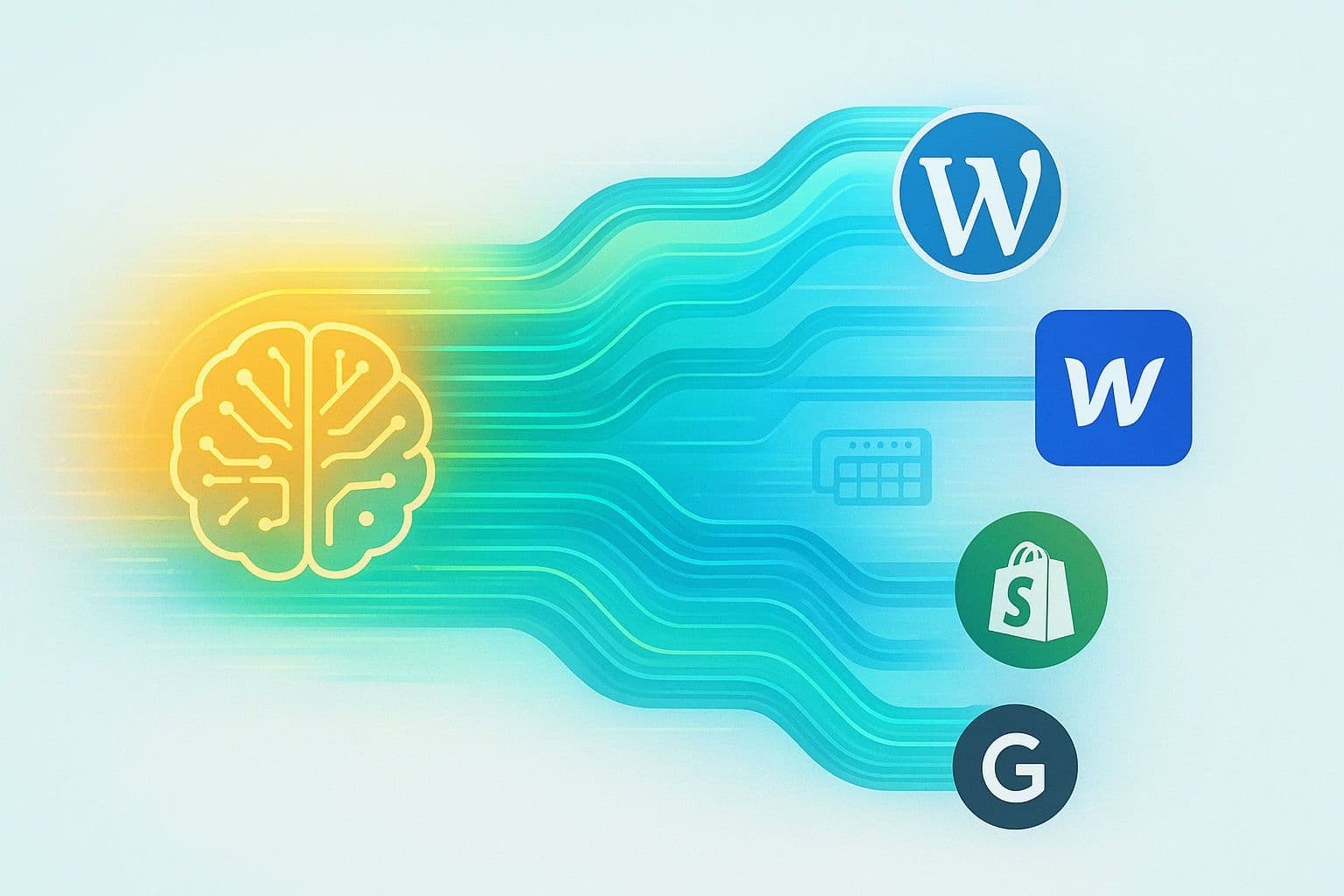
"Seamless SEO Content Publishing: A Guide to AI, CMS Integration, and Workflow Automation
You've seen the promise of AI for content creation. The idea of generating high-quality articles automatically is compelling. But as you start evaluating solutions, a more practical and pressing question emerges: ""How will this actually fit into my current workflow without causing chaos?""
For most businesses, the real challenge isn't just creating content; it's the entire process from strategy and writing to optimizing and publishing it seamlessly on a WordPress, Webflow, or Shopify site. You're rightfully concerned about complex setups, broken integrations, and tools that create more manual work than they save.
This guide is for you. We're moving past the hype to give you a clear framework for evaluating AI content platforms based on what matters most in the middle of your decision journey: deep CMS integration and true end-to-end workflow automation.
What ""Seamless Integration"" Actually Means for Your CMS
The term ""integration"" gets thrown around a lot. For many tools, it means a simple API connection that lets you push content from one platform to another, often requiring manual steps. But for a truly efficient workflow, seamless integration is much deeper.
It's about a native-level connection that requires minimal setup and respects your existing site structure. It means the AI platform understands your CMS, whether it’s the plugin-heavy environment of WordPress or the API-first nature of Webflow.
The fear of a new tool ""breaking your existing setup"" is valid. Research shows that integrating AI with legacy or existing CMS can be technically difficult due to a lack of architectural flexibility. A seamless solution is designed to prevent this by working with your CMS, not against it.
Let's look at the specific considerations for popular platforms:
- WordPress: The key is finding a solution that offers more than a basic plugin. True integration means the AI can handle publishing, formatting, setting featured images, and even managing categories and tags directly within your WordPress environment, without you needing to copy and paste a single word.
- Webflow: Known for its design flexibility, Webflow's API is powerful but can be complex. A seamless integration here means an AI platform can connect directly to your CMS Collections, populating fields correctly and publishing new items without requiring you or your developer to write custom scripts.
- Shopify: Content for e-commerce isn't just about blog posts; it's about driving traffic to product pages. Seamless Shopify integration involves creating and publishing content that intelligently links to your products, understands your collections, and supports your overall SEO strategy to attract buyers.
- Ghost: For this lightweight, creator-focused platform, the ideal integration is just as lean. It should be a simple, authorized connection that allows the AI to publish clean, well-formatted posts directly, preserving the minimalist ethos of the platform.
Unpacking Workflow Automation: Beyond Just Writing the Words
True workflow automation covers the entire content lifecycle, not just the writing part. While 60% of companies are using generative AI for content production, the real efficiency gains come from automating the steps before and after the first draft is written.
Think of it as a production line:
1. Strategy & Planning: The system analyzes your website and competitors to build a data-driven content plan and calendar. You simply approve the topics.
2. Content Generation: AI drafts complete, long-form articles optimized for your target keywords. This includes titles, meta descriptions, and even internal link suggestions.
3. Scheduling & Publishing: Based on the approved calendar, the platform automatically publishes the content directly to your CMS on a consistent schedule. This is the ""one-click publish"" ideal.
4. Ongoing Optimization: The system monitors performance and can even update content over time to maintain its ranking and relevance.
This level of automation is why 66% of businesses have automated at least one process, a number expected to hit 85% by 2029. It’s about reclaiming time, ensuring consistency, and scaling your content efforts in a way that’s simply not possible with a manual or fragmented process.
A Practical Framework for Comparing AI Content Platforms
When you're evaluating options, it's easy to get lost in feature lists. Instead, focus on these core criteria that directly impact your daily operations and long-term success. Most tools fall into one of three categories: point solutions, platform connectors, and end-to-end automation systems.
!Side-by-side CMS integration comparison with clear horizontal bars that make it quick to see which platforms offer seamless, low-disruption connections.
Here’s how to assess them:
| Evaluation Criteria | Point Solutions (e.g., AI Writing Assistants, SEO Plugins) | Platform Connectors (e.g., Zapier, Make) | End-to-End Platforms (e.g., Fonzy.ai) |
| :--- | :--- | :--- | :--- |
| CMS Integration Depth | Low: Often requires copy-pasting or basic plugins that only handle one part of the process (like SEO). | Medium: Can connect different apps but may require complex, multi-step ""zaps"" or scenarios that can be brittle. | High: Offers deep, one-click native integrations with multiple CMS platforms (WordPress, Webflow, etc.). |
| Workflow Automation Scope | Narrow: Focuses on a single task like writing a draft or optimizing a meta title. The rest of the workflow is manual. | Fragmented: Chains tasks together but relies on you to build and maintain the logic. Every piece is separate. | Comprehensive: Manages the entire lifecycle from strategy and content planning to daily, automated publishing. |
| Ease of Use & Setup | Variable: Some are simple, but integrating them into a full workflow is complex. | Complex: Requires technical understanding to build and troubleshoot workflows. Prone to breaking when one app updates. | Simple: Designed for a ""one-click setup"" experience, minimizing technical hurdles and getting you started quickly. |
| Best For | Teams who need help with one specific task and have the resources to manage the rest of the process manually. | Tech-savvy users who need to create custom connections between tools that don't natively integrate. | Businesses, coaches, and agencies who want a complete, automated system to handle their content marketing from start to finish. |
While WordPress-specific plugins offer some automation, they often lack strategic planning and multi-CMS support. Platform connectors provide flexibility but place the burden of building and maintaining the workflow squarely on your shoulders.
For businesses seeking true efficiency, an end-to-end platform is the most direct path to a seamless publishing engine.
Fonzy.ai: The Blueprint for End-to-End Automation
An end-to-end platform like Fonzy.ai is built specifically to solve the integration and workflow challenge. The entire process is designed to minimize manual intervention and eliminate the friction points that plague fragmented solutions.
!A clear implementation flow illustrating how Fonzy.ai connects strategy to publishing with one-click setup and low technical friction.
The workflow is simple and powerful:
1. Connect Your Site: You provide your website URL. Fonzy.ai analyzes your business, competitors, and market to generate a personalized SEO and content strategy.
2. Approve Your Plan: You review and approve the content calendar.
3. Automation Takes Over: Fonzy.ai gets to work, generating high-quality, optimized articles and publishing them directly to your WordPress, Webflow, Shopify, or Ghost site every single day.
This approach directly addresses the primary concerns of MOFU evaluators: it's easy to set up, it won't disrupt your existing site, and it automates the entire content lifecycle, allowing you to focus on your business.
Overlooked Details That Future-Proof Your Decision
Choosing an AI platform is also about trust and long-term viability. As you finalize your decision, consider these critical factors that often get missed in feature-to-feature comparisons.
- Human Oversight: Automation is about efficiency, not abdication. While AI can handle 90% of the work, the best platforms recognize that human editing is crucial for maintaining brand voice and ensuring accuracy. The goal is to assist, not replace.
- Data Security & Compliance: Where is your data being processed? Does the platform adhere to standards like GDPR? A trustworthy partner will be transparent about its security practices.
- Scalability: Will this solution grow with you? A platform that can handle one site should be able to handle ten. An end-to-end system is inherently more scalable than a patchwork of individual tools and connectors.
Investing in an automated system delivers a significant return. Companies using generative AI see an average of 3.7x ROI for every dollar invested, driven by massive time savings and increased organic visibility.
!Quantified benefits and compliance signals that help decision-makers quickly assess the time and cost savings from automated publishing.
Your Next Step: Make Your Content Workflow Effortless
Choosing the right AI content platform comes down to one thing: finding a solution that fits into your world, not one that forces you to rebuild your world around it.
By prioritizing seamless, one-click CMS integration and a truly comprehensive workflow—from strategy to daily publishing—you move beyond simple content generation. You build an automated engine for consistent organic growth.
If you're ready to stop juggling fragmented tools and implement a system that just works, it's time to explore a platform built for that purpose. See how Fonzy.ai can connect to your site in minutes and start building your automated content strategy today.
***
Frequently Asked Questions
Do I need coding skills or a developer to integrate these platforms?
For platform connectors and some basic plugins, you may need technical know-how. However, end-to-end platforms like Fonzy.ai are designed for a ""one-click setup"" that requires no coding. You simply authorize the connection to your CMS.
Will AI automation replace my content team?
No, it empowers them. By automating the time-consuming tasks of ideation, drafting, and publishing, AI frees up your team to focus on higher-value activities like strategy, editing for brand voice, and promotion.
How does this differ from just using an AI writer like ChatGPT?
AI writers are a point solution for content generation. An end-to-end automation platform is a complete system. It handles the SEO strategy, content planning, keyword research, optimization, internal linking, and direct publishing to your CMS—a full workflow that an AI writer alone cannot manage.
Can a single platform handle multiple websites on different CMS?
This is a key differentiator. While most plugins are CMS-specific, a true end-to-end platform should be able to manage content workflows for multiple sites, whether they're on WordPress, Webflow, or another supported CMS, all from a single dashboard."
Roald
Founder Fonzy — Obsessed with scaling organic traffic. Writing about the intersection of SEO, AI, and product growth.
Stop writing content.
Start growing traffic.
You just read about the strategy. Now let Fonzy execute it for you. Get 30 SEO-optimized articles published to your site in the next 10 minutes.
No credit card required for demo. Cancel anytime.
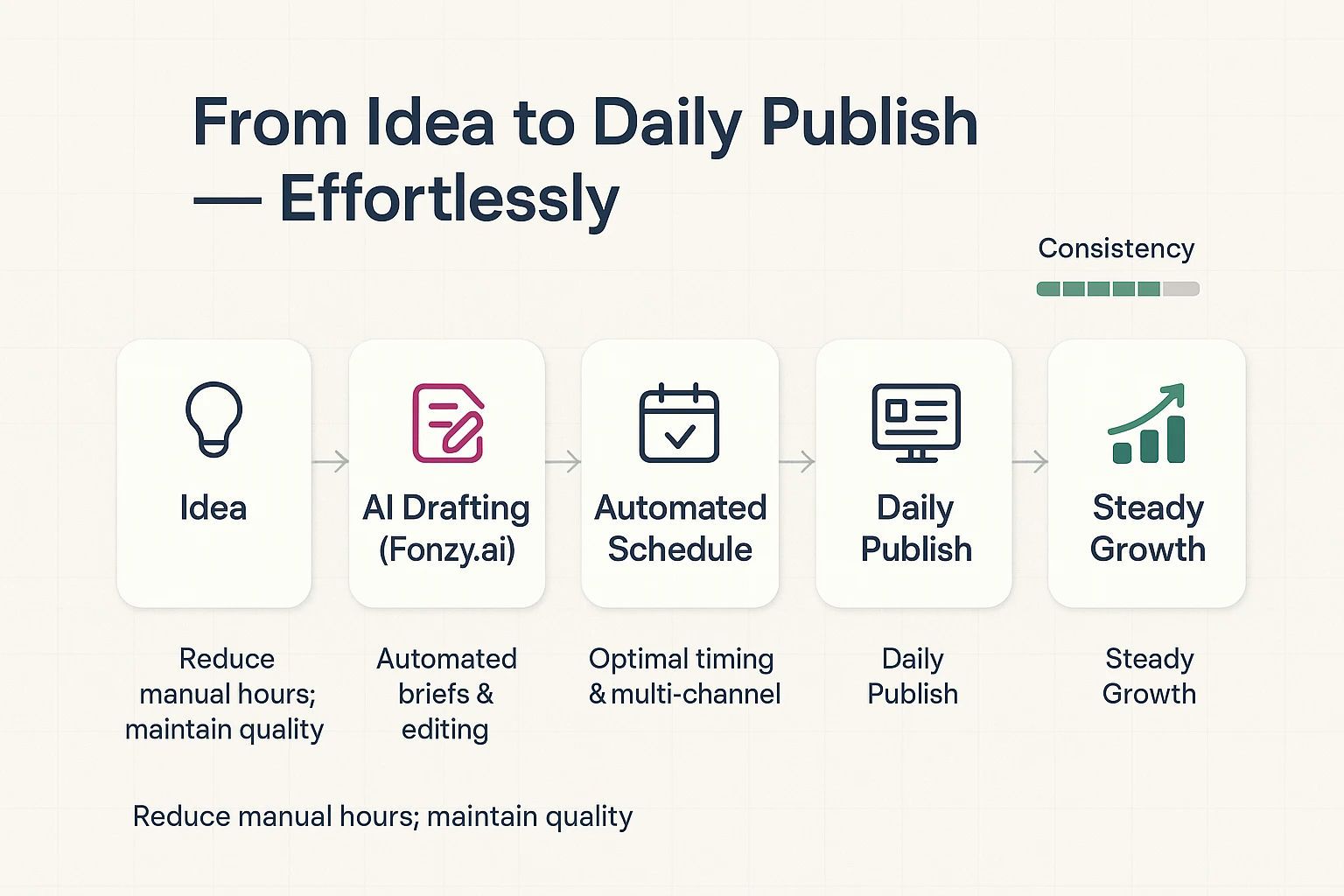
The Daily Content Dilemma How to Achieve Consistent Growth
Discover how to publish daily without burnout using automation for steady growth and higher SEO impact.
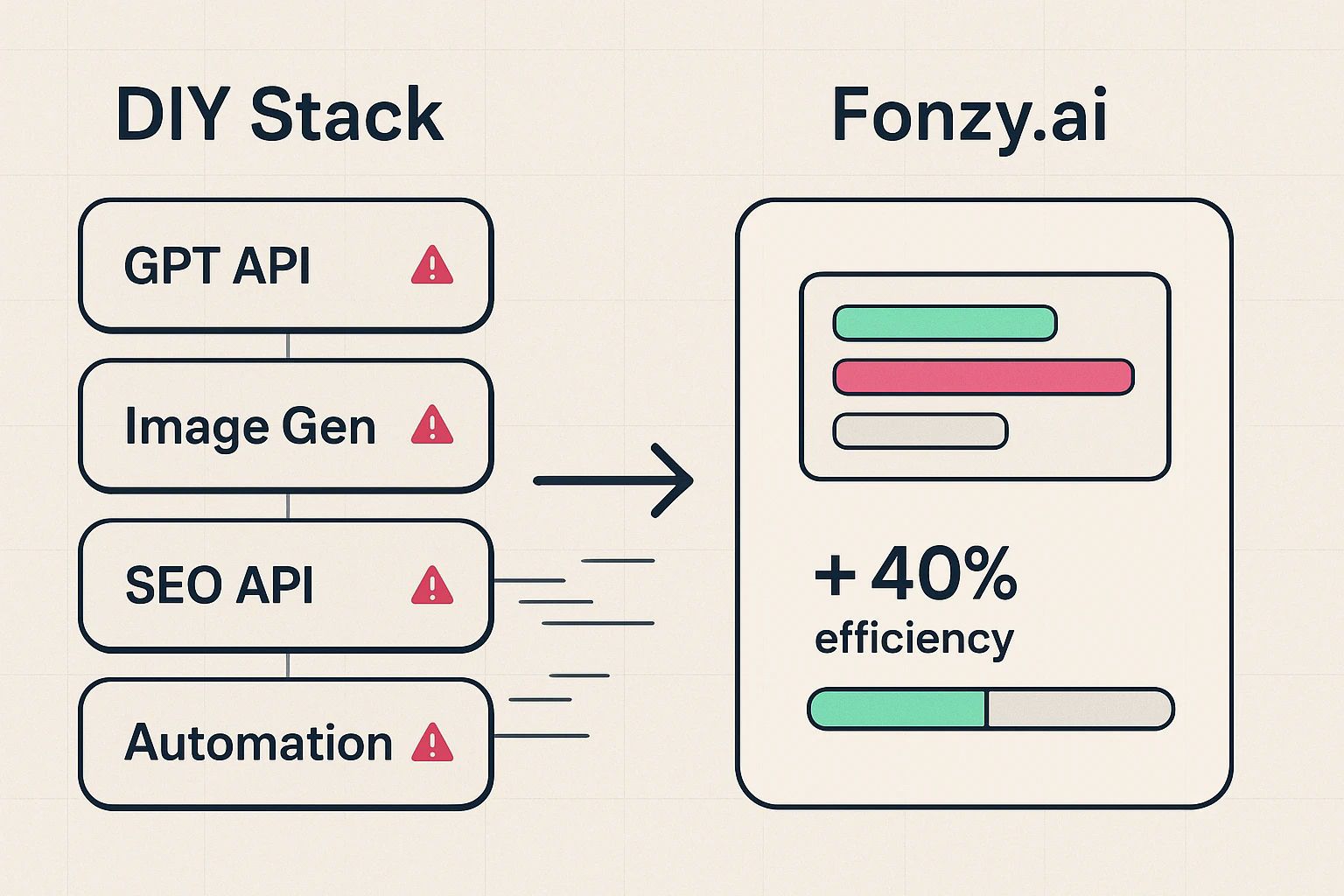
Fonzy.ai vs Building Your Own AI Content Stack Complexity vs Simplicity
Compare Fonzy.ai with DIY AI content stacks to find a simpler, scalable solution that saves time and cuts hidden costs for your SEO growth.
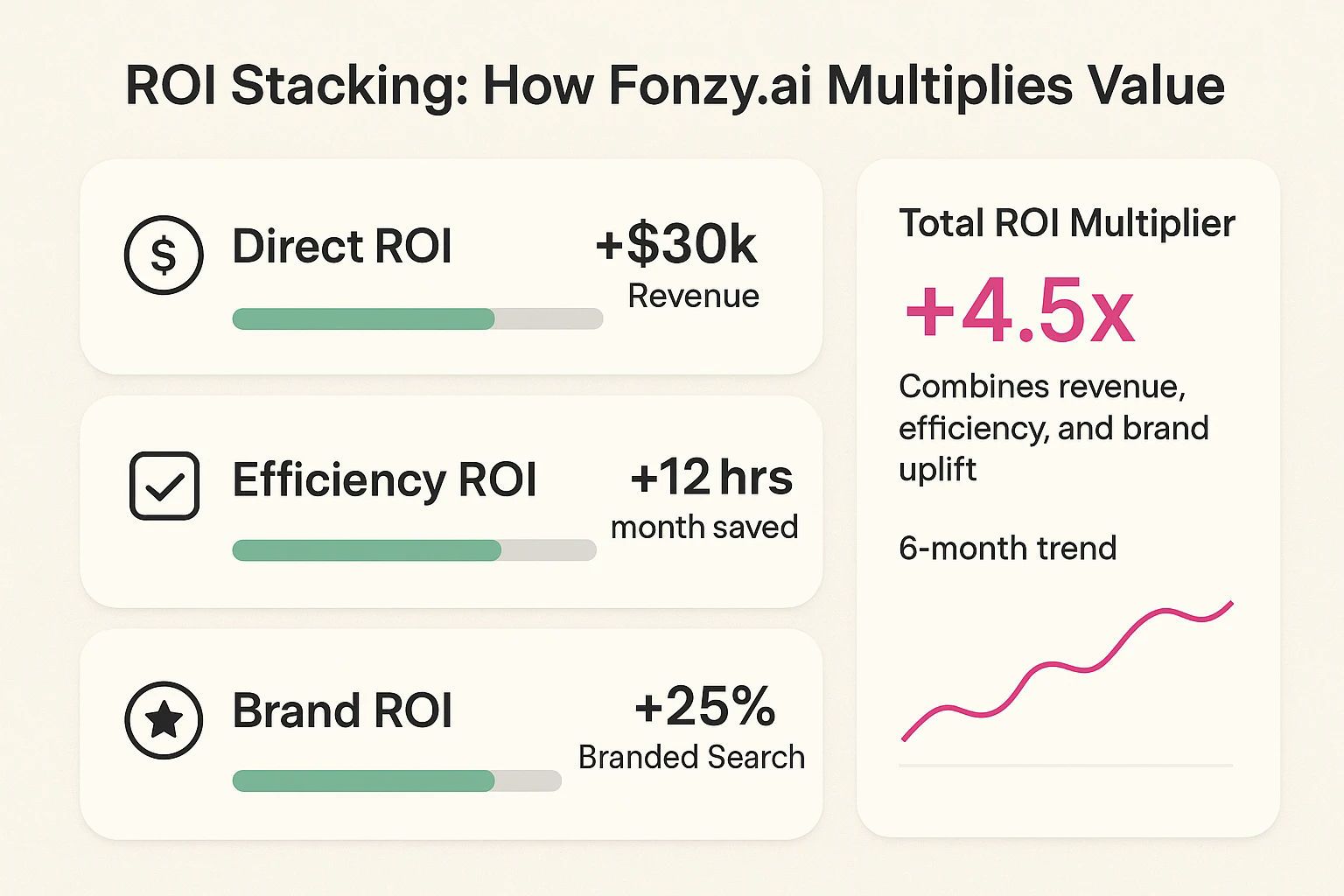
The ROI of Automated SEO Content Calculating Your True Savings and Growth with Fonzy.ai
Discover how automating SEO content cuts costs, boosts efficiency, and drives measurable growth with Fonzy.ai's proven ROI framework.