Beyond Personalization Your Guide to AI-Driven Engagement That Actually Converts

Beyond Personalization: Your Guide to AI-Driven Engagement That Actually Converts
You’ve seen the case studies and heard the buzz. You know that leveraging AI is no longer an innovative edge but a competitive necessity. Yet, you're navigating a complex landscape of solutions, trying to separate vanity metrics from tangible conversion lifts. The real challenge isn't deciding if you should use AI, but how to deploy it in a way that deeply resonates with users and guides them decisively toward conversion.
Traditional engagement strategies often fall short because they treat all users the same. AI changes the game by enabling a dynamic, one-to-one conversation with every visitor. In fact, companies that master AI-driven strategies see conversion rates increase by up to 30%, according to research cited by McKinsey. This guide moves beyond the surface-level talk of chatbots and recommendation engines to give you a framework for evaluating and implementing the AI strategies that create truly high-converting content experiences.
Phase 1: Decoding User Intent Before They Even Ask
The most effective engagement starts with a deep understanding of user intent. Clicks and page views only tell part of the story. AI allows you to analyze the subtle signals—the micro-interactions, scroll depth, and hesitation points—to build a predictive model of what your user truly needs at each stage of their journey.
This is the shift from reactive to proactive engagement. Instead of just answering questions, agentic AI operates in the background, anticipating user needs and surfacing the right information at the right time. By analyzing behavioral patterns, AI can identify a user who is comparing solutions (a middle-funnel indicator) and dynamically adjust the content to highlight competitive advantages or showcase relevant case studies, guiding them more effectively than a static webpage ever could.
Phase 2: Crafting Hyper-Personalized Content Experiences
Once you understand intent, you can begin to craft experiences tailored to the individual. But true personalization goes far beyond inserting a user's first name in an email. It’s about adapting the very fabric of your content to match their context, preferences, and cognitive load.

The Unsung Hero of Conversion: AI-Optimized Readability
One of the most overlooked yet powerful applications of AI in content is the optimization of readability and accessibility. If a user can't easily comprehend your message, they won't convert. Advanced AI models are now tackling this challenge with incredible sophistication:
- Dynamic Text Simplification: Using natural language processing (NLP) and genetic algorithms, AI can analyze a user's likely comprehension level and adjust syntax, vocabulary, and sentence structure in real-time to match. Reinforcement learning models, like those developed by Amazon researchers, can generate summaries at specific, controllable readability levels.
- Responsive Typography: AI can optimize the visual presentation of text for maximum legibility. Convolutional Neural Networks (CNNs) and Generative Adversarial Networks (GANs) can test and deploy typographic styles—font, size, line spacing—that are scientifically proven to reduce cognitive strain, leading to engagement gains of 20-30%.
This isn't just about grammar checks; it's a fundamental re-engineering of the content for clarity and impact, ensuring your core message always lands.

Dynamic Content Adaptation in Real-Time
Beyond readability, AI excels at adapting specific content blocks to match user intent. This moves past batch updates to real-time adjustments that can dramatically lift conversions. For example, personalized Calls-to-Action (CTAs) have been shown to improve conversion rates by a staggering 202%. Imagine a user arriving from a search query about "AI for e-commerce." AI can dynamically replace a generic "Learn More" button with a highly relevant "See E-commerce Case Studies" CTA, directly addressing their immediate interest.
Phase 3: Integrating Intelligent Interactive Elements
Static content is passive. To maximize engagement and guide users toward a decision, you need to invite them into a conversation. AI transforms interactive elements from simple novelties into powerful conversion tools.
While chatbots are a common example, the opportunity is much broader. Consider AI-powered guided selling tools embedded directly within your content. A prospect reading about a complex SaaS product could engage with an AI-driven quiz that asks about their specific challenges. Based on their answers, the AI can:
- Reveal relevant features and hide irrelevant ones.
- Showcase testimonials from similar companies.
- Dynamically calculate and present a potential ROI.
- Guide them down an adaptive content path, serving up the exact information they need to build a business case.
This turns a one-way information broadcast into a two-way consultative experience, building trust and momentum toward a conversion.

Phase 4: Automating the Conversion Funnel with Precision
The ultimate goal is to connect these intelligent engagement strategies into a seamless, automated funnel. A complete [fonzy ai](https://www.fonzy.ai/) ecosystem doesn't just personalize content; it uses the engagement data from that content to inform the next step in the journey.
- Automated Multivariate Testing: AI can run thousands of tests on headlines, images, and content layouts simultaneously, learning and optimizing far faster than any human team.
- Intelligent Lead Scoring: Engagement with high-intent interactive elements or specific deep-dive content sections can automatically increase a user's lead score, triggering a timely follow-up from your sales or marketing automation platform.
This creates a self-improving system where every user interaction makes the entire conversion funnel smarter and more efficient.
Measuring What Matters: Proving the ROI of Your AI Strategy
Implementing these strategies requires investment, and stakeholders need to see a clear return. The beauty of an AI-driven approach is that its impact is highly measurable. You can move beyond traffic and time on page to track the metrics that truly matter to the business.
Key Performance Indicators (KPIs) to focus on include:
- Conversion Rate Lift: The primary measure of success.
- Lead Quality Score: Are AI-nurtured leads more qualified?
- Sales Cycle Length: Does guided selling shorten the time to close?
- Content-Assisted Revenue: Directly attribute revenue to specific AI-driven content interactions.
By focusing on these outcomes, you can build a powerful business case that justifies continued investment and showcases the transformative power of intelligent engagement.

A Practical Framework: Dos, Don'ts, and Human Oversight
As you evaluate solutions, it's crucial to adopt a strategic and ethical approach.
- DO start with a solid data foundation. High-quality data is the fuel for any successful AI initiative.
- DON'T remove human oversight. AI is a powerful tool, but human creativity, empathy, and strategic direction are irreplaceable. Use AI to augment your team, not replace it.
- DO prioritize data privacy and transparency. Be clear with users about how their data is being used to enhance their experience.
- DON'T mistake automation for authenticity. The goal of AI is not to sound robotic but to enable more human-centric conversations at scale.
Frequently Asked Questions (FAQ)
Q1: How much data do I need to start with AI personalization?
You don't need petabytes of data from day one. Many AI platforms can start delivering value by analyzing real-time on-site behavior. The key is to start with a specific, high-impact use case—like personalizing CTAs on your most popular pages—and expand as you collect more data and prove the ROI.
Q2: Will AI make my brand's content feel robotic and inauthentic?
This is a common concern, but it's a misconception. The best AI tools are designed to enhance authenticity, not diminish it. By understanding user intent and sentiment, AI helps you deliver a more relevant, empathetic, and helpful message. The "robotic" feeling often comes from poorly implemented, rule-based systems, not from sophisticated, learning-based AI.
Q3: Are these advanced AI strategies only for large enterprises?
Not anymore. The rise of SaaS platforms has democratized access to powerful AI. Many solutions are designed specifically for small to medium-sized businesses, offering scalable pricing and user-friendly interfaces that don't require a dedicated data science team. The key is finding a platform that automates the complexity, allowing you to focus on strategy.
Q4: How do I choose the right AI tool among so many options?
Focus on your specific business goals. Are you trying to increase lead quality, boost e-commerce sales, or improve content comprehension? Look for a solution that directly addresses your primary pain point. Seek out platforms that offer a holistic approach—connecting content strategy, creation, and optimization—as this delivers a much higher long-term value than single-point solutions. An integrated [fonzy ai](https://www.fonzy.ai/) platform can often replace multiple disparate tools.
Your Next Step Toward Proactive, High-Converting Engagement
Moving from a static content strategy to a dynamic, AI-driven engagement model is the single most powerful lever you have for maximizing conversions. It’s about creating a system that not only attracts users but actively understands, guides, and converts them through intelligent, personalized experiences.
Start by identifying one key area of friction in your current user journey. Is it a high bounce rate on a critical landing page? A low conversion rate on a demo request form? Apply the frameworks from this guide to that single problem and begin exploring how AI can transform that point of friction into a moment of conversion.
Roald
Founder Fonzy — Obsessed with scaling organic traffic. Writing about the intersection of SEO, AI, and product growth.
Stop writing content.
Start growing traffic.
You just read about the strategy. Now let Fonzy execute it for you. Get 30 SEO-optimized articles published to your site in the next 10 minutes.
No credit card required for demo. Cancel anytime.

AI SEO Pricing Unlocked A Practical Guide
Explore AI SEO pricing models, analyze costs, and learn how to calculate ROI to choose the best platform for your business growth.

The Definitive Guide to Measuring AI SEO ROI
Learn how to quantify AI SEO ROI and build a strong business case to justify your investment with proven metrics and clear frameworks.
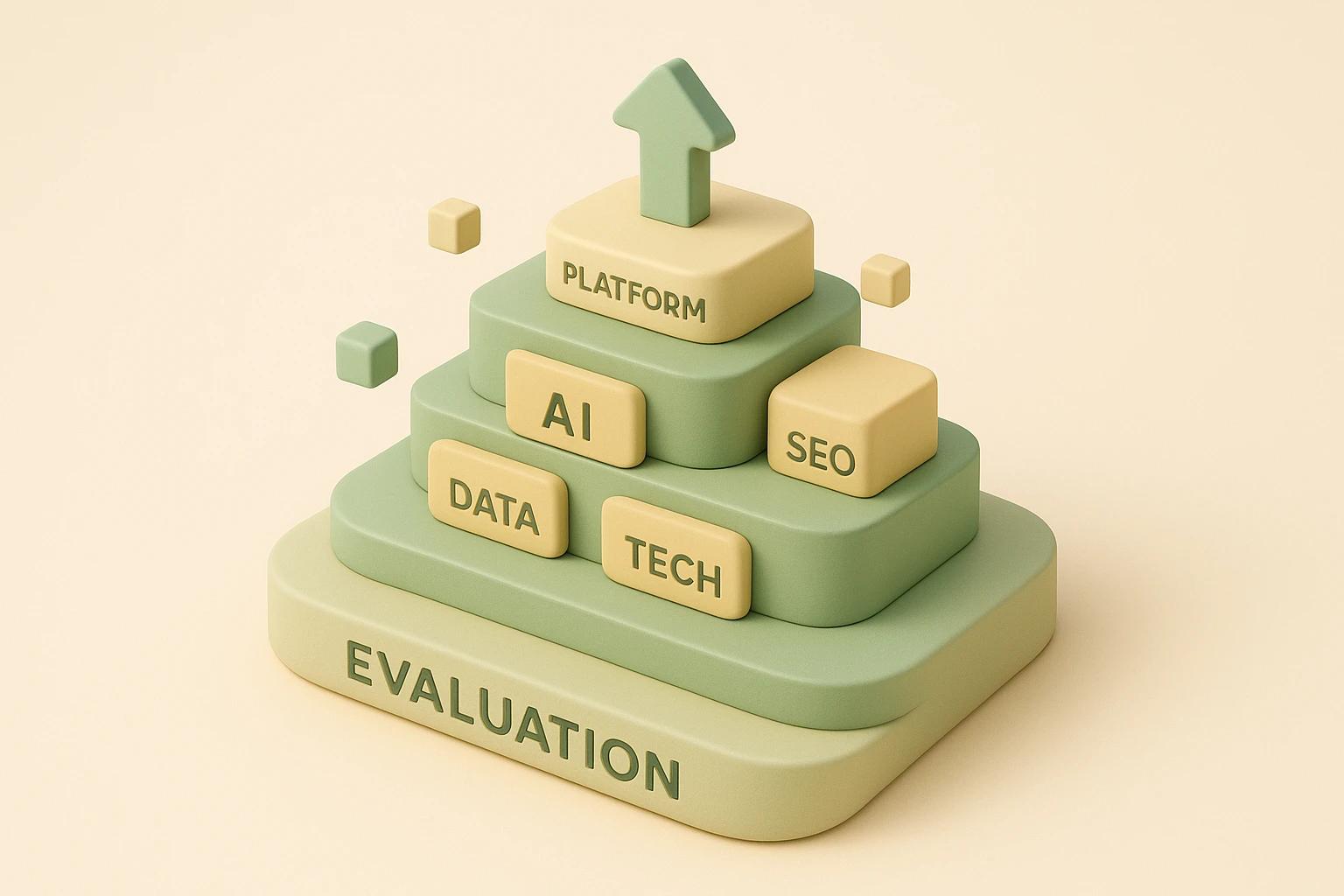
The Definitive Framework for Evaluating AI SEO Platforms
Use a proven framework to assess AI SEO platforms with six key pillars and pick the right partner to boost your organic growth confidently.