 Ready to grow?
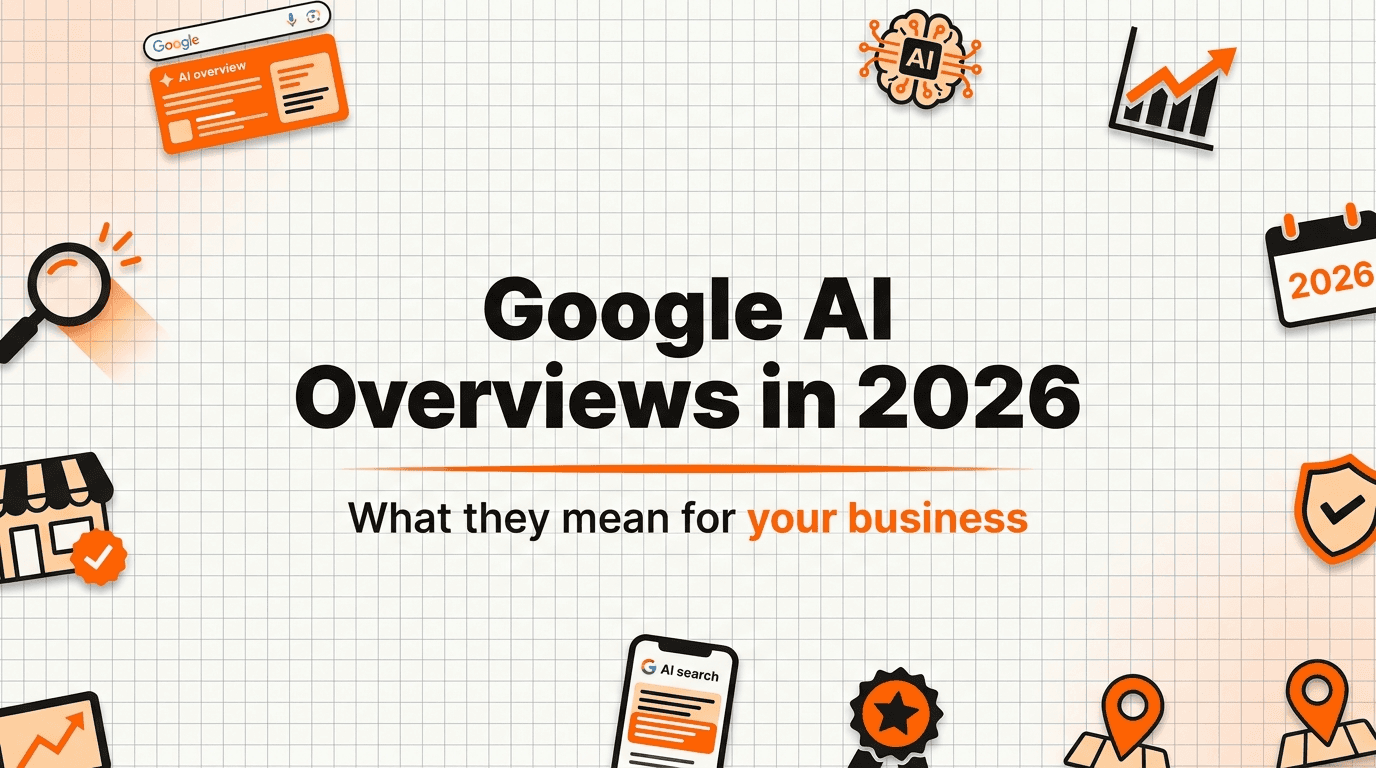
AI Overviews are the AI-written answers Google shows at the top of many search results, with links to the pages it pulled the information from. The consequence for you: people get their answer without clicking, unless your page is one of the sources the answer cites. That changes which pages on your website are worth having.
This is not the end of Google traffic. It is a filter. Generic content gets skipped. Specific, current, clearly written answers get quoted and linked. If you actually know your trade, that filter works in your favor.
What does an AI Overview actually look like?
Search "why is my tap dripping" and you will usually see a few AI-written paragraphs at the top: worn washer, loose valve seat, high water pressure. Next to or below the answer sit two or three source links. Those links are the new front page of Google.
Now search "plumber near me" and you get something completely different: the map, business profiles, reviews, phone numbers. No AI summary. Google still treats that as a "send this person to a business" search.
That split matters more than anything else on this page. Overviews show up on questions. They mostly stay out of the way when someone is ready to hire or buy.
What changed for small businesses?
Two things, and they pull in opposite directions.
Clicks on general information searches dropped. If your blog post explains what a heat pump is, the Overview now explains it instead, and most readers never reach your site. The traffic you used to get from broad how-to posts is shrinking, and it is not coming back.
At the same time, being a cited source got more valuable. When the Overview answers "how long does a heat pump installation take" and links to your page, you appear above every regular result with Google's stamp on it. One citation on a question your customers actually ask is worth more than a hundred visits from people skimming a generic explainer and leaving.
So here is the honest position: Google AI Overviews punish generic content and reward specific answers. For a small business with real expertise, that is good news. The sites losing the most traffic are the ones publishing content anyone could have written.
Which of your pages are affected?
Sort your pages into three buckets.
- Generic explainers. "What is a boiler", "benefits of regular car maintenance". These compete directly with the Overview itself and lose. Expect their traffic to keep falling.
- Specific questions with a local or price angle. "How much does a boiler service cost in Rotterdam", "do I need a permit to replace a fence in Utrecht". These either get cited in the Overview or skip it entirely. Either way, the visitor who arrives is close to spending money.
- Buying and hiring searches. "Emergency electrician open Sunday", "best price winter tires 205/55 R16". Overviews appear less here, and when they do, the local pack and regular listings still sit right next to them. These searches still send clicks and calls.
Read your own analytics with this in mind. A traffic drop on a generic post is the market telling you that page stopped earning its place. The same drop on a service page is a real problem worth fixing.
How do you get your page cited?
Pages that get cited share one habit: they answer the question directly, at the top, before any warm-up.
- Answer in the first two sentences. If the page is about boiler service cost, the first sentence names a price range. Context comes after the answer, not before it.
- One question per page. A page that half-answers twelve questions gets beaten by twelve pages that each answer one question fully.
- Write headings the way people ask. "How long does the installation take?" works harder as a heading than "Our process".
- Date your facts. Prices, rules, and availability change. A page that says "as of June 2026" reads as current. An undated page reads as stale, to both readers and Google.
None of this is a trick. It is the same writing discipline that has always ranked well, applied more strictly because an AI now reads your page before a human does.
Does your Google Business Profile matter more now?
Yes, for one plain reason: the searches that still send customers directly, the "near me" and "open now" kind, lean heavily on it. Hours, services, photos, reviews, and a category that matches what you actually do. When someone searches "bike repair open Saturday", a complete profile beats a beautiful website that Google cannot connect to a real shop.
Fill in the services list properly while you are at it. Google increasingly uses profile data to decide which local businesses to show, including inside AI answers about local services. Ten minutes of profile maintenance per month protects the search traffic that converts best.
Will Overviews work the same way next year?
Nobody knows, including the people publishing confident predictions. Google has already changed how frequently Overviews appear, which searches trigger them, and how visible the source links are, several times. It will keep adjusting, because it is balancing answer quality against the ad clicks its revenue depends on.
That uncertainty is exactly why chasing the format is a waste of your time. The durable strategy does not depend on what the answer box looks like in March: be the clearest, most current, most specific source on the questions your customers ask. Every version of Google search so far has rewarded that. Every AI assistant that cites web sources rewards it too.
Frequently asked questions
Should I stop writing blog posts because of AI Overviews?
No, but stop writing generic ones. A post that answers a specific question your customers ask, with current facts and the answer in the first sentences, earns citations and qualified visitors. A post that explains what everyone already knows now gets read by nobody.
How do I know if AI Overviews are affecting my traffic?
Open Google Search Console and compare impressions to clicks. If impressions hold steady while clicks fall on informational pages, an Overview is likely answering the question before people reach you. Run the search yourself for those queries to confirm what shows above your listing.
Can I pay to appear in an AI Overview?
No. Google does not sell placement inside the answer, and the cited sources are chosen organically. Ads still appear around Overviews, but within the answer itself a small local business that addresses the question better can be cited ahead of a big publisher.
This is exactly the kind of page Fonzy writes for you: one question per page, a direct answer in the opening sentences, current facts, and headings that match how your customers search. Tell it what you do and where you work, and it produces the specific pages Overviews cite while your competitors keep publishing explainers nobody reads. For the bigger picture on turning visibility into paying customers, read how to get more customers online.