The Unseen Power of Content Volume in the Age of AI Search


The Unseen Power of Content Volume in the Age of AI Search
You've read the guides on Generative Engine Optimization (GEO). You understand that AI is changing the search landscape, with conversational queries now averaging 23 words, far beyond Google's 4-word standard. Yet, something feels incomplete. The advice to focus on E-E-A-T, structure your content, and write for user intent is sound, but it feels like a holdover from the SEO playbook you already know.
If you're looking for the hidden variable—the strategic lever that competitors are overlooking—it's this: the conversation is too focused on optimizing individual pages. The real opportunity lies in optimizing your entire content library.
In the new era of AI-driven answers, the sheer volume of high-quality, interconnected content your brand publishes is no longer just a contributing factor; it is the foundation of your authority.
Decoding the AI Brain: Why Generative Engines Favor Deep Content Libraries
To win at GEO, you have to stop thinking like an SEO and start thinking like a data scientist training an AI model. Large Language Models (LLMs) like those powering ChatGPT and Google's AI Overviews don't just "rank" content; they synthesize it. They learn by ingesting massive datasets, identifying patterns, and building a foundational understanding of concepts, entities, and their relationships.
When an AI synthesizes an answer, it's performing a complex calculation of probability and relevance. A single, well-optimized article might provide a good data point. But a deep library of 50, 100, or 500 articles all reinforcing the same core expertise from a single domain? That’s not just a data point; it’s a trusted dataset. It fundamentally shapes the AI's understanding of your niche and positions you as an indispensable source.
This explains a critical market shift: the overlap between top Google links and the sources cited by AI tools has reportedly collapsed from 70% to below 20%. A new system of authority is being forged, and it rewards comprehensive knowledge over single-page prominence.
The "Volume Effect": Your Strategic Advantage is Cumulative Content Authority
We call this strategic advantage Cumulative Content Authority (CCA). It's the principle that a large, high-quality, and consistently updated content library from a single entity accrues disproportionate influence within AI models over time. Each article you publish doesn't just exist in isolation; it becomes another node in your knowledge graph, another piece of evidence reinforcing your expertise.
This sustained "feeding" of the AI makes your brand a more trusted and frequently cited entity. You are no longer just competing for a rank; you are competing to become part of the AI's core knowledge.

This isn't just theory. SEO resources are already seeing an 800% year-over-year increase in referrals from LLMs. The traffic is real, and it flows to those who provide the most comprehensive answers. Your expansive content library is your AI training superpower.
How Content Volume Redefines the Rules: SEO vs. GEO
For years, the debate has been "quality vs. quantity." GEO reframes this into "quality at scale." While a single pillar page could anchor an SEO strategy, AI's appetite for data means that strategic volume is now a non-negotiable part of the equation.
Understanding this shift is central to developing a future-proof AI-driven content strategy. Your evaluation criteria must evolve.

In traditional SEO, authority is often inferred from external signals like backlinks. In GEO, authority is increasingly demonstrated through the internal signal of a deep, coherent, and voluminous body of work.
The New Success Formula: E-E-A-T-V
To thrive, we must evolve our frameworks. The familiar E-E-A-T (Experience, Expertise, Authoritativeness, Trust) is still crucial, but it's missing the critical signal for AI. We propose E-E-A-T-V, adding Volume as a fifth, co-equal pillar.
- Experience: Showcased through real-world case studies and examples.
- Expertise: Demonstrated by the depth and accuracy of your content.
- Authoritativeness: Built by becoming a go-to resource on a topic.
- Trust: Earned through transparency, accuracy, and credible sourcing.
- Volume: Proven by a vast, interconnected library of content that comprehensively covers your domain.
Volume is the ultimate proof of the other four pillars. A single article can demonstrate expertise. A library of 100 articles on a topic demonstrates undeniable authority that an AI can easily measure and trust.
Your Blueprint for Building AI Dominance Through Strategic Volume
Translating this thesis into action requires a shift from sporadic publishing to a systematic, high-velocity content operation. The goal is to build a deep moat of expertise that makes your brand synonymous with your niche in the "mind" of the AI.
Automating this publishing cadence is key, which is why having an automated content creation platform becomes a decisive advantage.

Stage 1: Foundational Quick Wins
- Content Interconnection Audit: Map your existing content. Use smart internal linking to create dense topic clusters that help AI understand the breadth of your expertise.
- Apply E-E-A-T-V: Review your top content. Can you expand it? Can you add more data, quotes, and unique insights? Research shows content with statistics has 30-40% higher visibility in AI answers.
Stage 2: Strategic Scaling
- Establish a Content Velocity Pipeline: Move to a consistent, daily or multi-weekly publishing schedule. This continuous stream of fresh, relevant content signals to AI that you are an active authority.
- Expand Topic Clusters: Systematically build out content around your core themes. If you have an article on "email marketing," create supporting articles on "subject line optimization," "list segmentation," and "A/B testing."
Stage 3: Long-Term Dominance
- Monitor AI Citations: Use tools to track how often your brand is mentioned or cited in AI-generated answers. Look for patterns and double down on what's working.
- Proactively Shape Answers: Identify the key comparison and evaluation questions your prospects ask AI. Create content specifically designed to influence those answers, guiding them through their decision journey.
Answering Your Core Questions About Volume-First GEO
Is this just a "quantity over quality" argument?
Not at all. This is a "quality at scale" imperative. Every single article must meet E-E-A-T standards. The strategic advantage comes from the cumulative effect of a large volume of high-quality pieces, which creates a signal of authority that is impossible to fake.
How can a small business possibly compete on volume?
By focusing. You don't need to cover everything; you need to comprehensively cover your niche. A small consulting firm can become the definitive AI source for "financial planning for freelance creatives" by building a deep library of 50-100 articles on that specific topic, outmaneuvering larger, more generalist competitors. Smart automation is the great equalizer here, enabling smaller teams to achieve enterprise-level content velocity.
How do I measure the impact of content volume on AI answers?
The metrics are evolving. While traditional rankings still matter, you should start tracking new KPIs like "brand citation frequency" in AI tools, "model relevance scores," and the rate of LLM-driven referral traffic. Manually test prompts related to your services to see which sources AI platforms are trusting.
Isn't GEO just a rebranding of good SEO?
No, because the underlying mechanism has changed. Traditional SEO is primarily about retrieval and ranking—finding the best link for a query. GEO is about influencing synthesis and generation—becoming a foundational source for a newly created answer. Content volume has a disproportionately higher impact on the synthesis process, as it provides the raw material for the AI to build its understanding.
The Path Forward: Making Your Content AI's Foundation
The generative AI market is projected to grow to over $1.3 trillion by 2030, and the "cottage industry" for GEO is already valued at nearly $850 million. This is not a distant future; it is the competitive landscape you are operating in today.
Brands that continue to focus only on single-page optimization will be providing data points. Brands that embrace a volume-first GEO strategy will be building the dataset. They will establish Cumulative Content Authority and become the default sources for the next generation of search and discovery.
The first step is to recognize that your entire content library is a strategic asset waiting to be deployed. By systematically building its depth and breadth, you can ensure that when AI answers, it speaks with your voice. See how Fonzy.ai can help you get found in Google and AI answers, automatically.
Roald
Founder Fonzy — Obsessed with scaling organic traffic. Writing about the intersection of SEO, AI, and product growth.
Stop writing content.
Start growing traffic.
You just read about the strategy. Now let Fonzy execute it for you. Get 30 SEO-optimized articles published to your site in the next 10 minutes.
No credit card required for demo. Cancel anytime.

Editorial rules for building trust with authorship and transparency
Discover simple editorial rules to boost content trust through clear authorship, transparency, and verifiable claims for better visibility.
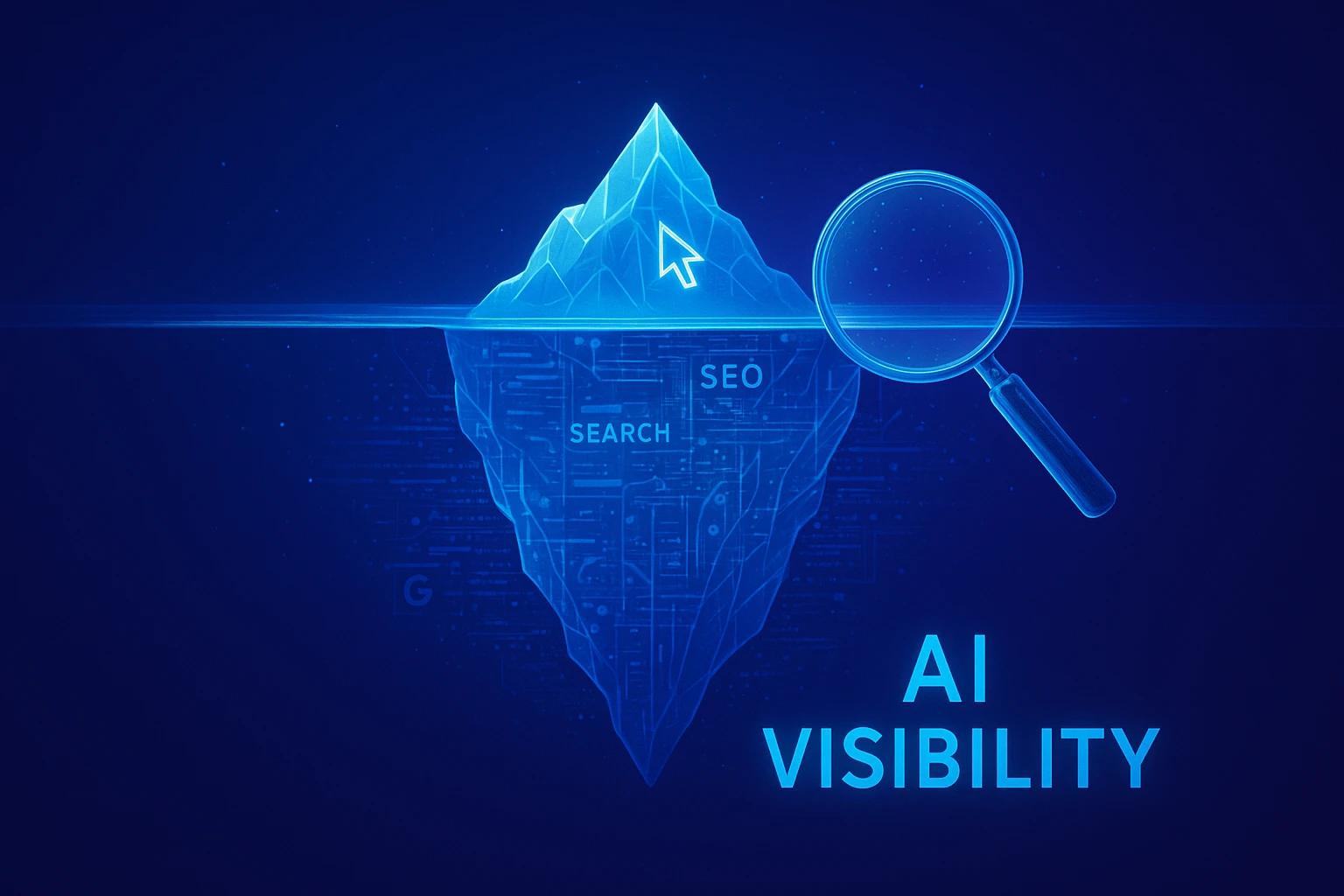
Measuring AI Visibility Practical Content Signals
Learn how to spot practical signals that show when AI assistants use your content and why it matters for your strategy.

Conversational language mapping matching how people ask questions
Learn how to align your content with natural questions your audience uses to improve SEO and AI discovery.