Beyond Creation The Definitive Guide to Measuring and Maximizing AI Content Conversions

Beyond Creation: The Definitive Guide to Measuring and Maximizing AI Content Conversions
You’ve embraced AI to scale your content production. The articles are publishing, the calendar is full, and your output has never been higher. But a nagging question keeps you up at night: Is any of this actually working?
You’re not alone. Many businesses are mastering AI content creation, but they're struggling to measure its true business impact. Traditional metrics feel inadequate, and it's hard to tell if you're driving revenue or just creating noise. Only an estimated 20% of organizations are even measuring the ROI of their generative AI efforts, highlighting a massive gap between production and performance.
This guide is your bridge across that gap. We're moving beyond vanity metrics to give you a concrete framework for measuring, optimizing, and turning your AI-generated content into a reliable conversion engine.
The New Performance Paradigm: Are Your Metrics Obsolete?
The first step is recognizing that the game has changed. Simply tracking pageviews or keyword rankings isn’t enough. The rise of AI-powered search is shifting the landscape from traditional Search Engine Optimization (SEO) to AI Experience Optimization (AEO) and Generative Engine Optimization (GEO). Your new goal is to create content so helpful and authoritative that it gets cited by AI systems like ChatGPT and featured in AI Overviews.
Why does this matter for conversions? Because visitors arriving from these AI-driven searches are not just browsing; they are on a mission. Research shows that AI-driven search visitors convert at a staggering 4.4x the rate of traditional organic traffic. They have high intent, and your content needs a more sophisticated measurement system to capture and optimize for that value.
It starts with a holistic view of performance, blending production efficiency with tangible business outcomes.

Your Data Blueprint: The Four Pillars of AI Content Performance
To build a true picture of performance, you need to track a blend of metrics that cover the entire content lifecycle, from production speed to final conversion. Here are the four pillars you should focus on.
1. Production & Efficiency Metrics
This measures the operational advantage of using AI. It’s not about conversions directly, but it quantifies the resource savings that you can reinvest into other growth activities.
- Publication Velocity: How many high-quality articles are you publishing per day or week?
- Content Scaling: How easily can you scale production for new topics or campaigns?
- Cost Per Article: What is your all-in cost compared to manual methods? AI in lead generation has been shown to reduce manual work by 15%, a saving that should be factored into your ROI.
2. Engagement & Quality Metrics
This tells you if your AI content is resonating with humans. Poor engagement is a leading indicator of low conversion potential.
- Average Engagement Time & Scroll Depth: Are users actually reading the content, or are they bouncing immediately?
- AI-Sourced Conversions: Tag your AI-generated pages to track how many lead to direct or assisted conversions.
- Model Quality Score: Internally grade your AI outputs on factors like instruction following, factual accuracy, and verbosity. This helps refine your prompts over time.
3. Conversion & Revenue Metrics
This is the bottom line. These metrics tie your AI content efforts directly to business results.
- Conversion Rate (by AI content cluster): Are topic clusters generated by your AI strategist converting visitors into leads or customers?
- Lead Quality: Are the leads generated from AI content pages of high quality?
- Return on Investment (ROI): For every dollar and hour spent on your AI content system, what is the return? A reported 68% of small businesses see higher ROI from AI-driven SEO and content, so you should be measuring this closely.
4. Search Visibility & AEO Metrics
This measures your content's performance in the new AI-driven search landscape.
- Featured Snippet Wins: Is your content being chosen as the most direct answer to a query?
- AI Overview Citations: Is your content being referenced by generative AI search results?
- Keyword Rankings per AI Cluster: How well are your AI-generated topic pillars ranking for their target keywords?
From Guesswork to Growth: Your AI-Driven Experimentation Playbook
Once you have your metrics, you can stop guessing and start optimizing. AI doesn't just create content; it can be a powerful partner in refining it. The key is a disciplined approach to A/B testing, where AI helps generate variants and you analyze the results to drive continuous improvement.
This isn't about testing random ideas. It's about building an iterative loop that consistently boosts performance.

Here’s a simple four-step process:
- Hypothesize: Based on your data, form a hypothesis. For example: "Changing the headline on our top-performing AI-generated blog post to be more benefit-driven will increase the click-through rate from the SERP by 10%."
- Generate Variants with AI: Use AI as a creative partner. Prompt it to create five different benefit-driven headlines for your article. Ask for different tones—professional, urgent, inquisitive—to get a diverse set of options.
- Test & Measure: Implement an A/B test using a tool like Google Optimize, Optimizely, or your CMS’s built-in features. Run the test until you reach statistical significance.
- Analyze & Iterate: Did your variant win? Implement it. Did it lose? Analyze why and use that insight to form your next hypothesis. This continuous loop is how you achieve compounding gains.
Architecting for Impact: The Human-in-the-Loop Workflow
The highest-performing AI content strategies are not fully autonomous. They are hybrid systems where AI handles the heavy lifting and human experts provide strategic direction, review, and refinement. In fact, research shows that hybrid AI-human content generates 5.44x more traffic than content created by AI alone.
An effective workflow with human oversight doesn't just improve quality; it builds trust and ensures your content is always on-brand, accurate, and genuinely helpful. This is non-negotiable for creating content that actually converts.
A robust governance model includes three critical checkpoints:

- Strategic Oversight: A human must set the content strategy, define the target audience, and approve the content calendar generated by AI.
- Quality Gates: Before any article is published, an editor should review it for factual accuracy, brand voice, and tone. This step is crucial for maintaining credibility and ensuring your content aligns with Google's E-E-A-T guidelines.
- Performance Review: Regularly review the performance data with your team to inform future strategy and identify optimization opportunities.
This human-AI partnership allows you to maintain quality and strategic focus while benefiting from the speed and scale of AI automation.
Prioritizing Your Strategy: Quick Wins vs. Strategic Investments
You now have the metrics, the testing framework, and the governance model. The final question is: where do you start? Not all optimizations are created equal. You need to balance low-effort, high-impact "quick wins" with more significant "strategic investments" that will pay dividends over time.
Use a simple decision matrix to prioritize your efforts based on expected conversion lift and the level of effort required.

- Quick Wins (Low Effort, High Impact): Start here. Focus on A/B testing headlines and CTAs on your existing high-traffic, AI-generated pages.
- Strategic Investments (High Effort, High Impact): These are bigger projects, like building out a full programmatic SEO strategy around an AI topic cluster or implementing personalization at scale. These require more resources but can fundamentally change your growth trajectory.
Frequently Asked Questions
How do I ensure my brand's unique voice isn't lost when using AI?
This is where the human-in-the-loop model is critical. AI should generate the first draft based on detailed prompts that include brand voice guidelines, examples, and a "do not use" word list. A human editor's final pass is essential to infuse nuance, storytelling, and personality that AI cannot replicate.
Is it difficult to set up the advanced tracking for these metrics?
Setting up custom tracking can seem daunting, but many tools are making it easier. You can start simply by using UTM parameters to tag links within your AI content to track their specific contribution to goals in Google Analytics. Platforms like Fonzy.ai are designed to automate much of this tracking, linking content production directly to performance analytics in a single dashboard.
How does using AI for content creation align with Google's guidelines?
Google's stance is clear: they reward helpful, high-quality content, regardless of how it's produced. Their focus is on the content's value to the reader. As long as you use AI to create original, accurate, and people-first content—and avoid using it to generate low-quality, spammy articles—you are operating well within their guidelines. The hybrid approach with human oversight is the best way to ensure this.
What is a realistic conversion lift to expect from optimizing AI content?
This varies widely by industry and starting point, but it's not uncommon to see significant gains. Some studies show AI in lead generation can boost conversions by as much as 25%. The key is to focus on iterative improvements. A 5% lift from a headline test and a 10% lift from a CTA refinement on a key page can quickly compound into substantial business growth.
Your Path to Measurable AI Content Performance
Moving from high-volume creation to high-impact conversion is the defining challenge for businesses in the AI era. It requires a new mindset, a more sophisticated set of metrics, and a commitment to a hybrid human-AI workflow.
By implementing a robust measurement framework, embracing iterative experimentation, and maintaining strategic human oversight, you can transform your AI content engine from a simple production tool into your most powerful driver of organic growth.
Ready to explore more strategies for scaling your content effectively? You can find more expert insights and resources on the Fonzy.ai blog.
Roald
Founder Fonzy — Obsessed with scaling organic traffic. Writing about the intersection of SEO, AI, and product growth.
Stop writing content.
Start growing traffic.
You just read about the strategy. Now let Fonzy execute it for you. Get 30 SEO-optimized articles published to your site in the next 10 minutes.
No credit card required for demo. Cancel anytime.

AI SEO Pricing Unlocked A Practical Guide
Explore AI SEO pricing models, analyze costs, and learn how to calculate ROI to choose the best platform for your business growth.

The Definitive Guide to Measuring AI SEO ROI
Learn how to quantify AI SEO ROI and build a strong business case to justify your investment with proven metrics and clear frameworks.
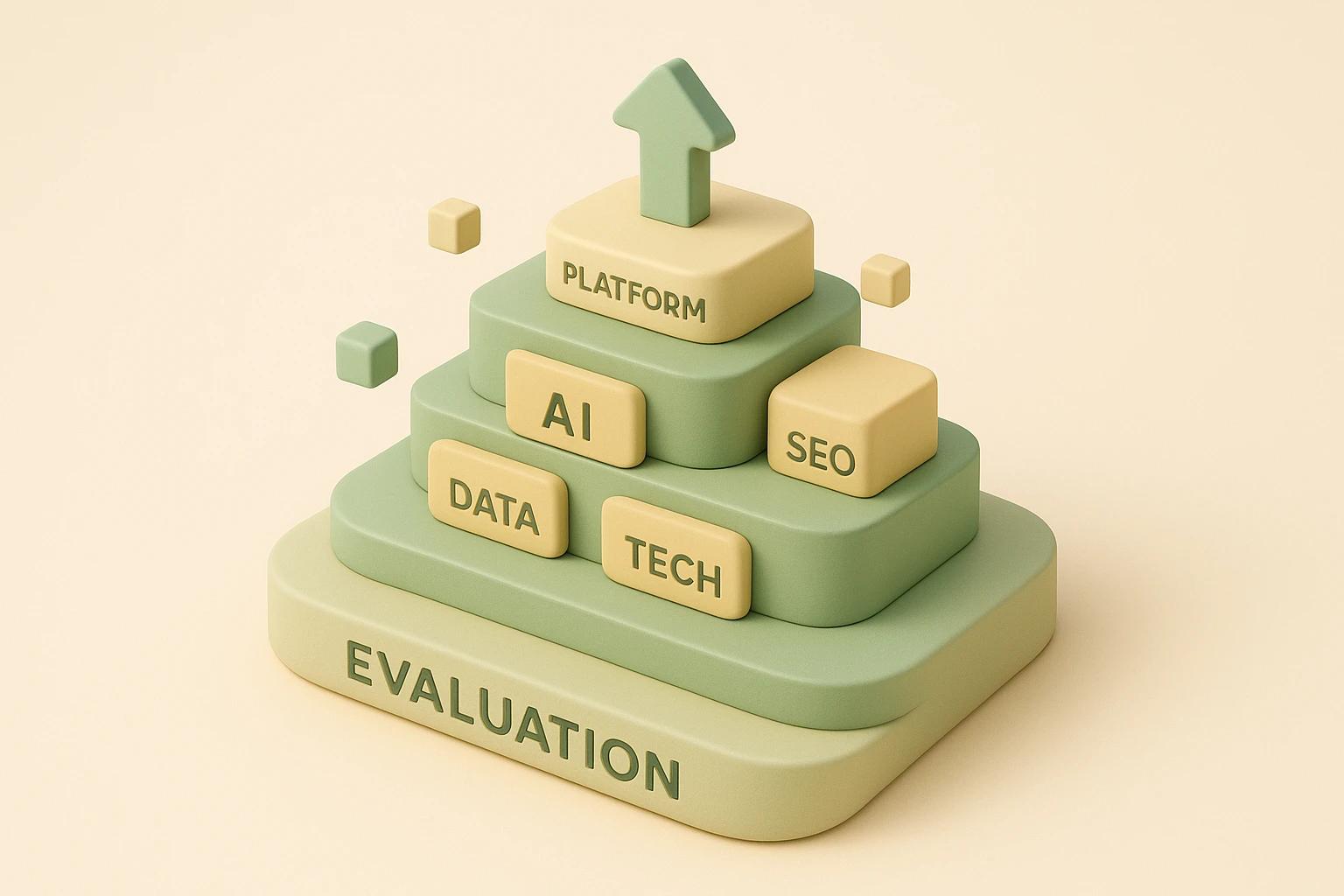
The Definitive Framework for Evaluating AI SEO Platforms
Use a proven framework to assess AI SEO platforms with six key pillars and pick the right partner to boost your organic growth confidently.