Structuring Content for AI Extraction with Headings and Evidence


Structuring Content for AI: A Beginner's Guide to Getting Extracted
Have you ever asked Google a question and seen that new AI-generated box appear at the top, giving you a direct answer? It feels a bit like magic. But behind that magic is a simple truth: some websites are doing a much better job of speaking the language of AI.
They aren't just writing for human readers anymore; they're structuring their content so that generative engines can easily find, understand, and feature their information.
This isn't about keyword stuffing or old-school SEO tricks. It's about a fundamental shift in how we build our content, moving from trying to rank on a list to aiming to become the source for an answer. Welcome to the world of Generative Engine Optimization (GEO). If you're wondering how to make your content the one that AI chooses, you've come to the right place.
Why Your Old SEO Playbook Needs an AI-Powered Update
For years, SEO was about signaling relevance to search engine crawlers. We focused on keywords, backlinks, and meta descriptions to help Google understand what a page was about. Humans, with our incredible ability to infer context, could fill in the gaps.
AI models, or Large Language Models (LLMs), read things differently. They don't just scan for keywords; they break down your content into tiny pieces of data called "tokens" and analyze the relationships between them to understand meaning. They thrive on clarity, logic, and structure.
A dense, 500-word paragraph might be readable for a person, but for an AI, it's a confusing block of information. It struggles to pinpoint the single most important fact or the core answer to a user's question.
In this new landscape, unstructured content becomes invisible. The most valuable real estate on the internet is now the AI-generated answer, and the only way to get there is by making your content perfectly "extractable."
The Core Principles of AI-Friendly Content Architecture
Think of yourself as an architect, designing a building of information. You need a clear blueprint, strong foundations, and rooms that are easy to navigate. The same goes for your content. Let's break down the essential principles.
Principle 1: Build a Clear Roadmap with Headings
Headings (H1, H2, H3, etc.) are the single most important structural element for AI. They act like a table of contents, telling the AI exactly what your page is about and how the information is organized. A logical hierarchy is non-negotiable.
- H1: The main title of your page. There should only be one.
- H2s: The main sections or key questions your article answers.
- H3s: Sub-points that support the H2 they fall under.
Avoid vague, "creative" headings. Instead of "Our Thoughts," use "Key Benefits of AI Content Structuring." This clarity helps an AI instantly grasp the purpose of each section.
[IMAGE 1: An infographic comparing a dense block of text ('AI-Unfriendly') with a well-structured version using headings, a summary, and bullet points ('AI-Friendly').]
Principle 2: Start with the Answer (The Lead Summary)
Imagine a journalist writing a news story. They use the "inverted pyramid" method—the most critical information comes first, followed by supporting details. This is exactly what AI loves.
For every major section (and especially for the article as a whole), start with a concise, "answer-first" summary. This makes your key message immediately extractable. An AI doesn't have to read an entire section to figure out your point; you hand it the answer on a silver platter.
This simple change can dramatically increase the chances of your content being used to generate a direct answer or an AI Overview.
Principle 3: Think in "Chunks," Not Pages
Generative AI doesn't think in terms of articles; it thinks in terms of concepts. Semantic chunking is the practice of breaking down your content into small, self-contained, and logically complete blocks of information.
Each chunk should focus on a single idea, definition, or answer. Think of them as Lego bricks. Your article is the final creation, but the AI can grab any individual brick it needs to build its own answer for a user. A clear heading, a short summary, and a few supporting bullet points can form a perfect, extractable chunk.
This approach is central to developing an effective AI-driven content strategy that scales.
[IMAGE 2: A diagram illustrating the concept of 'semantic chunking,' showing a main topic broken down into smaller, self-contained, and interconnected sub-topics.]
Principle 4: Prove It! Labeling Claims with Evidence
Trust is the currency of the AI era. Generative engines are becoming increasingly sophisticated at identifying and prioritizing information that is backed by credible sources. Unsubstantiated claims are a red flag and a primary cause of AI "hallucinations."
To build trust with both users and AI, make your evidence explicit. This is a critical step that many content creators miss. Don't just mention a study; label your claim with its source directly in the text.
Before: "Many experts agree that AI is transforming marketing."
After: "Over 70% of businesses are now exploring AI for marketing. (Source: Marketing AI Institute, 2024)."
This simple formatting makes your claim verifiable, trustworthy, and easily citable for the AI, positioning you as an authoritative source.
[IMAGE 3: A screenshot or mockup of a 'Before and After' example. 'Before' shows a claim made in a paragraph. 'After' shows the same claim, but rephrased as a direct statement with a clear, labeled source, e.g., "(Source: Industry Report, 2024)".]
Principle 5: Use Lists and Tables for Instant Clarity
When you need to present steps, compare features, or list benefits, avoid burying them in a paragraph. Lists and tables are forms of structured data that AIs can parse with near-perfect accuracy.
- Bulleted Lists (like this one): Perfect for features, benefits, or items that don't have a specific order.
- Numbered Lists: Ideal for step-by-step instructions or processes where the order is critical.
- Tables: The best way to compare data or features across multiple items.
Using these formats removes ambiguity and makes your data clean, clear, and ready for extraction.
Putting It All Together: Your "5-Second AI Read Test"
Feeling overwhelmed? Here’s a simple, practical test you can apply to your content.
Look at any section of your article for just five seconds. In that time, can you identify:
- The main topic of the section (from the heading)?
- The core answer or key takeaway (from the first sentence)?
- The key supporting points (from the bullet points or bolded text)?
If you can do this easily, chances are an AI can, too. This simple "read test" helps you shift your perspective from that of a writer to that of a content architect, ensuring every piece you publish is built for the new era of search. By focusing on this, you're not just writing content; you're building a library of answers that can achieve consistent organic growth.
Frequently Asked Questions About Structuring Content for AI
What is content structuring for AI extraction?
It's the practice of organizing and formatting your content—using clear headings, summaries, lists, and cited evidence—so that AI models can easily understand, extract, and use your information to answer user queries.
How is this different from traditional SEO?
Traditional SEO focuses on signaling relevance to crawlers through keywords and backlinks to earn a spot on a ranked list of links. Structuring for AI focuses on providing clear, extractable answers to become the source of the information presented directly to the user by a generative engine. While classic SEO principles are still valuable, GEO is an added layer of optimization.
What content formats are best for AI?
AI loves structured formats. FAQs, glossaries, how-to guides, and articles with clear Q&A sections perform exceptionally well. Within any format, the use of bulleted lists, numbered lists, and data tables is highly effective.
Do I have to rewrite all my old content?
Not necessarily. Start by auditing your most important pages. You can often make a huge impact by simply improving the heading structure, adding "answer-first" summaries to each section, and formatting key data into lists or tables. Prioritize pages that answer common questions in your industry.
The Future is Structured
The shift toward AI-driven search isn't a trend; it's the new reality. Businesses that adapt will become the go-to authorities in their space, their expertise amplified and shared directly with users. Those who don't risk becoming invisible.
By embracing these principles—clear hierarchy, answer-first summaries, labeled evidence, and semantic chunks—you're not just optimizing for a machine. You're creating more value for your human readers, too. You're making your knowledge more accessible, more trustworthy, and more impactful than ever before.
Ready to see how to apply these principles at scale? Discover how automated content creation can build your AI-ready foundation, automatically.
Roald
Founder Fonzy — Obsessed with scaling organic traffic. Writing about the intersection of SEO, AI, and product growth.
Stop writing content.
Start growing traffic.
You just read about the strategy. Now let Fonzy execute it for you. Get 30 SEO-optimized articles published to your site in the next 10 minutes.
No credit card required for demo. Cancel anytime.

Topical Breadth vs Depth How Coverage Influences AI Answers
Learn how balancing topical breadth and depth helps your content get cited by AI answer tools and build authority.
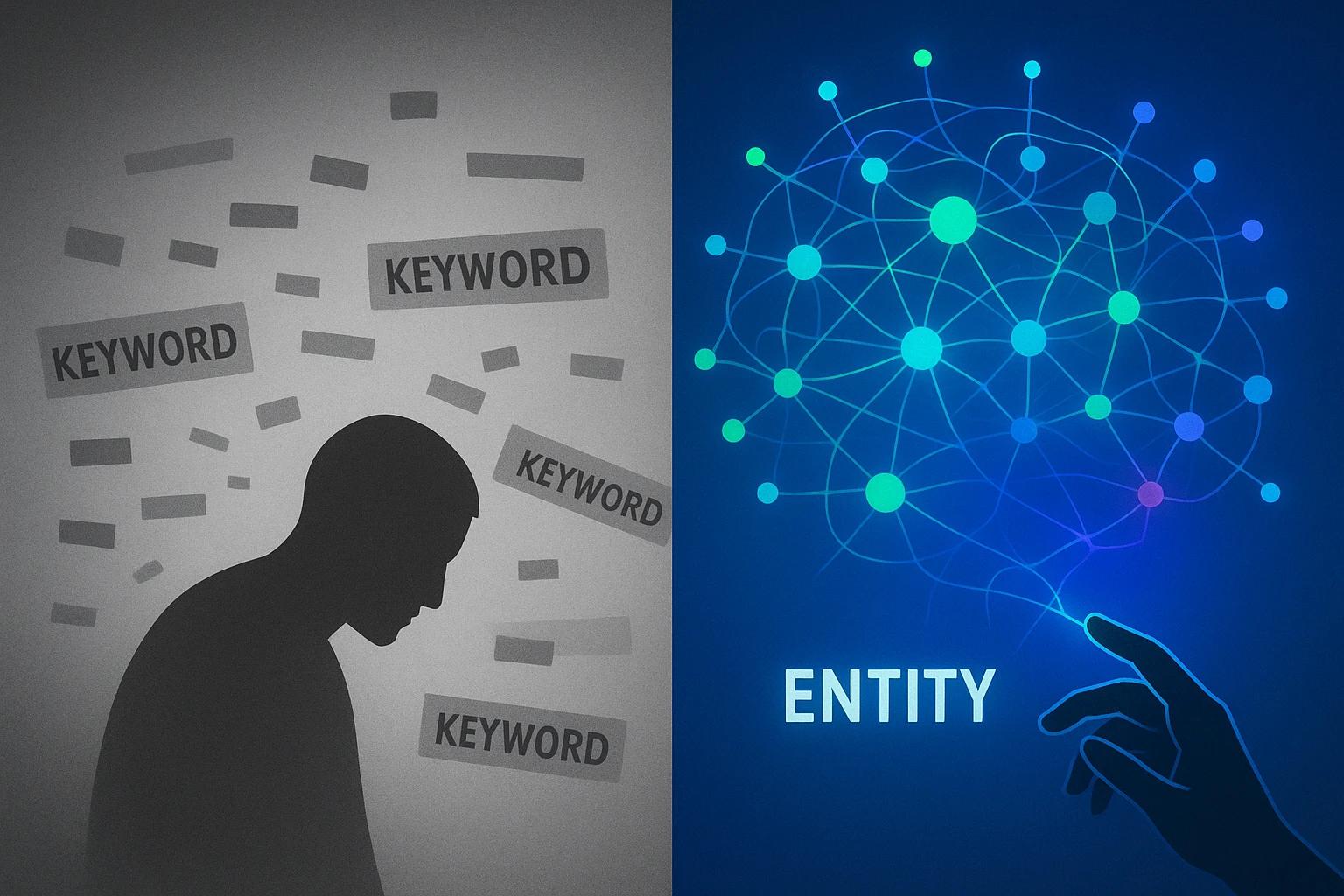
Building topical authority that AI and search engines trust
Learn how to shift from keywords to entities and build the expertise AI and search engines recognize and trust.
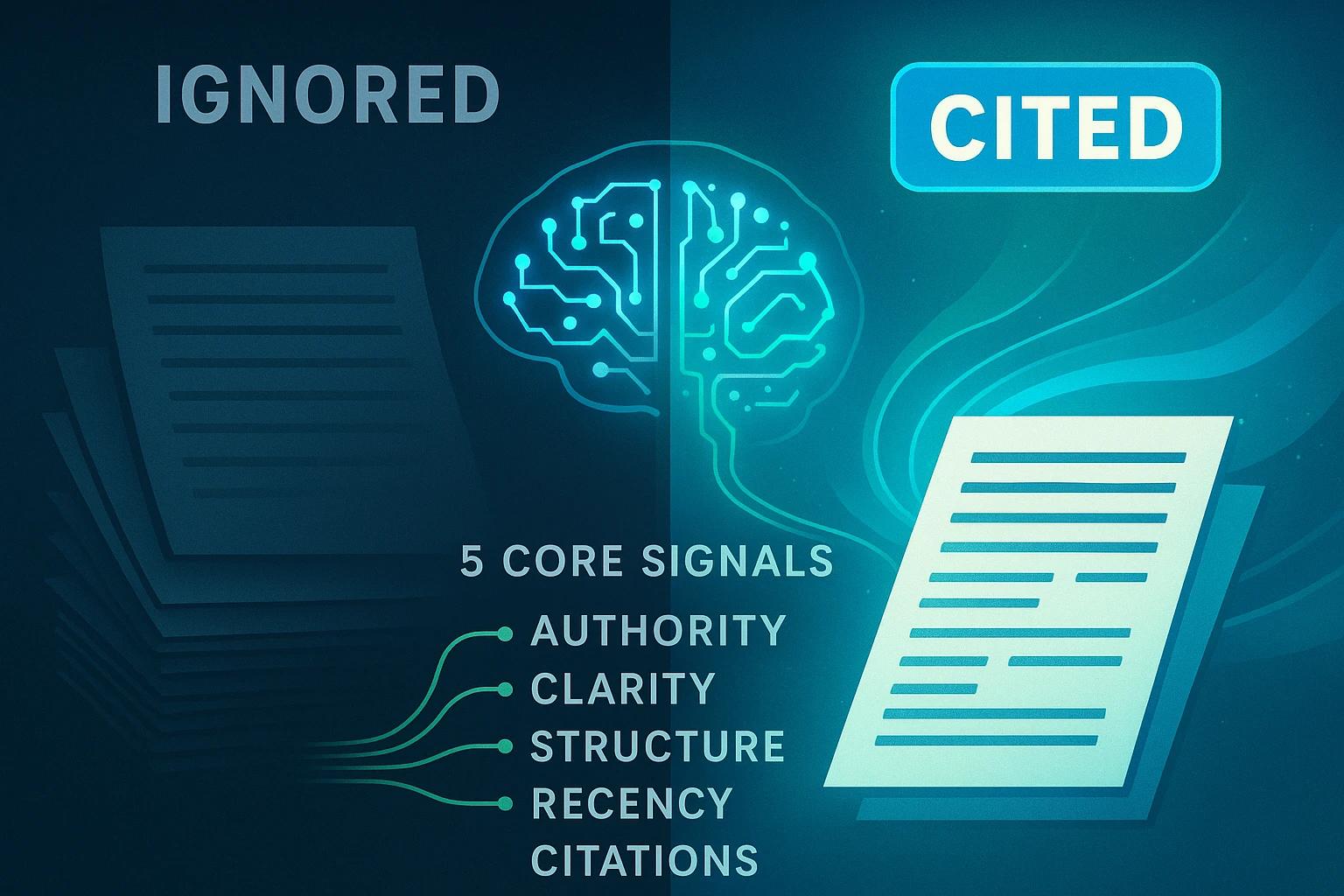
How AI Answer Engines Choose What to Cite
Discover the key signals and heuristics AI uses to decide which sources to cite in their answers.