AI SEO for Local Business: Your Guide to Getting Found Without Getting Overwhelmed
You’ve heard it all before. An agency promises to get you on the first page of Google. A sales rep insists you need to spend more on ads. Another email guarantees leads if you just sign up for their complex marketing platform.
For a local business owner—a dentist, plumber, salon owner, or consultant—it’s exhausting. You’re busy running your actual business. Marketing often feels like a necessary evil, a confusing digital world where everyone makes big promises but few deliver tangible results. Your comfort zone is referrals and your local reputation, because that’s real. That’s what keeps the lights on.
You’re not trying to become a marketing guru. You just want the phone to ring when someone nearby searches for what you do. The question is, how do you make that happen without hiring an expensive agency or losing your weekends to learning SEO?
The Real Reason Your Competitors Are Winning Online (It’s Not What You Think)
Here’s the secret most marketing agencies won’t tell you: winning in local search isn’t about having the most clever campaign or the biggest budget. It’s about consistency.
Think about your local competitors. How many are actively publishing helpful content every week? How many are consistently updating their Google Business Profile or responding to every review? The answer is, very few. Most local businesses either do nothing, tried something once and gave up, or are paying an agency for work they can't even evaluate.
This creates a huge opportunity. The bar for visibility isn't digital marketing excellence—it's just showing up when others don’t. As research from industry leaders like Search Engine Land and Thrive Agency consistently shows, search engines reward activity and relevance. By simply being a consistent, helpful voice in your local area, you can outperform the vast majority of your competition.
The problem has always been time. Who has a spare five or ten hours a week to dedicate to this? Until now, nobody.

How AI Makes Consistency Effortless, Not Another Chore
This is where artificial intelligence changes the economics of local marketing. AI isn’t here to replace your expertise or your authentic community voice. It’s here to do the heavy lifting—the time-consuming work that prevented you from being consistent in the first place.
Instead of seeing AI as another complex technology to master, think of it as your automated marketing assistant, one that runs in the background while you focus on your customers.
Here’s how it works in practical terms:
- Hyper-Local Content, Instantly: You know the questions your customers ask. AI can help you turn that knowledge into helpful blog posts optimized for your service area—like "5 Signs You Need a Plumber in West Hartford" or "Choosing the Right Dental Implants: A Guide for Springfield Residents." It handles the writing and SEO; you provide the expert validation.
- Always-On Google Business Profile: Your Google Business Profile (GBP) is your digital storefront. AI can keep it constantly updated with new photos, responses to questions, and fresh posts about your services, signaling to Google that you are active and open for business.
- Amplify Your Reputation: Positive reviews are gold for local businesses. AI can help you streamline the process of encouraging reviews and even suggest thoughtful, personalized responses, boosting the trust signals that Google and new customers look for.
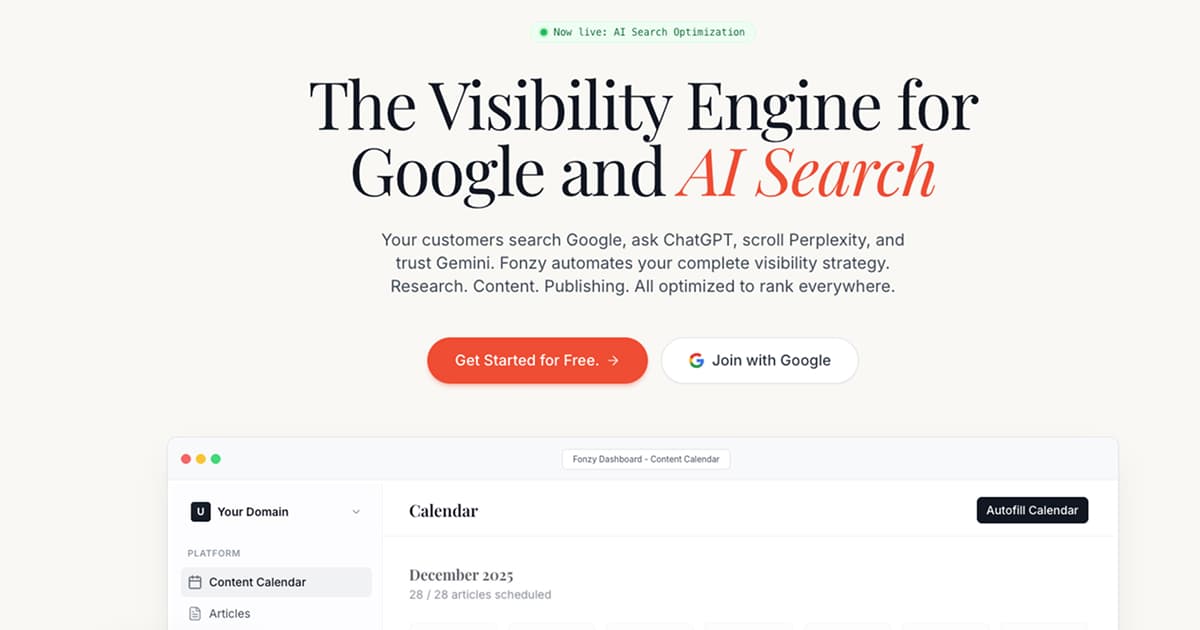
The goal isn't to "do marketing." The goal is to build a system that automatically demonstrates your relevance and authority to search engines. This is the principle behind platforms like Fonzy AI, which are designed to automate this entire process, turning a major time-sink into a background task.
From Vague Metrics to Real-World Results
Let’s be honest: you don’t care about "impressions" or "click-through rates." You care about appointments, phone calls, and new customers walking through your door. This is the most important shift AI brings to local SEO. It connects the dots between consistent online activity and tangible business growth.
When your website is regularly updated with helpful local content and your Google profile is active, you’re not just chasing rankings. You are creating a web of relevance that makes you the obvious answer when someone in your area has a problem you can solve.
The outcome isn’t a better report; it’s a busier schedule.

Your New 15-Minute Marketing Week
What does this consistency look like in practice? It’s not hours spent in front of a computer. It’s a simple, manageable routine where AI does 90% of the work.
Imagine this: every Monday, you get a notification. Fonzy has prepared a week's worth of locally-focused content—a blog post about a common customer problem, a few Google Business Profile updates, and suggested replies to your latest reviews. You spend 15 minutes reviewing and approving everything, adding a personal touch where you see fit. Then you’re done.
Your marketing engine is running for the entire week, signaling your relevance to Google, while you get back to serving your customers.

Answering Your Questions: An Honest FAQ on AI for Local SEO
Skepticism is healthy, especially when you’ve been burned by marketing promises before. Let’s address the most common concerns directly.
"Will AI make my business sound generic and robotic?"
This is the most critical question, and the answer is no—if you use it correctly. The best AI tools, as noted by marketing experts at Thrive Agency, are designed to work with you. Think of AI as a talented writer that needs your expert direction. It creates a strong first draft that is locally optimized, and you provide the final layer of authenticity and human insight. This combination is powerful because it pairs efficiency with your genuine voice, a key factor competitors miss.
"How is this different from just using ChatGPT?"
ChatGPT is a general-purpose tool; it's like a raw block of wood. You can build something with it, but you need to be a skilled carpenter. An AI SEO platform like Fonzy is a purpose-built machine. It already understands local SEO, content strategy, and Google's ranking factors. It analyzes your website and market to create a plan for you, then executes it. It saves you the guesswork and the hundreds of hours it would take to learn and implement a strategy from scratch.
"What about Google's new AI Answers? Will people even click on my website?"
This is a valid concern, and it’s where consistency becomes your best defense. As M&R Marketing points out, Google's AI Overviews get their information from trusted, authoritative sources. By consistently publishing helpful local content and maintaining a pristine Google Business Profile with great reviews, you are effectively "teaching" the AI that you are the go-to expert in your area. Your goal is to be the business Google's AI quotes and recommends, driving visibility even before a click happens.
"Is this just another expensive tool I'll never have time to use?"
The entire model is built for the time-strapped owner-operator. Unlike complex marketing suites that require extensive training, the workflow is designed to be a 15-minute weekly check-in. The cost is a fraction of hiring a marketing employee or an agency, but the outcome—a consistent, professional online presence—is the same, if not better. It’s the marketing capability you’ve always needed but could never justify, made accessible by AI.

Your Local Advantage Starts Now
For years, being visible online felt like a choice between spending too much money or spending too much time. AI has created a third option: intelligent automation that delivers the consistency you need to win locally.
It’s not about becoming a marketer. It’s about making your business unmissable to the people in your community who are actively searching for your help. It’s about letting technology handle the background noise so you can focus on what you do best.
If you’re ready to stop being invisible and start winning new customers effortlessly, it’s time to see how an AI-powered content engine can work for your business.
Continue Reading
→ AI SEO Strategies for E-commerce Growth Compared
→ AI SEO That Runs Itself A Business Owner's Guide
→ AI SEO for Agencies The Strategic Briefing for Protecting Margins and Winning New Business

Roald
Founder Fonzy. Obsessed with scaling organic traffic. Writing about the intersection of SEO, AI, and product growth.