The New Town Square: Why Conversational Search Is Rewriting SERP Real Estate
Remember the old Google search? You’d type in a few keywords, hit ‘Enter’, and get a neat list of ten blue links. Your job was to click through them, piece together information, and find your own answer. That version of Google is quickly becoming a relic.
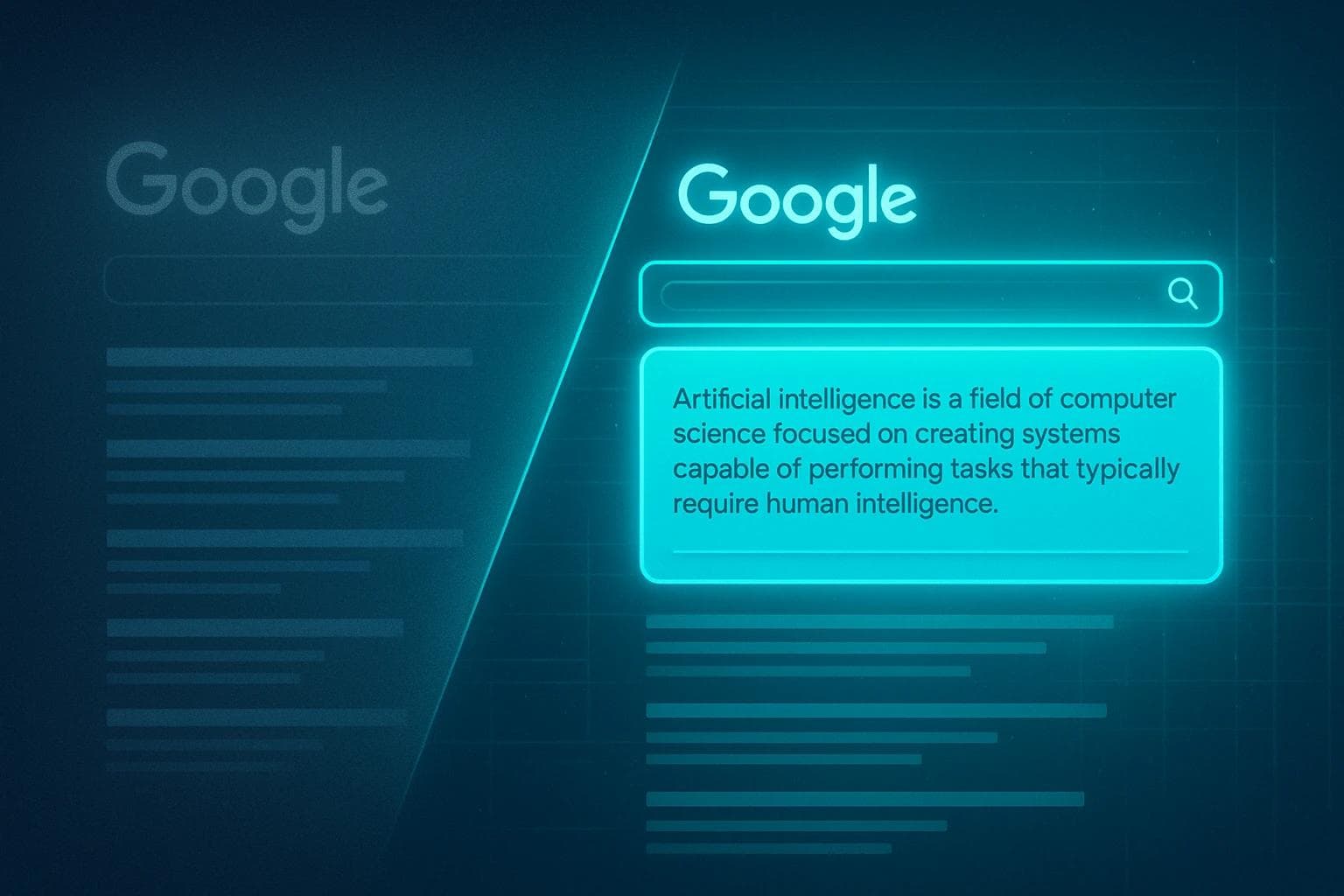
Today, when you ask a question, Google doesn't just give you a list of links; it often gives you the answer directly in a detailed summary at the very top of the page. This is an AI Overview, and it’s the most visible sign of a massive shift in how we find information online. The search engine results page (SERP) is no longer a simple gateway to other websites. It’s becoming the destination itself.
For businesses, creators, and marketers, this isn't just a minor update—it's a fundamental rewriting of the rules of online visibility.

Understanding the New Search Paradigm: From Keywords to Conversations
This change is driven by the rise of conversational search. Instead of typing fragmented keywords like "best coffee maker," we now ask full questions just like we would with a person: "What's the best drip coffee maker for a small apartment under $100?"
AI models like Google's Gemini are now powerful enough to understand the intent and context behind these questions. They then scan the web, synthesize information from multiple trusted sources, and present a single, comprehensive answer directly on the results page. This is what's known as an AI Overview (formerly called Search Generative Experience, or SGE).
This has two immediate and profound impacts:
- The SERP Becomes a Destination: Users get their answers without ever needing to click on a website. Research has shown that these "zero-click searches" were already on the rise, and AI Overviews are accelerating the trend.
- The Battle for Position #0: The most valuable real estate on the page is no longer the #1 organic result; it's being featured inside the AI-generated answer. Your website link appears as a citation, a direct endorsement from the search engine itself.
Think of it this way: traditional SEO was about getting someone to visit your website. The new SEO—let's call it Answer Engine Optimization (AEO)—is about becoming a trusted source that the AI quotes. As one analysis puts it, we're facing an "authority imperative." Clicks are still important, but citations are the new currency of credibility.

How to Win in the Age of AI Answers
The thought of losing clicks can be scary, but this shift also presents a huge opportunity for those willing to adapt. AI doesn't create information out of thin air; it relies on high-quality, authoritative content from the web. Your goal is to make your content the most logical, trustworthy, and easiest choice for the AI to use.
This requires a dual approach: writing for humans, but structuring for machines. Here’s a high-level look at what that means.
Phase 1: Master the Art of Answering Questions
In the conversational era, content must be laser-focused on user intent. Surface-level articles that rehash common knowledge won't cut it anymore. AI is looking for depth, expertise, and clarity.
- Embrace E-E-A-T: This stands for Experience, Expertise, Authoritativeness, and Trustworthiness. It’s Google’s framework for quality content. Now, more than ever, you must prove you’re an expert. Back up claims with data, cite sources, showcase author credentials, and provide unique insights from real-world experience.
- Think in Questions and Answers: Structure your content to directly answer the questions your audience is asking. Use clear headings formatted as questions (like the ones in this article!). This makes it incredibly easy for AI to extract the exact information it needs.
- Go Beyond Your Blog: AI considers information from all over the web, including forums like Reddit and Quora. Engaging in relevant communities and establishing your expertise there can build "conversational authority" that AI models pick up on.
Phase 2: Speak AI's Language with Technical SEO
While great content is the foundation, technical optimization helps the AI understand it correctly and efficiently. You need to "whisper" the answers directly to the machines.
- Use Structured Data (Schema): Schema markup is code you add to your website to explicitly label your content for search engines. Using things like FAQ Schema or How-To Schema is like handing the AI a perfectly organized cheat sheet of your information, making it a prime candidate for inclusion in an answer.
- Focus on Entity Optimization: An entity is any well-defined thing or concept—a person, place, product, or idea. By clearly defining these entities in your content and connecting them to what Google’s Knowledge Graph already knows, you help the AI understand your content’s context and relevance. A clear and consistent automated SEO and content plan is crucial for building this topical authority over time.

Your Playbook for the Next Decade of Search
Adapting to conversational search isn't about chasing algorithms; it's about committing to creating the absolute best, most helpful, and most authoritative content in your niche. The businesses that thrive will be those that become indispensable resources, not just for people, but for the AI that serves them.
This means shifting your mindset from "How do I rank #1?" to "How do I become the definitive answer?"
The urgency is real. As one marketing firm bluntly stated, the new SERP reality is to "Adapt or Die." While that may sound dramatic, the underlying message is true: ignoring this change means becoming invisible. But by embracing it, you can position your brand as a trusted authority, earning visibility and credibility in the most valuable digital real estate that exists today. The challenge is that creating this volume of high-quality, technically-optimized content consistently is a massive undertaking. This is where leveraging automated content creation can provide a critical advantage, ensuring you can scale your authority without burning out your team.
Frequently Asked Questions (FAQ)
What is conversational search?
Conversational search refers to using natural, full-sentence questions to find information, much like you'd talk to another person. Instead of typing "weather New York," you might ask, "What's the weather going to be like in New York this weekend?" This shift is driven by voice assistants and more advanced AI in search engines.
How is Google search changing with AI?
Google is integrating its generative AI models (like Gemini) directly into the search results page. This creates "AI Overviews," which are detailed summaries that directly answer a user's query at the very top of the page. This pushes traditional blue links further down, fundamentally changing what users see and interact with first.
What are Google AI Overviews (SGE)?
Google AI Overviews (previously known as the Search Generative Experience or SGE) are AI-generated answers that appear at the top of the search results for many queries. They synthesize information from multiple web pages to provide a single, comprehensive response, complete with links (citations) to the source websites.
Why is SERP real estate being rewritten?
Search engines are evolving from being directories of links to becoming answer engines. Their goal is to satisfy the user's query as quickly and efficiently as possible. By providing an AI-generated answer directly on the SERP, they can often fulfill a user's need without requiring them to click away to another site. This prioritizes the AI answer box as the most valuable "real estate" on the page.
Your Next Step: From Awareness to Action
Understanding that the landscape has changed is the first critical step. You now see the field and know the new rules of the game. The question is no longer if you need to adapt, but how.
The next step is to move from strategy to tactics. It’s time to learn how to audit your existing content, structure new articles for AI, and implement the technical signals that get you noticed. The future of search belongs to those who become the best answer, and your journey to becoming that answer starts now. To see how this can be put into practice, explore our deep dive on how to optimize your content for AI Overviews and conversational search.

Roald
Founder Fonzy — Obsessed with scaling organic traffic. Writing about the intersection of SEO, AI, and product growth.
Stop writing content.
Start growing traffic.
You just read about the strategy. Now let Fonzy execute it for you. Get 30 SEO-optimized articles published to your site in the next 10 minutes.
No credit card required for demo. Cancel anytime.
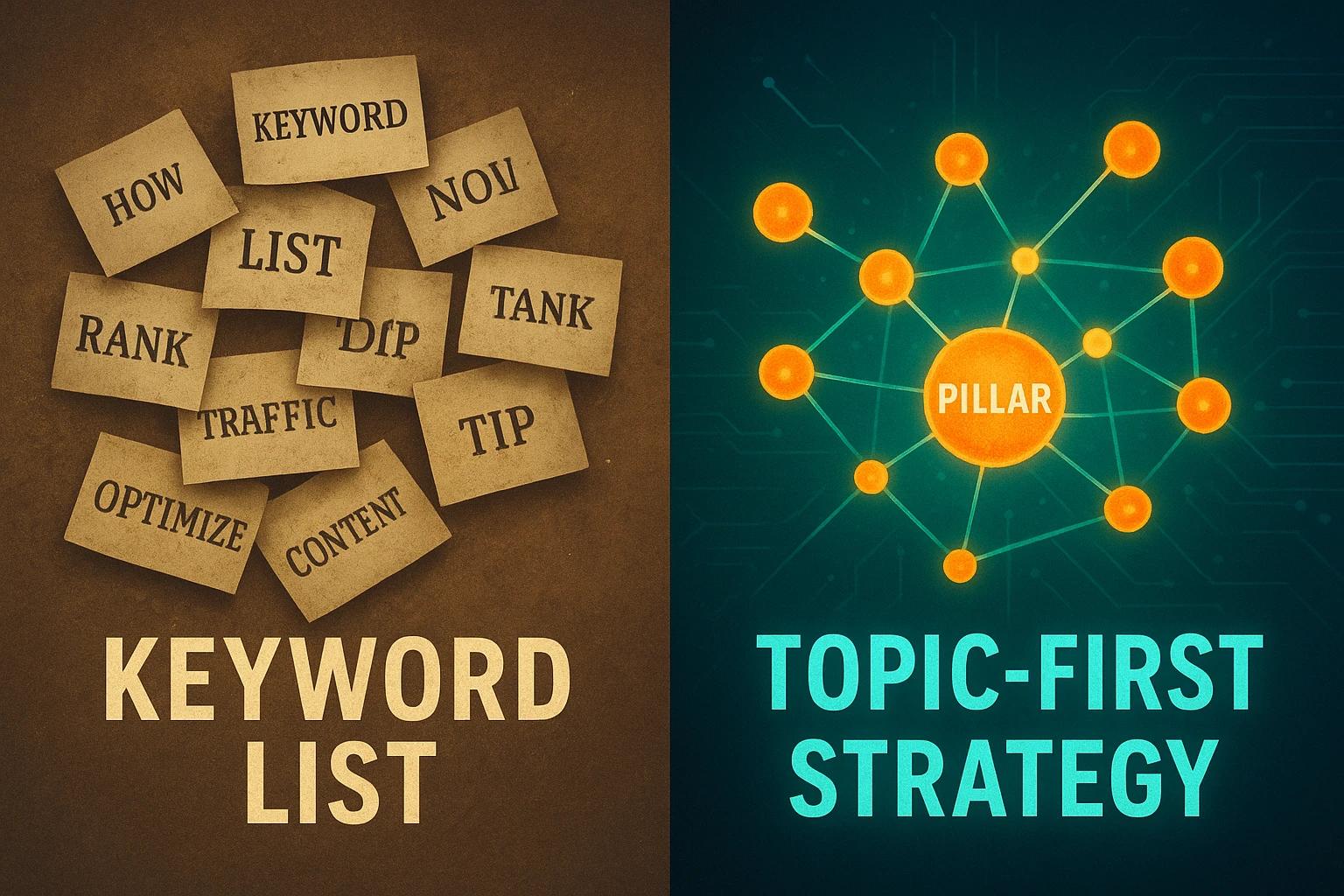
Topic-First Content Strategy for AI-Driven Search
Discover why focusing on topics over keywords drives SEO success in AI-powered search environments.
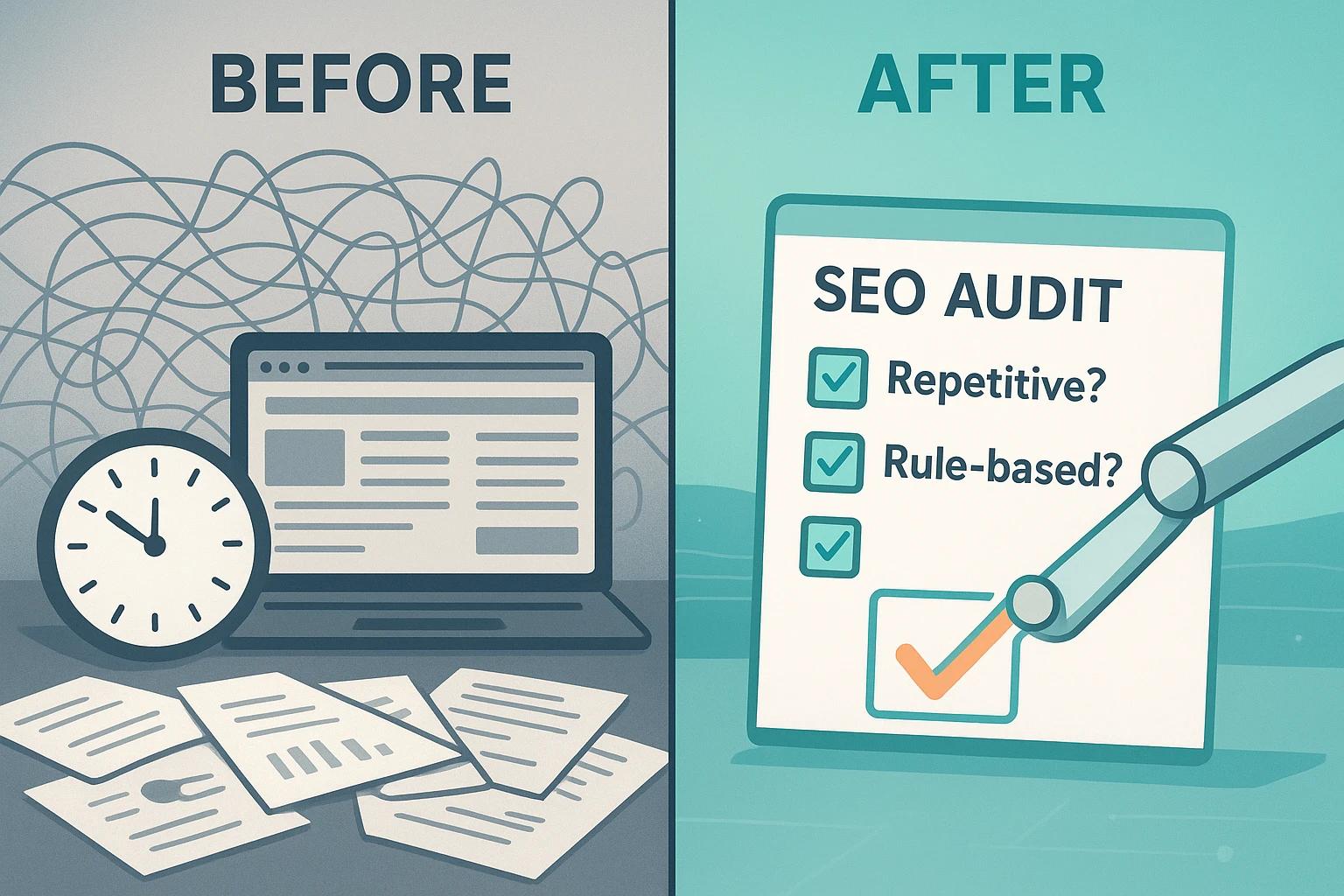
How to Audit SEO for Automation Opportunities
Discover a simple non-technical checklist to identify SEO tasks you can automate and save time for strategic work.

5 Signs Your Content Workflow Is Blocking Growth
Discover common content workflow problems slowing your growth and how automation can help improve efficiency and results.