What Are Google AI Overviews and Their Impact on Visibility

Google AI Overviews Are Here: Your Guide to the New Search Landscape
Imagine you’re planning a weekend getaway. Instead of clicking through a dozen blue links to find the best dog-friendly hikes, compare local coffee shops, and check the weather, you type one complex question into Google: "What are some good dog-friendly hikes near Asheville for a weekend in October, and where can I get coffee nearby?"
In the past, this would have required some serious digital legwork. Today, Google might give you a single, comprehensive answer right at the top of the page—a neat summary with links, maps, and even a suggested itinerary.
Welcome to the new reality of search. This is an AI Overview, and it’s changing the way we find information online. For businesses, marketers, and creators, this isn't just a minor update; it's a fundamental shift in how you get seen. Let's break down what's happening, why it matters, and how you can start thinking about this new digital landscape.
First Things First: What Exactly Is a Google AI Overview?
You might have heard the term "SGE" (Search Generative Experience) floating around. Think of SGE as the code name for Google's public experiment. Now, that experiment has graduated and rolled out to users as AI Overviews.
At its core, an AI Overview is a summary generated by Google's AI (powered by its Gemini model) that appears at the very top of the search results page. Instead of just giving you a list of websites, Google now tries to directly answer your question by pulling information from multiple high-quality sources across the web and synthesizing it into a single, easy-to-read block of text.
Google’s goal is simple: to do the "searching for you" and reduce the legwork required to answer complex questions. They want to provide faster, more satisfying answers, transforming Google from a search engine into an answer engine.

The Big Shift: How AI Overviews Impact Your Website's Visibility
If Google is answering questions directly, what does that mean for the websites it gets the answers from? This is the million-dollar question for anyone who relies on organic traffic. The impact is twofold: it changes the layout of the search results page and alters user click behavior.
A New Fight for Real Estate
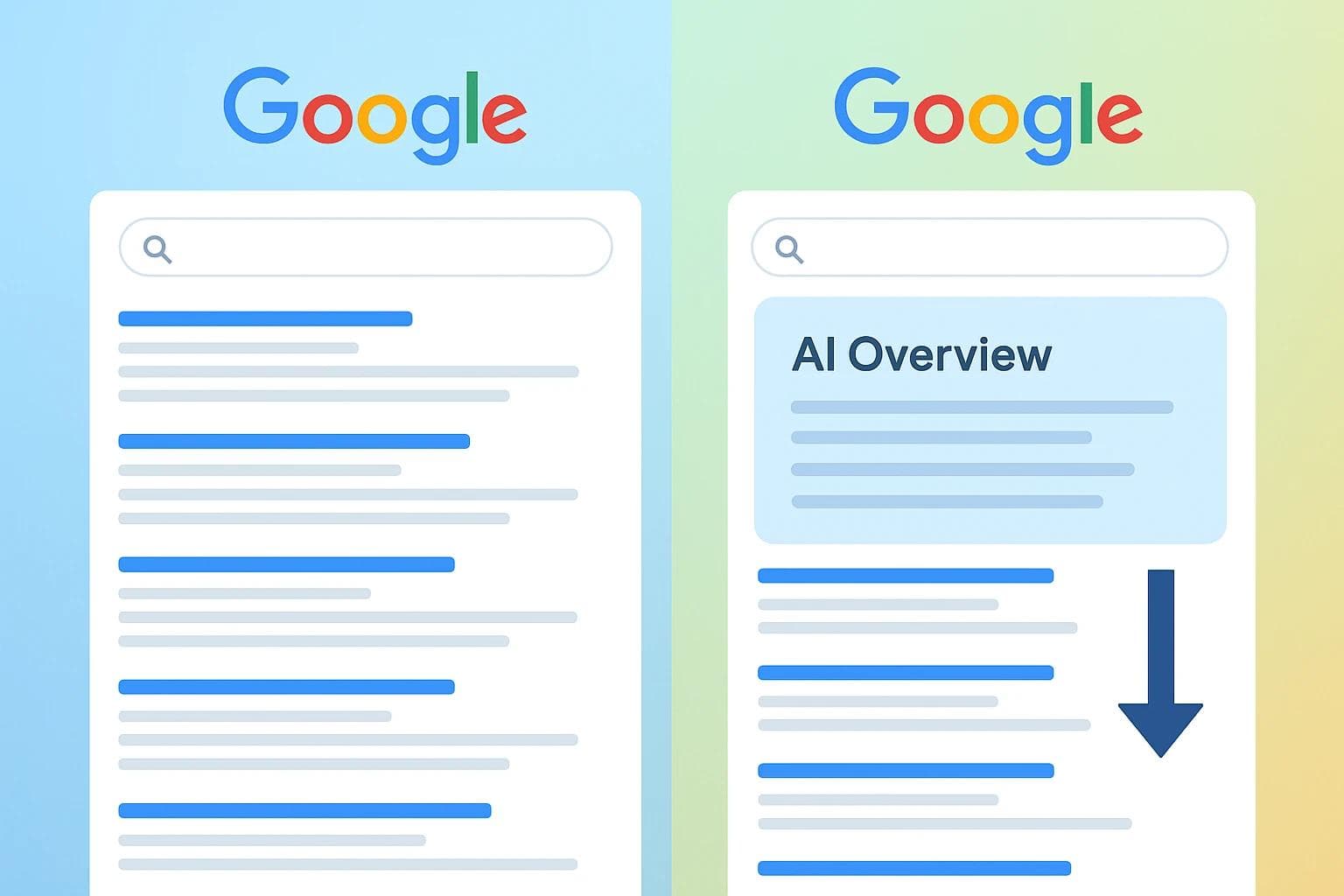
The most immediate change is visual. AI Overviews occupy the most valuable digital real estate on the planet: the top of the Google search results page. This coveted "position zero" pushes the traditional list of ten blue links further down the page.
For years, the goal of SEO has been to rank in the top few organic spots. Now, even if you’re ranked #1, you could appear below a large AI-generated answer. This means users might get the information they need from the overview without ever needing to scroll down to your link, which brings us to the next point.

The "Zero-Click" Search vs. The "Quality Click"
The rise of AI Overviews has fueled fears of "zero-click searches"—scenarios where a user gets their answer directly from the SERP and never clicks through to a website. This is a valid concern, especially for informational queries where a quick summary might suffice.
However, Google argues that the clicks that do come from AI Overviews will be more valuable. Their reasoning is that if a user reads an AI summary and still decides to click on a cited source, they are likely more engaged, more qualified, and further along in their journey. They aren't just looking for a quick fact; they're looking for depth, authority, and detail that only your site can provide.
The challenge for businesses is shifting from a mindset of chasing traffic volume to attracting high-intent, high-quality visitors. It’s no longer just about getting the click; it’s about being the definitive source that earns the click after the summary.
Adapting to the Answer Engine: A New Mindset for Visibility
So, how do you ensure your content is what Google’s AI chooses to feature? While the algorithms are complex, the guiding principle is refreshingly simple: be the best, most helpful, and most trustworthy source of information.
This is where a strategic framework comes in. Google has long talked about E-A-T (Expertise, Authoritativeness, Trustworthiness). The community has since expanded this to H.E.E.A.T., adding two crucial elements: Helpfulness and Experience. This framework is your new north star.
H.E.E.A.T: Your North Star for AI-Driven Search
- Helpfulness: Does your content directly and completely answer the user's question? Is it easy to understand and satisfying? AI models are designed to find and summarize genuinely helpful content.
- Experience: Do you demonstrate real, first-hand experience with the topic? Write about what you’ve actually done, seen, or tested. This provides unique insights that AI can't fabricate.
- Expertise: Do you have deep knowledge of your subject? Showcase your credentials, cite your sources, and write with authority.
- Authoritativeness: Is your website or brand recognized as a go-to resource in your industry? This is built over time through quality content and mentions from other reputable sites.
- Trustworthiness: Is your site secure? Is your content accurate and unbiased? Do you have clear author bios and contact information? Trust is non-negotiable.
Focusing on H.E.E.A.T. isn't just an SEO tactic; it's a commitment to creating genuinely valuable content. This is the foundation of any SEO and content plan in the age of AI.
Content That Feeds the AI
Beyond quality, the structure of your content matters. To be easily understood and summarized by AI, your content should be:
- Logically organized: Use clear headings (H2s, H3s) to break down topics into digestible sections.
- Direct and concise: Start with a clear, summary-style introduction that directly answers the main question.
- Rich with data and specifics: Use structured data (like schema markup for products, FAQs, or recipes) to give Google explicit clues about what your content is about.
- Multimodal: Don't just rely on text. High-quality images with descriptive alt text and videos with captions provide additional context that AI models use to understand a topic more deeply.

Frequently Asked Questions About AI Overviews
It's natural to have a lot of questions about such a big change. Here are answers to some of the most common ones.
### What's the difference between SGE and AI Overviews?
SGE (Search Generative Experience) was the name of the project while it was in Google's experimental "Labs" phase. AI Overviews is the official name for the feature now that it has been released to the public. They are essentially the same concept.
### How does Google create these AI answers?
Google uses its advanced AI, the Gemini model, to analyze and understand information from a wide range of web pages. It then synthesizes the key points from the most reliable sources into a coherent summary that directly addresses the user's query. The overview often includes links to the sources it used, which is where your opportunity lies.
### Are Google AI Overviews always accurate?
No, not always. The technology is still new, and there have been instances of "AI hallucinations" where the model generates incorrect or nonsensical information. Google is actively working to improve accuracy and has put systems in place to prevent overviews for sensitive topics. This is why creating trustworthy, factual content is so important—it helps the AI learn and positions you as a reliable source.
### Will AI Overviews completely replace the traditional 10 blue links?
It's unlikely in the short term. Google has stated that they still see value in providing links to publishers and that traditional search results will continue to appear alongside AI Overviews. However, for many informational queries, the overview will become the primary way users get answers, reinforcing the need for consistent organic growth strategies that account for this new format.
What's Next? From Understanding to Action
The arrival of Google AI Overviews marks a true turning point for search. The game is no longer just about ranking—it's about becoming a cited, authoritative source within Google's new answer engine. While this shift can feel daunting, it’s also an opportunity to double down on what truly matters: creating high-quality, genuinely helpful content that serves your audience.
Now that you understand the "what" and "why" behind AI Overviews, the next step is to master the "how." Building a strategy that embraces H.E.E.A.T., optimizes content structure, and leverages every tool at your disposal is key to not just surviving, but thriving in this new era.
Roald
Founder Fonzy — Obsessed with scaling organic traffic. Writing about the intersection of SEO, AI, and product growth.
Stop writing content.
Start growing traffic.
You just read about the strategy. Now let Fonzy execute it for you. Get 30 SEO-optimized articles published to your site in the next 10 minutes.
No credit card required for demo. Cancel anytime.
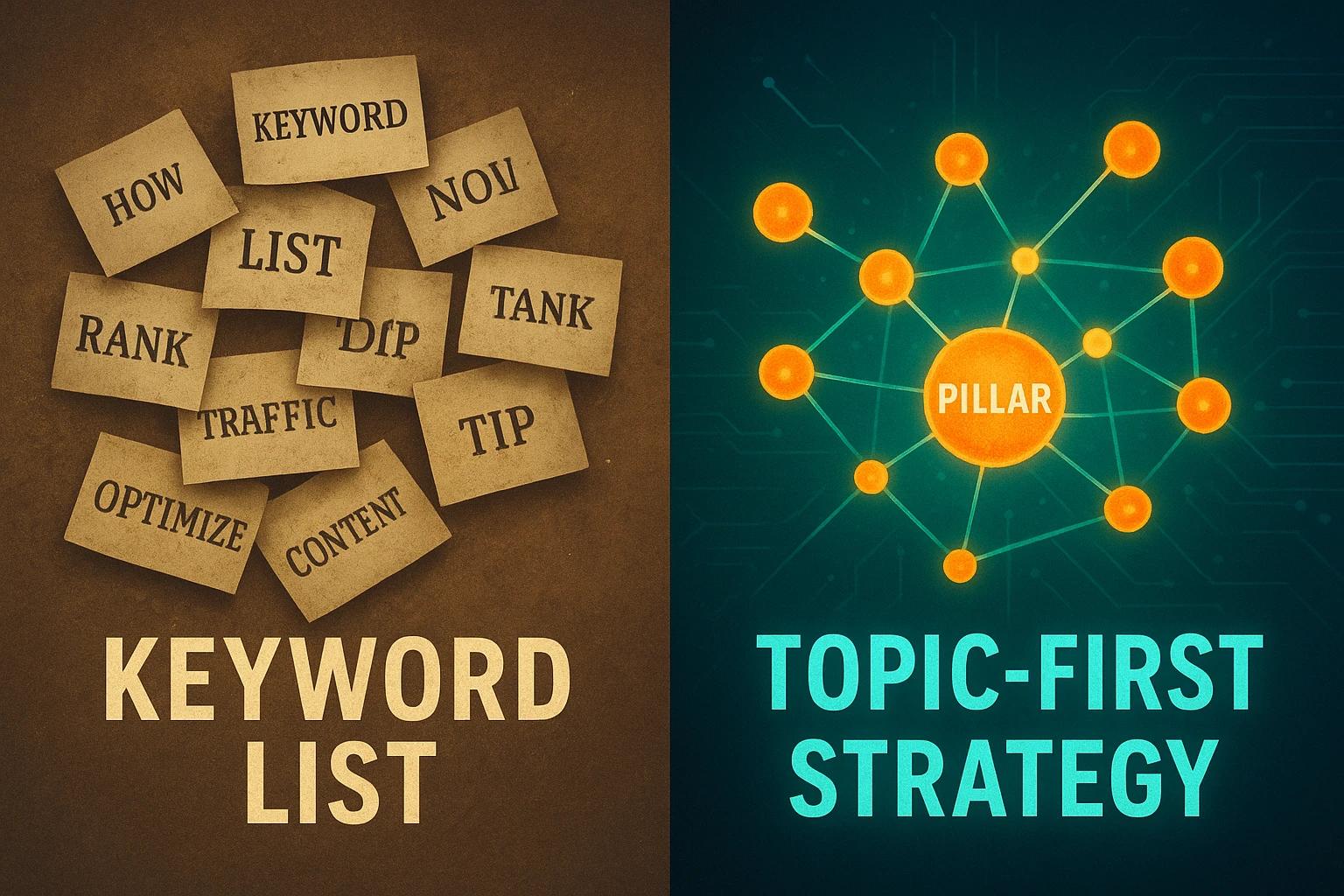
Topic-First Content Strategy for AI-Driven Search
Discover why focusing on topics over keywords drives SEO success in AI-powered search environments.
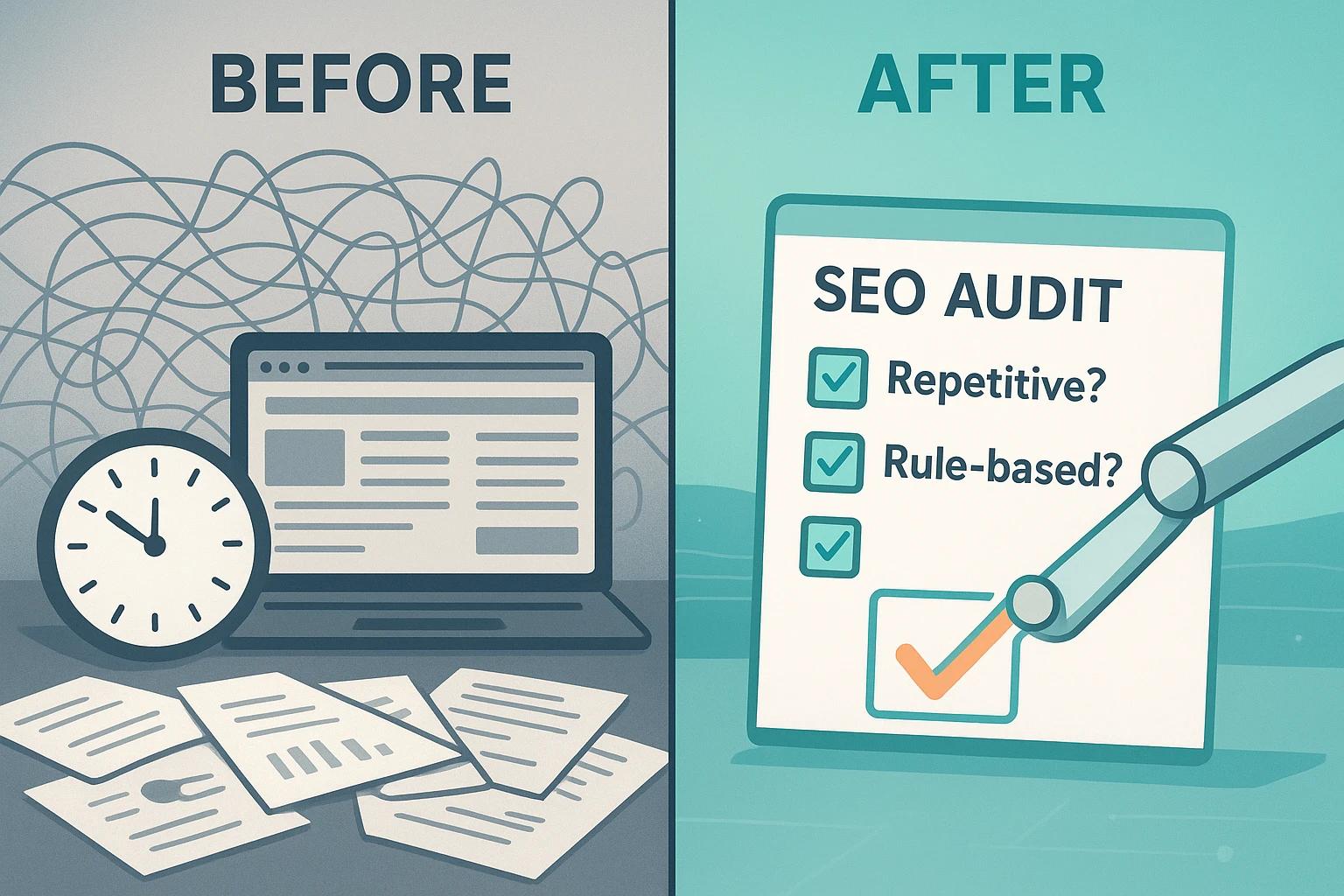
How to Audit SEO for Automation Opportunities
Discover a simple non-technical checklist to identify SEO tasks you can automate and save time for strategic work.

5 Signs Your Content Workflow Is Blocking Growth
Discover common content workflow problems slowing your growth and how automation can help improve efficiency and results.