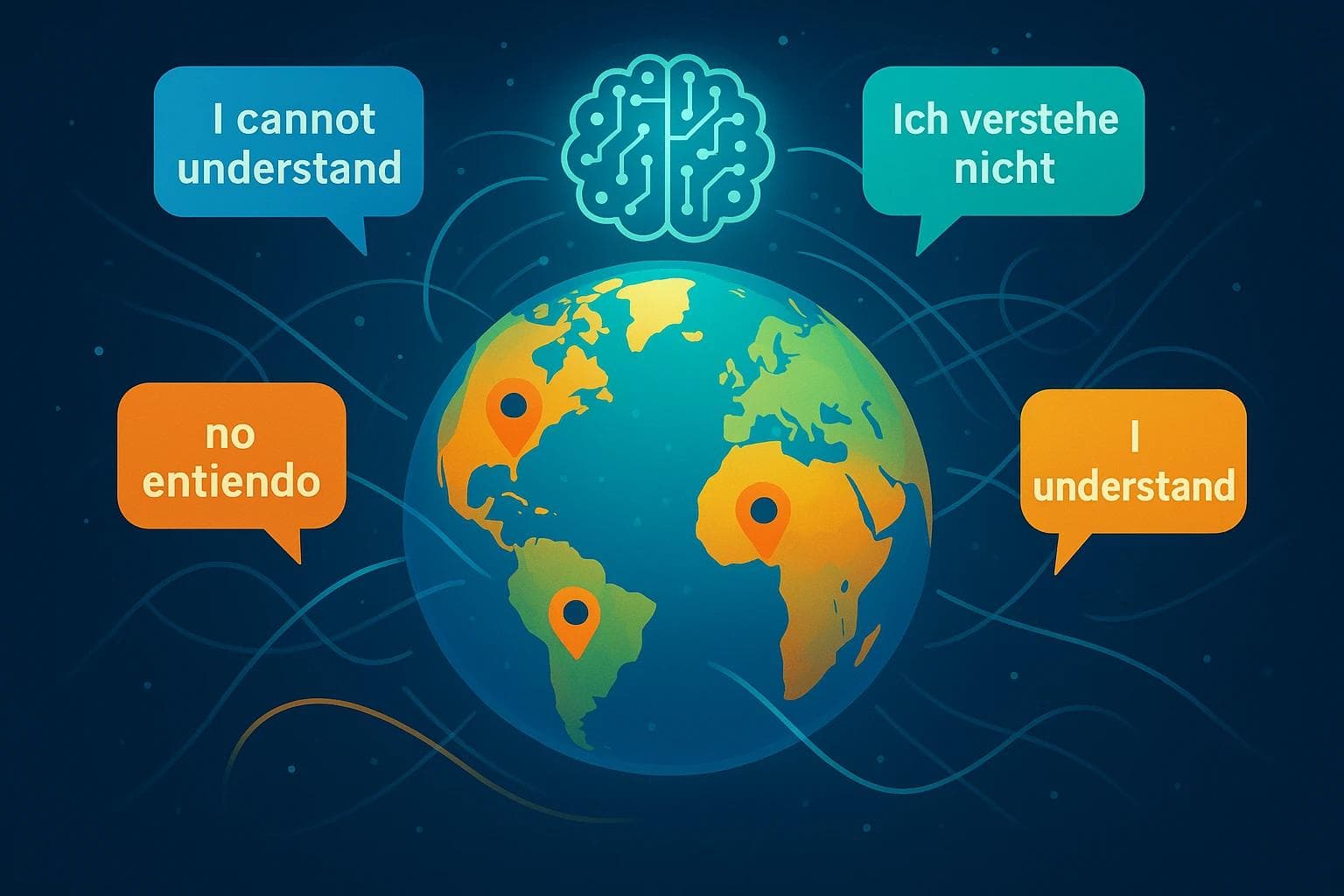
Lost in Translation? How Language & Location Dictate Your AI Overview Success
Imagine you’re a coffee shop owner in Austin, Texas. Someone nearby searches for “best cold brew,” and Google’s new AI Overview triumphantly features your shop, complete with a glowing summary from your blog. Fantastic.
Now, imagine a tourist from Germany, with their phone set to German, performs the same search. What do they see? Do they get an awkward, machine-translated version of your feature? Or does the AI Overview instead pull from a local German-language travel blog, pushing you out of the picture entirely?
Welcome to the new frontier of global search. AI Overviews aren't just changing the look of search results; they're fundamentally altering the rules of visibility for businesses with an international or multilingual audience. It’s no longer enough to just be the best answer. You have to be the best answer in the right language, for the right location.
This guide will demystify how language and location impact your chances of being featured in AI Overviews. We'll move from foundational concepts to actionable strategies, helping you understand where to focus your efforts to get found, no matter where your customers are searching from.
The Ground Rules: How AI Overviews See the World
Before we dive into strategy, let's get on the same page. Think of AI Overviews as a super-smart research assistant. It doesn't just find links; it reads them, understands the context, and synthesizes a direct answer.
To do this, it relies heavily on a technology called Retrieval-Augmented Generation (RAG). In simple terms, this means the AI first retrieves information from credible sources (like your website and other trusted sites) and then generates a summary based on that data.
This process is heavily influenced by two powerful signals:
- Language: The language of the user's query and their browser/OS settings.
- Location: The user's physical location, inferred from GPS, IP address, and past search behavior.
These signals are the lens through which the AI views the web. If your content isn't optimized for the right lens, you might as well be invisible.
Your Quick Glossary for Global SEO
- Localization: More than just translation. This is the art of adapting your content to a specific region's culture, slang, and search habits. It's the difference between "pants" (UK) and "pants" (US).
- Geotargeting: The practice of delivering content to a user based on their geographic location. This can be done through your website structure (e.g.,
yoursite.defor Germany) or specific tags. - E-E-A-T (Experience, Expertise, Authoritativeness, Trustworthiness): Google's quality framework. Crucially, you must build E-E-A-T independently in each language and market you target. Authority in English doesn't automatically transfer to your Spanish content.
The Language Layer: Are You Speaking AI's Language?
It’s tempting to think that a simple translation of your content is enough. But Google's AI is looking for something much deeper: linguistic and cultural relevance.
An AI model processing a query in Spanish isn't just "thinking" in English and translating. It's accessing its understanding of the Spanish language, including idioms, cultural nuances, and common search intent for Spanish speakers.
According to Google's own support documents, AI Overviews are available in numerous languages and countries, and this list is constantly expanding. This means the AI is actively looking for high-quality, native content to source its answers from. Relying on clunky, word-for-word translations is a surefire way to get overlooked in favor of a competitor who has invested in true localization.
How to Signal Your Language Prowess
- Go Beyond Basic Translation: Invest in localization that captures regional dialects and cultural context. For example, a guide to "car financing" in the U.S. will use different terminology and reference different regulations than one for the UK.
- Master hreflang Tags: These little snippets of code are like signposts for Google. They tell the search engine, "Hey, this is the English version of the page, and here's the link to the German version." Proper implementation prevents Google from seeing your different language pages as duplicate content and ensures the right version is shown to the right user.
- Build E-E-A-T in Every Language: You need to prove your expertise in each market. This means creating original, valuable content tailored to that audience, earning local backlinks, and establishing your brand as a trusted resource within that specific linguistic community.
The Location Layer: Putting Your Content on the Map
If language tells the AI what the user is asking, location tells it where they're asking from—and this context is everything.
A study by SERP WIZARD highlights how drastically location can change an AI Overview. A search for “best pizza” in New York will understandably feature New York pizzerias. The AI uses signals like the user's IP address, GPS data (on mobile), and their Google search history to understand the powerful local intent behind the query.
This applies to far more than just restaurants. Think about queries like:
- "How to file business taxes" (varies by country, state, and even city)
- "Emergency roof repair" (requires immediate, hyper-local results)
- "Family law attorney" (governed by hyper-specific local jurisdictions)
For these searches, the AI will heavily prioritize sources that demonstrate clear, authoritative local relevance.
How to Anchor Your Content Locally
- Choose Your Geotargeting Strategy: You can structure your website to signal your geographic focus. Using a country-code top-level domain (ccTLD) like
.co.ukis a powerful signal for the UK. Alternatively, you can use subdirectories (yoursite.com/uk/) or subdomains (uk.yoursite.com). Each has its pros and cons, but all clearly communicate your target regions to Google. - Optimize Your Google Business Profile: For businesses with physical locations, a complete and active Google Business Profile is non-negotiable. It’s a primary source of trusted local information that feeds directly into search results and AI Overviews.
- Create Hyper-Local Content: Write about local events, create guides to your neighborhood, or publish case studies featuring local clients. This content demonstrates genuine experience and authority within a specific geographic area, making you a much more attractive source for a location-based AI Overview.
The Synergy Effect: When Language and Location Collide
The real magic—and the biggest challenge—happens when language and location intersect. What happens when a user in Miami searches in Spanish? Or a user in Brussels searches in French?
The AI must weigh both signals. In these cases, it will look for content that satisfies both criteria: a source that is not only written in fluent, natural Spanish but also demonstrates authority and relevance to the Miami area.
This is where many businesses falter. They might have a great Spanish translation but no local Miami content. Or they have a strong Miami presence but only in English. The business that has both is far more likely to win the AI Overview feature.
Common Mistake: The "One-Size-Fits-All" Translation
A common pitfall is using a single Spanish translation for Spain, Mexico, and the United States. While the language is the same, the cultural context, currency, regulations, and local intent are wildly different. An AI is sophisticated enough to know that content about GDPR compliance (relevant in Spain) isn't helpful for a user in Mexico asking about local data privacy laws.
A Practical Framework for Global AI Overview Readiness
Feeling overwhelmed? Don't be. You can strategically improve your odds by focusing on clarity and structure, making it as easy as possible for AI to understand and trust your content. This often involves leveraging [a seamless, automated approach to content marketing] to ensure consistency across different regions.
- Structure for Synthesis: Use clear, descriptive headings (H2s, H3s), bulleted lists, and numbered steps. This "chunking" of information makes your content easy for both humans and AI to scan and digest.
- Answer Questions Directly: Structure pages to answer specific questions. An FAQ section on a service page is a goldmine for AI Overviews, as it provides direct, concise answers that the AI can easily pull from.
- Embrace AI-Powered Localization: The world of localization is also being transformed by AI. As noted by experts at Crowdin, modern AI localization goes beyond basic machine translation. It involves sophisticated workflows with AI-powered quality assurance and a "human-in-the-loop" approach to catch cultural nuances. These tools can help you scale your efforts efficiently without sacrificing quality.
- Publish Consistently: Building authority in a new region takes time. Consistently publishing high-quality, localized content signals your commitment to that market and gradually builds the E-E-A-T necessary to be considered a trusted source for AI Overviews.
Frequently Asked Questions About AI Overviews
What is an AI Overview and where is it available?
An AI Overview is a summary generated by Google's AI to provide a direct answer to a search query at the top of the results page. It's available in many countries and languages, with Google continuously expanding its reach.
How do I change the language or location of my AI Overviews?
AI Overviews are automatically tailored to your detected language and location. You can change your language settings in your Google account, but location is largely determined by signals like your IP address and GPS to provide the most relevant local information.
Can AI Overviews be trusted?
According to Google, these are experimental systems that can sometimes make mistakes. They are designed to synthesize information from reliable web sources, but the underlying E-E-A-T of those sources is critical. Always cross-reference critical information.
Where Do You Go From Here?
Getting featured in AI Overviews across different languages and locations isn't about finding a single secret hack. It's about building a foundation of high-quality, relevant, and technically sound content for each audience you want to reach.
Here are your next steps:
- Audit: Review your current content. Are you relying on direct translation? Is your site structure sending clear signals to Google about the regions you serve?
- Optimize: Start with your most important pages. Implement
hreflangtags correctly and begin the process of true localization, adapting the content to fit the local culture and search intent. - Strategize: Develop a long-term plan. Decide which markets are most important and create a roadmap for building your authority there through consistent, targeted content.
By treating each language and location as a unique opportunity to provide value, you won't just be optimizing for an algorithm; you'll be building a stronger, more meaningful connection with your global audience. As search continues to evolve, understanding and mastering these principles is the key to developing powerful [AI-driven content strategies] that drive real growth.

Roald
Founder Fonzy — Obsessed with scaling organic traffic. Writing about the intersection of SEO, AI, and product growth.
Stop writing content.
Start growing traffic.
You just read about the strategy. Now let Fonzy execute it for you. Get 30 SEO-optimized articles published to your site in the next 10 minutes.
No credit card required for demo. Cancel anytime.
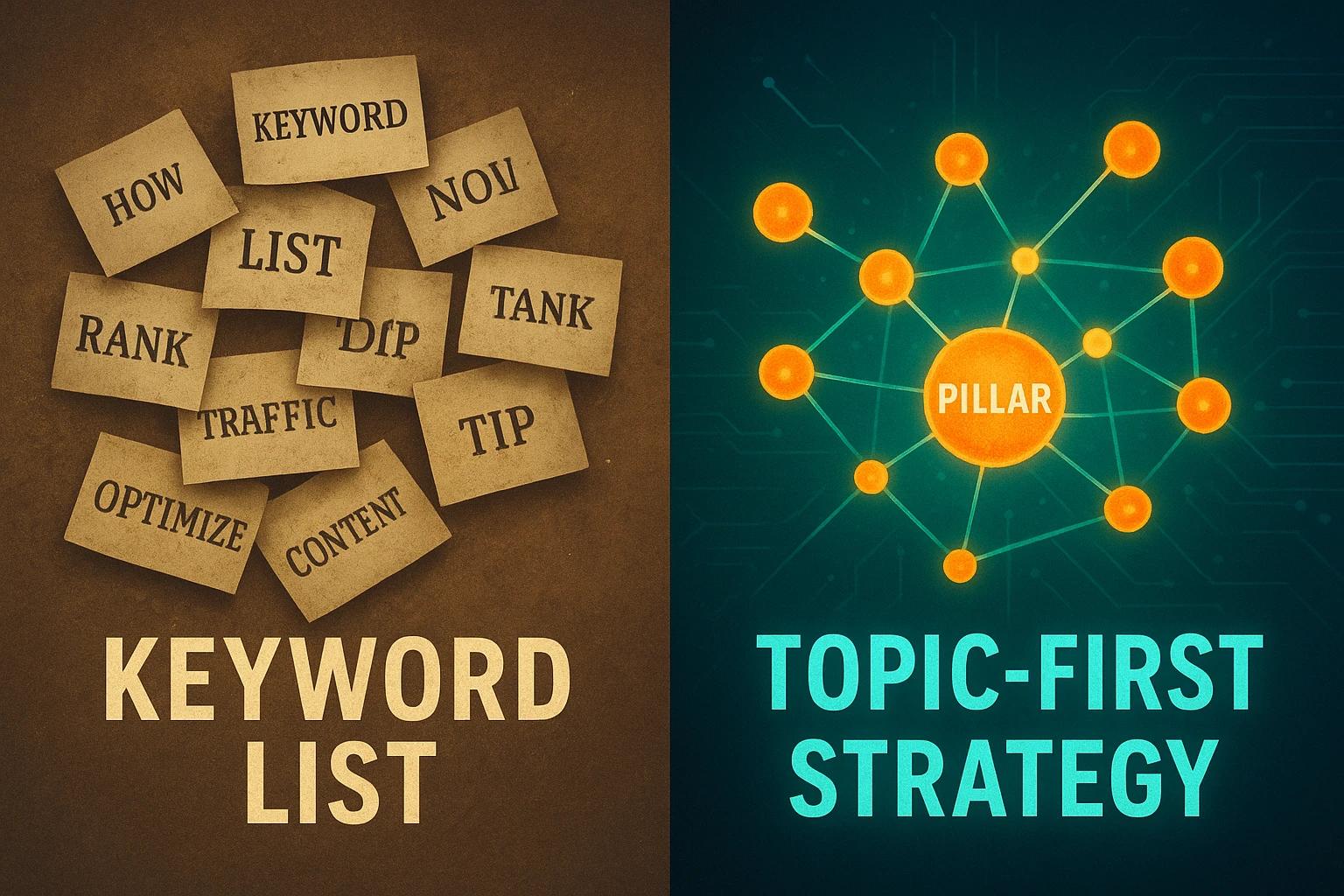
Topic-First Content Strategy for AI-Driven Search
Discover why focusing on topics over keywords drives SEO success in AI-powered search environments.
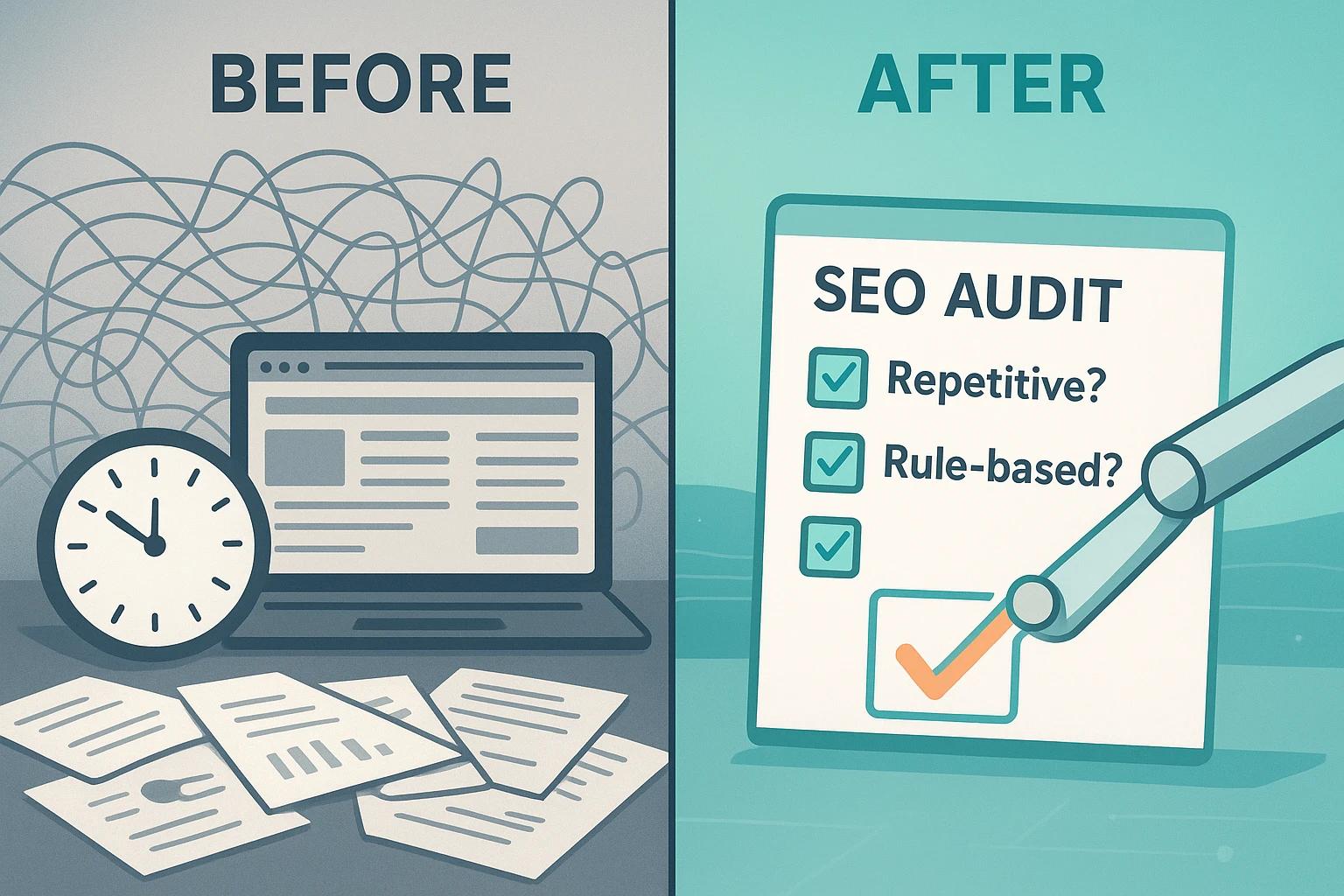
How to Audit SEO for Automation Opportunities
Discover a simple non-technical checklist to identify SEO tasks you can automate and save time for strategic work.

5 Signs Your Content Workflow Is Blocking Growth
Discover common content workflow problems slowing your growth and how automation can help improve efficiency and results.