How to Measure Visibility for AI Answers and Traditional Search

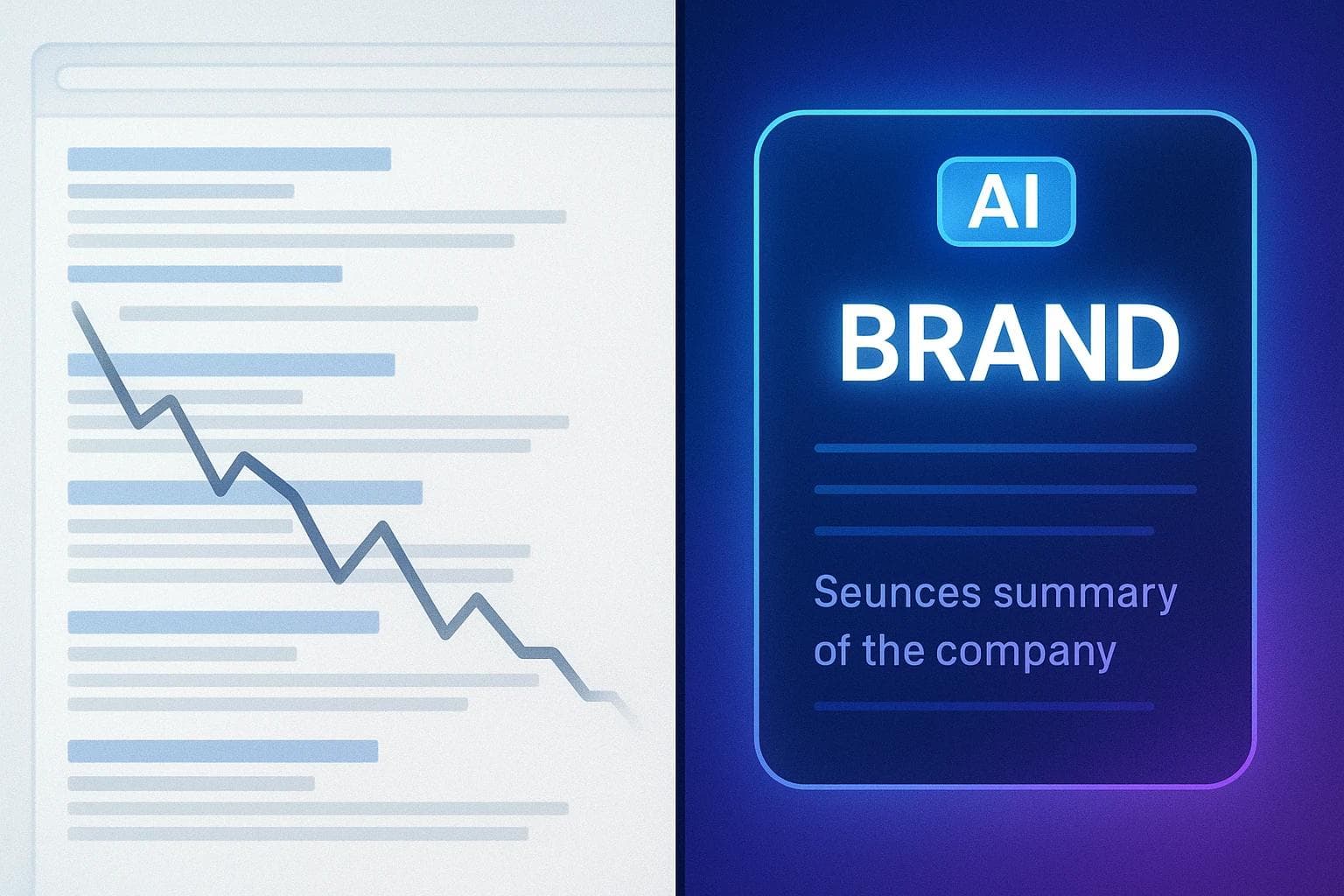
Are You Invisible in AI Search? Why Your Old SEO Metrics Don't Work Anymore
You’ve done everything right. You’ve optimized your titles, built backlinks, and tracked your keyword rankings like a hawk. For years, this was the playbook for getting found on Google. So why is your website traffic hitting a plateau, or even dipping, despite all your hard work?
The answer might not be in the search results you’re used to seeing. It’s in the conversational, direct answers that now appear at the top of the page, powered by AI.
When someone asks Google, "What are the best pots for indoor plants?" they no longer just get a list of links. They get a summarized answer, a ready-made shopping list, and care tips, all synthesized by AI. If your blog post is just a link below that answer, you’ve become practically invisible.
This is the new reality of digital discovery. The game has shifted from "ranking on the page" to "being the answer." And to win this new game, you need a completely new scorecard.
The Big Shift: From Clicks to Citations
For two decades, SEO success was measured by a simple set of rules. You cared about:
- Keyword Rankings: Are we on page one?
- Organic Traffic: How many people are clicking our links?
- Click-Through Rate (CTR): What percentage of people who see our link click it?
These metrics are all about getting someone to your website. But AI search is changing user behavior. Why click a link when the answer is right there? This is the rise of the "zero-click search," and it's fundamentally altering how we measure visibility.
In the world of AI answers, a new set of principles matters more:
- From Ranking to Mentioning: It's no longer about being #1 in a list of ten blue links. It's about your brand, product, or insight being mentioned directly in the AI's response.
- From Traffic to Trust: Being cited as a source in an AI answer builds incredible authority. You are positioned not just as an option, but as a definitive source of truth.
Think of it like this: traditional SEO is like having a popular stall in a giant marketplace. AI visibility is like the trusted local expert everyone in the market points to when they have a question. Both get you noticed, but one builds a deeper level of authority.
[INSERT IMAGE 1 HERE: Infographic comparing the "Traditional SEO Funnel" (Awareness > Clicks > Website Visit) with the "AI Visibility Funnel" (Awareness > Citation/Mention > Trust), visually highlighting the shift away from direct website visits as the primary goal.]
Your New Dashboard: 4 Key Metrics for the Age of AI Answers
If your old dashboard of rankings and traffic is becoming obsolete, what should you track instead? While the field of Answer Engine Optimization (AEO) is still evolving, a new consensus is forming around metrics that measure your influence on AI.
Here are four essential metrics to start tracking.
1. Citation Share
This is arguably the most important new metric. It’s the AI equivalent of market share.
- What it is: Citation Share measures how often your website is cited as a source in AI answers for a specific set of important questions (prompts) related to your business.
- Why it matters: A high citation share means the AI sees you as a primary authority in your niche. You are the source it trusts to provide accurate information to its users. It’s a direct measure of your thought leadership.
- How to think about it: If you sell high-end coffee beans, you’d track how often your site is cited for prompts like "best single-origin espresso beans" or "how to make the perfect pour-over." If you’re consistently the source, you’re winning.
2. Answer Presence Rate
Before you can be cited, you have to be part of the conversation.
- What it is: This metric tracks whether your brand or products are mentioned—with or without a direct link—in AI answers.
- Why it matters: A mention builds brand recall even without a click. If an AI's answer to "what are the most comfortable running shoes?" lists your brand alongside Nike and Brooks, that’s a massive visibility win. You’re being included in the consideration set.
- The difference from citations: A citation is a formal link to your site as a source. A mention is simply your name appearing in the text. Both are valuable, but citations carry more authority.
3. Answer Accuracy & Sentiment
It’s not enough to just show up; you have to be represented correctly and positively.
- What it is: This is a qualitative check on the AI-generated answers that mention you. Is the information accurate? Is your brand portrayed in a positive, neutral, or negative light?
- Why it matters: An AI could misinterpret your content and provide incorrect information, or it could pull a negative review and feature it prominently. Monitoring accuracy and sentiment helps you protect your brand reputation in a space you don't directly control.
- A "Ground Truth" Document: One of the best ways to combat inaccuracies is to create a "ground truth" document on your site—a simple, clear page with foundational facts about your company, products, and key positions. As detailed by experts at Data-Mania, this gives AI models a reliable source to pull from, reducing the chance of errors.
4. AI Referral Traffic
Wait, didn't we say traffic wasn't the main goal? While direct clicks may decrease overall, the clicks you do get from AI answers are often highly qualified.
- What it is: This measures the website traffic that comes directly from a user clicking a citation link within an AI-generated answer. You can track this in tools like Google Analytics 4.
- Why it matters: A user who reads an AI summary and still decides to click your link is deeply engaged. They aren’t just looking for a quick answer; they see you as the authority and want to learn more. This traffic often has a much higher conversion potential than typical organic traffic.
[INSERT IMAGE 2 HERE: A simple comparison table titled "SEO vs. AEO Metrics at a Glance." Columns are "Metric," "Traditional SEO (What it measures)," and "AI Visibility / AEO (What it measures)." Rows include: Keyword Ranking vs. Citation Share, Organic Traffic vs. AI Referral Traffic, Click-Through Rate vs. Answer Presence Rate, Backlinks vs. Answer Accuracy/Sentiment.]
How to Start Measuring: The AI Search Analytics Loop
This might feel overwhelming, but you don’t need a complex suite of tools to begin. You can start by adopting a simple, repeatable process—a workflow you can run weekly to get a pulse on your AI visibility.
Think of it as an "AI Search Analytics Loop":
- Build Your Prompt Set: Brainstorm 10-20 questions your ideal customer would ask an AI. Include questions about problems, solutions, your brand, and your competitors.
- Test and Document: Ask these prompts to different AI engines (Google AI Overviews, ChatGPT, Perplexity) and carefully document the answers. Who do they cite? Who do they mention?
- Score Your Performance: Using the metrics above, score your brand's performance. Are you cited? Mentioned? Is the information accurate?
- Find the Gaps: Identify where you're not showing up. If a competitor is always cited for a key question, analyze their content. What makes it so "answer-friendly"?
- Update and Optimize: Improve your existing content or create new articles to specifically fill those gaps. Make your content the clearest, most authoritative answer to that prompt. Check out our guide on how AI can help you scale content production to do this efficiently.
- Re-Test: Wait a week or two, then run your prompt set again. Have the answers changed? Track your progress over time.
This hands-on process is the first step toward building a real strategy for what many now call What is Answer Engine Optimization (AEO)?. It shifts your focus from chasing algorithm changes to simply providing the best possible answers.
Frequently Asked Questions (FAQ)
What is AI visibility?
AI visibility is a measure of your brand's presence within the answers generated by AI search engines like Google's AI Overviews, ChatGPT, and Perplexity. It's not about ranking in a list of links, but about being mentioned or cited as a source directly within the AI's response.
How is AI visibility different from traditional SEO?
Traditional SEO focuses on gaining clicks from a ranked list of web pages. AI visibility focuses on influencing the AI's knowledge to become a trusted source, resulting in citations and brand mentions within a synthesized answer. The goal shifts from generating traffic to establishing authority.
Why is AI visibility important now?
As more users get their answers directly from AI summaries, the number of clicks to traditional search results is expected to decrease. If your business isn't visible in these AI answers, you risk losing a massive and growing channel of discovery and influence.
Can I track these new metrics with my current SEO tools?
Some traditional SEO platforms like Semrush are beginning to add AI visibility features. However, many of these new metrics, like Answer Accuracy and Sentiment, still require manual checks. The most important first step is building a manual tracking process with a core set of prompts.
The Future is an Answer, Not a Link
For years, the internet has been a library of documents. Search engines gave you a map to the right shelf. Today, AI is transforming that library into a single, all-knowing librarian who gives you the answer directly.
Your goal is no longer just to have a book in the library; it’s to be the source the librarian trusts and quotes.
By shifting your focus from old-school SEO metrics to the new world of AI visibility, you’re not just preparing for the future—you’re building a more resilient, authoritative brand. You're positioning yourself to be the definitive answer, no matter how the question is asked.
Ready to dive deeper into how this new landscape works? Explore our complete guide on AEO vs. SEO: Choosing Your Strategy for the Future of Search.
Roald
Founder Fonzy — Obsessed with scaling organic traffic. Writing about the intersection of SEO, AI, and product growth.
Stop writing content.
Start growing traffic.
You just read about the strategy. Now let Fonzy execute it for you. Get 30 SEO-optimized articles published to your site in the next 10 minutes.
No credit card required for demo. Cancel anytime.
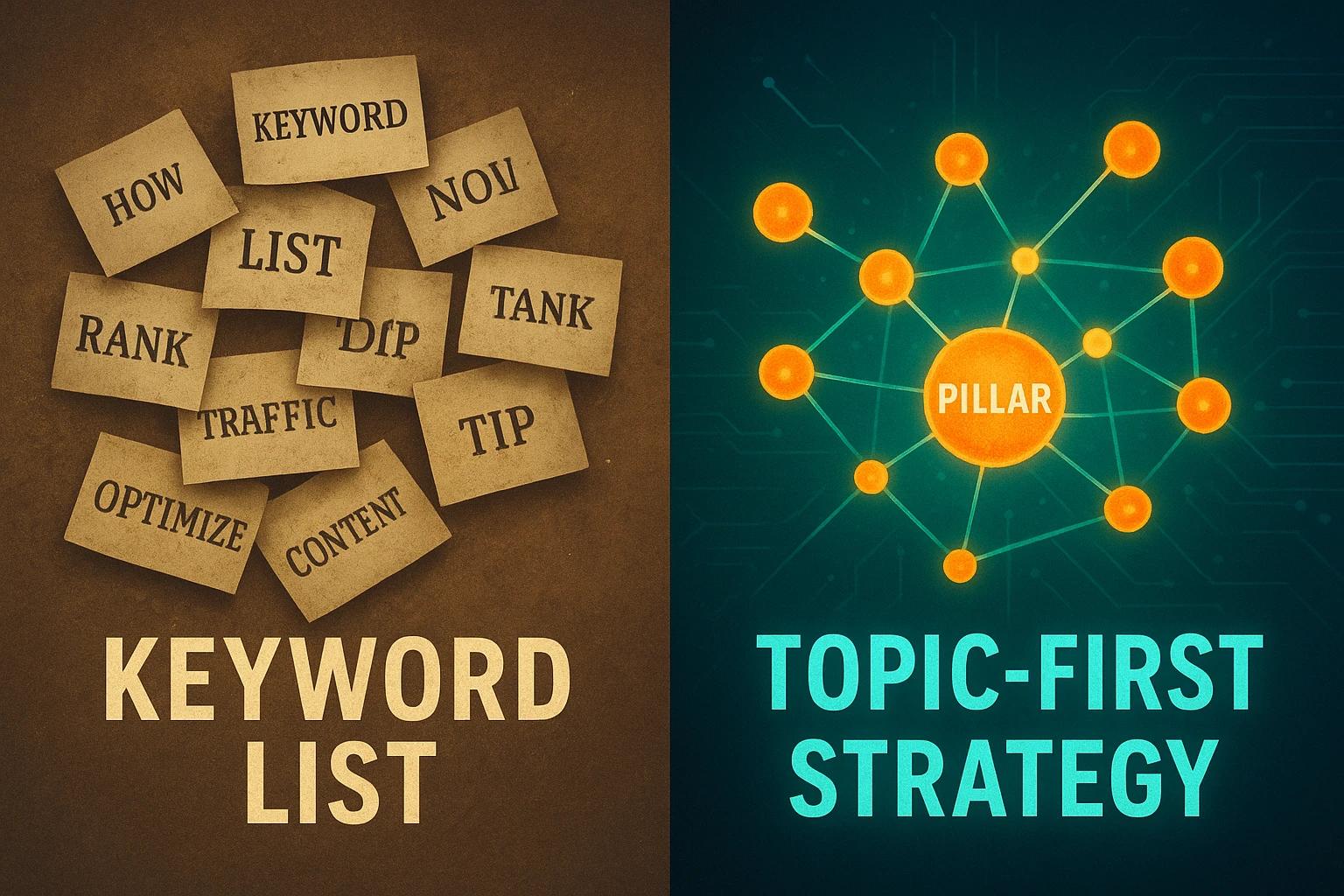
Topic-First Content Strategy for AI-Driven Search
Discover why focusing on topics over keywords drives SEO success in AI-powered search environments.
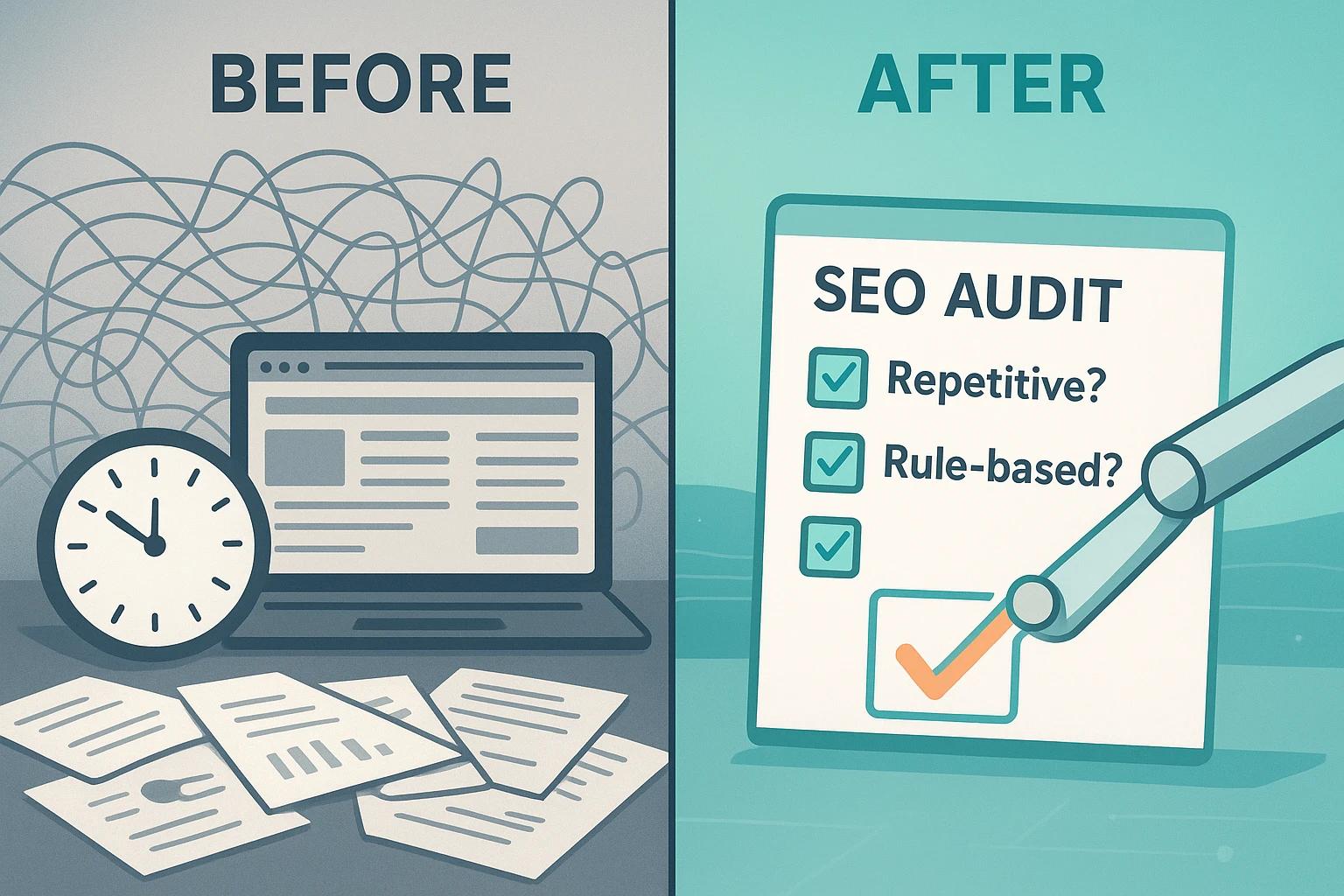
How to Audit SEO for Automation Opportunities
Discover a simple non-technical checklist to identify SEO tasks you can automate and save time for strategic work.
5 Signs Your Content Workflow Is Blocking Growth
Discover common content workflow problems slowing your growth and how automation can help improve efficiency and results.