Your Clicks Are Dropping, But You’re Not Invisible: A Guide to Measuring SEO in the Age of AI Overviews
You check your analytics dashboard. Your rankings for key terms are solid, maybe even climbing. But your organic clicks? They’re down. It’s a frustrating and confusing feeling, like hosting a party where everyone stands outside the front door but no one comes in.
If this sounds familiar, you’re not alone. You’re witnessing one of the biggest shifts in search behavior in a decade, driven by Google’s AI Overviews (AIOs). The old one-to-one relationship between ranking high and getting clicks is breaking down. But here’s the good news: you’re not becoming invisible. The way we measure visibility has just fundamentally changed.

This guide will walk you through why your clicks are dropping, what new metrics actually matter, and how to start thinking about success in this new, AI-powered search landscape.
The Great Decoupling: Why High Rankings No Longer Equal High Clicks
Think of a traditional Google search as a library directory. You find the right card (the search result) and then walk to the shelf to get the book (click the link).
AI Overviews have turned Google into a librarian who reads the most relevant books for you and gives you a summary on the spot. You get your answer without ever leaving the front desk. This is the new reality of search, and it has two major effects.
- The Rise of the "Zero-Click Search": Since the AI provides a direct answer, users have less reason to click through to a website. Semrush’s extensive research confirms that AIOs are appearing for a growing percentage of queries, accelerating this trend. Your content might be the primary source for the AI's answer, but you won't see a click for it.
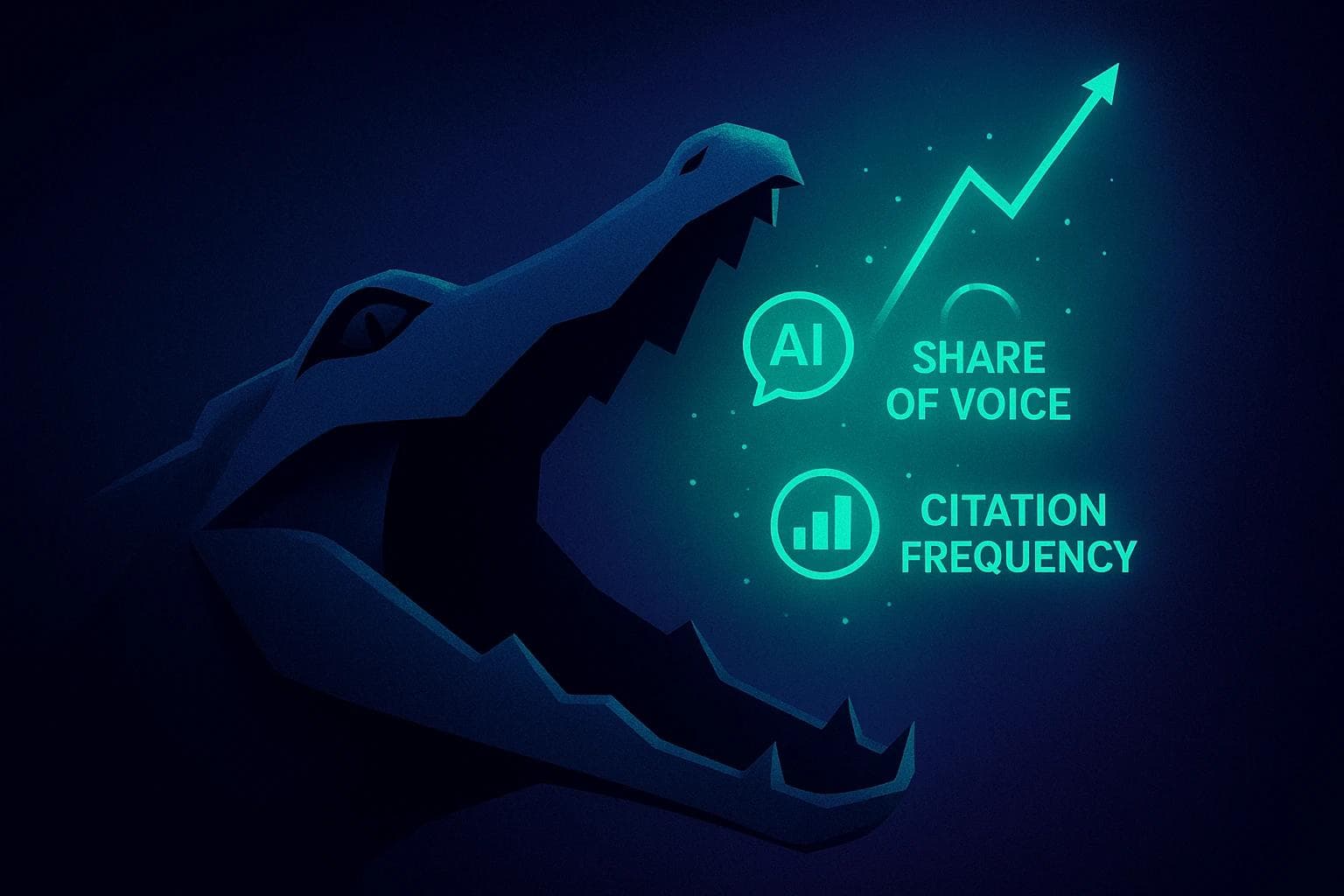
- The "Crocodile Effect": This is the phenomenon you're likely seeing in your Google Search Console. The top jaw of the crocodile represents your impressions—the number of times your site appeared in search results. This number might stay the same or even go up. The bottom jaw represents your clicks, which are trending down. The widening gap between them is the "crocodile's mouth," and it represents the traffic being satisfied by the AI Overview itself.
This "Great Decoupling," as the Digital Marketing Institute calls it, means that relying solely on clicks and click-through rates (CTR) gives you an incomplete and misleading picture of your performance.
Beyond the Click: The New KPIs for an AI-Powered Search World
So if clicks are no longer the North Star, what should you be looking at? It's time to shift from measuring traffic to measuring influence. Are you a trusted source that the AI relies on to form its answers? That's the new goal.
To measure this, we need a new set of key performance indicators (KPIs) focused on your presence within the AI-generated answers themselves.

AI Share of Voice (SoV)
- What it is: The percentage of times your brand is mentioned or your content is cited within AI Overviews for your target keywords.
- Why it matters: This is the new market share. Instead of just ranking on the page, you are now part of the definitive answer. A high AI SoV means your brand is the go-to authority in your niche, according to the AI.
Citation Frequency
- What it is: A simple count of how many times your domain is listed as a source in AI Overviews over a given period.
- Why it matters: Each citation is a vote of confidence from the AI. It’s direct proof that your content is valuable, authoritative, and useful for answering user questions. Tracking this helps you see which content pieces are most effective at earning AI trust.
Brand Visibility Score (BVS)
- What it is: A more advanced, composite metric that combines your AI Share of Voice, citation frequency, and sentiment into a single score.
- Why it matters: A BVS gives you a holistic "health check" of your AI presence. It helps you understand your overall footprint and track progress over time without getting lost in individual metrics.
Sentiment Analysis
- What it is: An analysis of how the AI is referencing your brand. Is it citing a positive review, a neutral statistic from your report, or a negative customer complaint?
- Why it matters: This is crucial for brand reputation management. It’s not just about being mentioned; it’s about ensuring the AI portrays your brand in a positive and accurate light.
How to Win in the New Search Landscape: A Shift in Strategy
Tracking these new metrics is the first step. The next is adapting your content strategy to improve them. This new discipline is being called Answer Engine Optimization (AEO) or Generative Engine Optimization (GEO)—the practice of making your content easy for AI models to find, understand, and cite.

From Keywords to Concepts: The Power of E-E-A-T
Google’s guidelines on Experience, Expertise, Authoritativeness, and Trustworthiness (E-E-A-T) are now more critical than ever. AI models are trained to find and synthesize information from the most credible sources. To win citations, your content must:
- Demonstrate real-world experience.
- Be written by subject matter experts.
- Establish your site as a go-to authority.
- Be factually accurate and trustworthy.
The CSQAF Framework: Building AI-Friendly Content
Dataslayer offers a brilliant framework for structuring content that AIs love to cite: CSQAF.
- Citations: Back up your claims with links to authoritative sources.
- Statistics: Use clear, specific data points.
- Quotations: Include quotes from experts to add credibility.
- Authoritativeness: Write comprehensively and cover the topic in depth.
- Fluency: Use clear, simple language and structure your content with headings, lists, and tables that are easy for an AI to parse.
This means creating content that doesn't just rank—it explains.
Your Questions About AI Overviews, Answered (FAQ)
What are Google AI Overviews?
They are AI-generated summaries that appear at the top of Google search results to provide direct, conversational answers to user questions. They pull information from multiple websites to create this summary.
Why are my clicks dropping even though my rankings are good?
Because AI Overviews answer the user's question directly in the search results, reducing their need to click on any individual links. Your content may be fueling the answer, but you won't get the click. This is the "Crocodile Effect" in action.
Is traditional SEO dead?
Not at all. It's evolving. The fundamentals of SEO—creating high-quality, authoritative content (E-E-A-T), building a strong technical foundation, and understanding user intent—are more important than ever. However, the goal is shifting from simply winning a click to winning a citation within the AI's answer.
Can I just turn off AI Overviews?
As a website owner, you cannot prevent Google from showing AI Overviews for searches. While users have some options to adjust their experience, businesses must adapt to this new reality as the default search experience.
Your First Steps into the Post-Click World
Seeing your clicks decline can be alarming, but it isn't a sign of failure. It's a signal of a fundamental change in how people find information. The game is no longer about attracting a click; it’s about becoming the trusted source that powers the answer.
Start by shifting your mindset and your measurement. Begin exploring your AI Share of Voice and Citation Frequency. Audit your content for E-E-A-T and structure it to be as clear and helpful as possible.
Now that you understand what to measure, the next step is learning how to optimize your content to improve those metrics. By focusing on becoming an undeniable authority in your field, you'll ensure your brand is not just seen, but trusted and cited in the AI-driven future of search.

Roald
Founder Fonzy — Obsessed with scaling organic traffic. Writing about the intersection of SEO, AI, and product growth.
Stop writing content.
Start growing traffic.
You just read about the strategy. Now let Fonzy execute it for you. Get 30 SEO-optimized articles published to your site in the next 10 minutes.
No credit card required for demo. Cancel anytime.
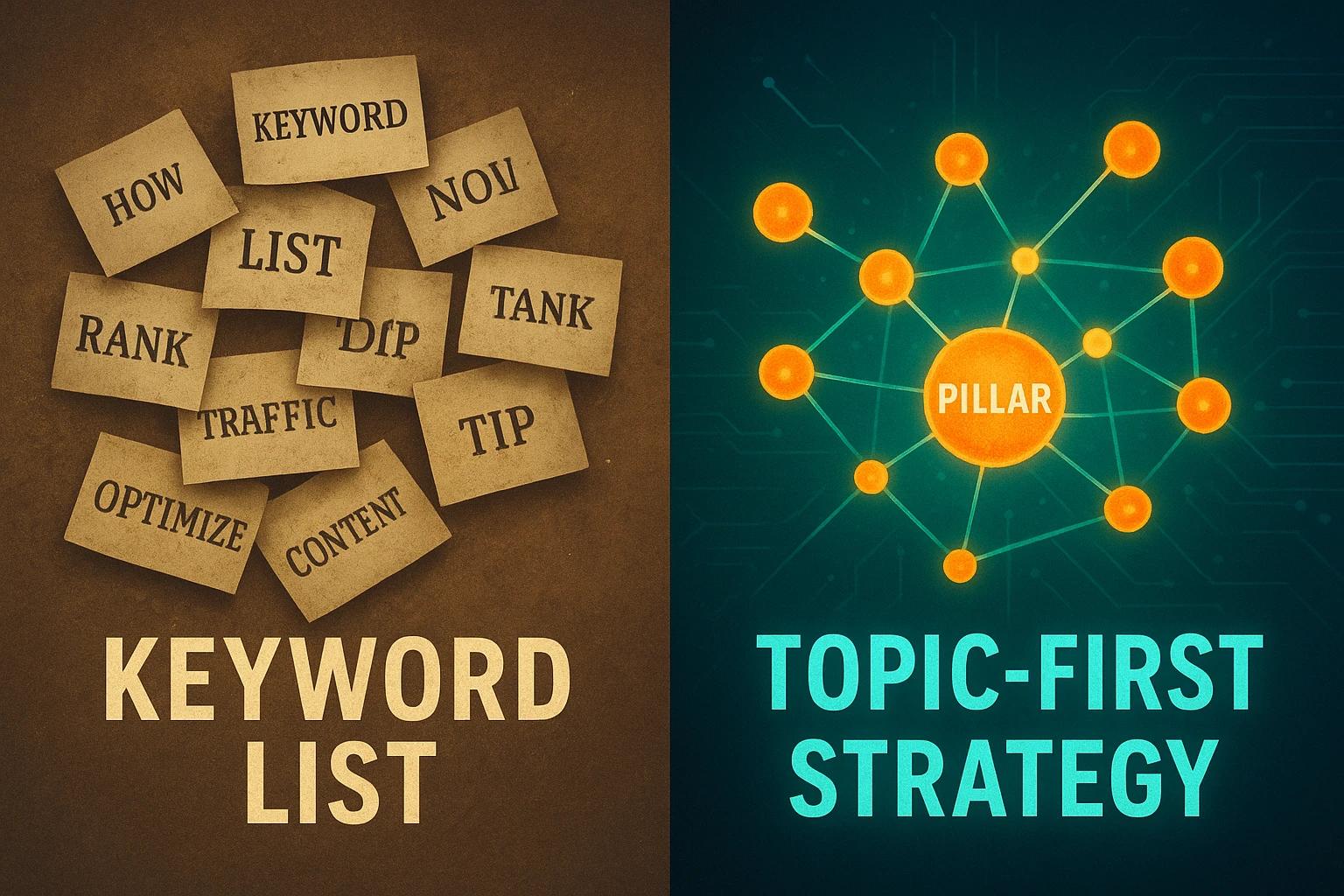
Topic-First Content Strategy for AI-Driven Search
Discover why focusing on topics over keywords drives SEO success in AI-powered search environments.
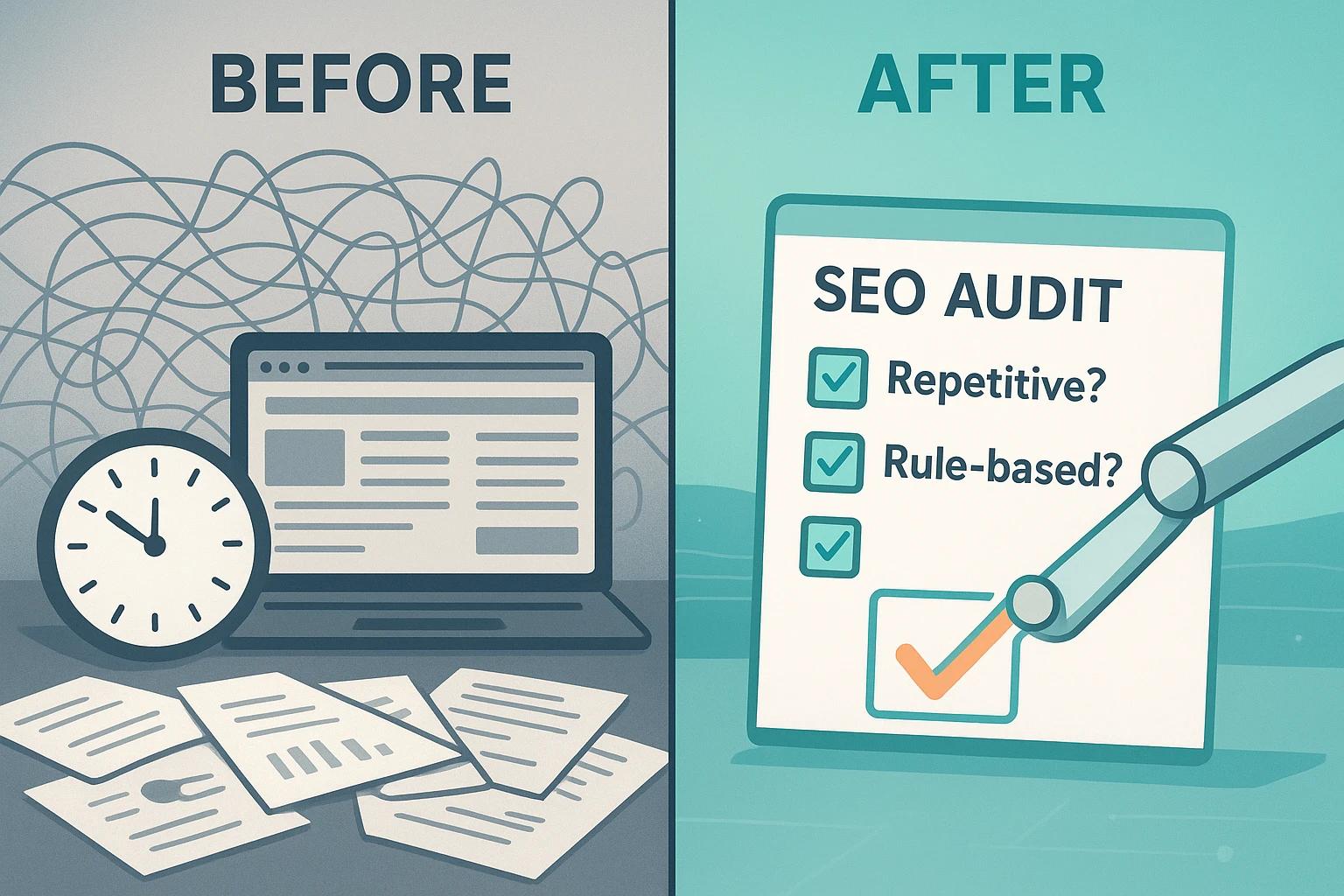
How to Audit SEO for Automation Opportunities
Discover a simple non-technical checklist to identify SEO tasks you can automate and save time for strategic work.
5 Signs Your Content Workflow Is Blocking Growth
Discover common content workflow problems slowing your growth and how automation can help improve efficiency and results.