Structured Data and Schema Basics for AI Extraction


Structured Data: How to Make Your Content an AI's Favorite Source
Have you ever asked your smart speaker a question and it replied, "According to [Website Name]…"? Or maybe you've seen a Google search that pulls a direct answer, complete with a link, right at the top of the page. It feels a bit like magic, but it’s not. It’s a direct result of that website speaking a language that AI and search engines can perfectly understand.
That language is called structured data.
For years, we’ve been told to create content for humans. But in today's world, where AI assistants and generative search are becoming our primary information guides, we also need to make our content perfectly legible for machines. Think of structured data as your content's official passport—it's what allows it to travel across the digital world, be understood instantly, and get cited as a trusted source. This guide will demystify structured data and show you how to format your content so AI systems don't just read it, but rely on it.

The Foundations: Speaking AI's Language
Before we dive into the "how," let's get the "what" straight. You'll often hear the terms "structured data" and "schema" used together, which can be confusing. Let's clear that up with a simple analogy.
What is Structured Data?
Imagine your webpage is a grocery store item. The article itself is the food inside. Structured data is the set of nutrition labels and price tags you add to the packaging. It doesn't change the food, but it gives the checkout scanner (the AI) explicit, organized information: this is a can of soup, it costs $2.99, it contains 250 calories, and its main ingredient is tomatoes.
Without these labels, the AI has to guess what's inside by looking at the packaging. With them, it knows instantly and accurately. In technical terms, structured data is a standardized format for providing information about a page and classifying its content.
What is Schema?
If structured data is the system of labeling, then schema (specifically from Schema.org) is the universal vocabulary used for those labels. It's the shared dictionary that ensures everyone—Google, Bing, Apple's Siri, Amazon's Alexa—understands that "name" means the product's title and "calories" means the energy value.
This shared language prevents confusion. You're not just making up labels; you're using a globally recognized vocabulary that gives your content immediate context and credibility.
JSON-LD: The AI-Friendly Format
There are a few ways to write this "label" code, but one is overwhelmingly preferred by search engines and AI systems: JSON-LD (JavaScript Object Notation for Linked Data).
Why? It's simple:
- It’s clean: You can place all your structured data in a single
<script>tag in the<head>or<body>of your page, separate from your visible content. This makes it easier to manage and less likely to break your page's design. - It’s precise: It allows you to create detailed, interconnected blocks of information that AI can process efficiently.
Think of it as the modern, preferred dialect. While other formats exist, speaking in JSON-LD ensures you're understood most clearly by the widest range of AIs.
Key Schema Types for AI Extraction and Citation
You don't need to label every single word on your page. The goal is to use the right schema for the right job to help AI understand the purpose of your content. Here are the most critical types for getting your content extracted and cited.

1. FAQPage Schema: For Direct Answers
What it is: A list of questions and their corresponding answers on a single page.
2. HowTo Schema: For Step-by-Step Instructions
- What it is: A structured guide that walks a user through a series of steps to complete a task.
- How AI uses it: AI assistants can read these steps aloud, one by one, guiding a user through a process like cooking a recipe or fixing a leaky faucet. Generative AI can also use this schema to summarize a process for a user.
- Citation-Ready Tip: Number your steps clearly and make each step a single, actionable instruction. Use the
textproperty for a concise description of the step and consider adding an image for each step using theimageproperty.
3. Article Schema: For Authoritative Content
- What it is: Provides context about a piece of content, such as the author, publication date, headline, and featured image.
- How AI uses it: This schema helps AI determine the content's credibility and relevance. By clearly identifying the
author,datePublished, andpublisher, you're providing signals of trustworthiness. An AI is more likely to cite a source that is clearly authored and recently updated. - Citation-Ready Tip: Ensure your
headlineanddescriptionproperties accurately summarize the article's core topic. This helps AI quickly understand what your content is about and whether it’s a good fit for a user’s query.
4. QAPage Schema: For Community-Driven Knowledge
- What it is: Similar to FAQPage, but designed for pages where users can submit questions and other users can post answers (think forums like Stack Overflow or Quora).
- How AI uses it: AI can use this schema to find a variety of perspectives on a single question. It understands there is a primary question and multiple answers, and it can even identify the
acceptedAnswerif one is marked. - Citation-Ready Tip: If you have a Q&A section on your site, ensure you implement a voting or "best answer" system and mark the chosen one with the
acceptedAnswerproperty. This tells AI which response is considered the most helpful.
Beyond the Code: Crafting "Citation-Ready" Content
Implementing schema is only half the battle. The content on your page needs to be structured in a way that’s easy for a machine to parse and quote. An AI is looking for clarity and confidence, not ambiguity.
- Write Definitive Snippets: Start your articles or sections with a clear, one-sentence definition. For the query "What is a 401(k)?", a page that begins with "A 401(k) is a retirement savings plan sponsored by an employer…" is far more likely to be extracted than one that starts with a long story.
- Use Your Headings Wisely: Headings (H1, H2, H3) create a logical outline of your content. An AI scans these headings to understand the hierarchy and flow of information. But it goes deeper than that; understanding what’s the impact of heading structure on ai extractability? can reveal how to build a content skeleton that machines can interpret flawlessly.
- Keep Sentences and Paragraphs Short: Break down complex ideas into simple, declarative sentences. This reduces ambiguity and gives the AI cleaner potential quotes.
Common Mistakes That Make Your Content Invisible to AI
Getting structured data right can feel tricky, and a few common errors can make your content difficult for AI to understand, or worse, cause it to be ignored completely. Think of these errors as communication breakdowns that erode an AI's trust in your content.

- The Fix: Ensure every piece of information in your JSON-LD script is present and visible on the page.
FAQ: Your Structured Data Questions Answered
Do I need to be a developer to add structured data?
Not anymore. Many modern CMS platforms like WordPress have plugins (like Yoast SEO or Rank Math) that handle the basics for you. For more advanced needs, you might need some technical help, but getting started is more accessible than ever.
How can I check if my structured data is working?
Google provides two excellent free tools:
- Rich Results Test: This tool shows you which rich results (the visually enhanced search listings) your page is eligible for based on your schema.
- Schema Markup Validator: This is a more technical tool that validates your schema against Schema.org standards and flags any errors or warnings in your code.
Can I use multiple schema types on one page?
Absolutely! This is actually a best practice. A single blog post could have Article schema for the post itself, FAQPage schema for a Q&A section at the end, and even VideoObject schema for an embedded video. This creates a rich, interconnected data graph that gives AI a deep understanding of your content.
Your Next Steps Toward an AI-Ready Website
Structured data is no longer an optional extra for SEO nerds; it's a fundamental requirement for discoverability in an AI-first world. By translating your content into a language machines can read, you're not just aiming for better search rankings—you're positioning your expertise to be the definitive answer wherever users are asking questions.
Start small. Pick one of your most popular blog posts or FAQ pages. Identify the right schema type, implement it, and use the validation tools to check your work. By making your content clear, organized, and machine-readable, you're not just optimizing a webpage; you're building a foundation of trust with the next generation of search.
Roald
Founder Fonzy — Obsessed with scaling organic traffic. Writing about the intersection of SEO, AI, and product growth.
Stop writing content.
Start growing traffic.
You just read about the strategy. Now let Fonzy execute it for you. Get 30 SEO-optimized articles published to your site in the next 10 minutes.
No credit card required for demo. Cancel anytime.
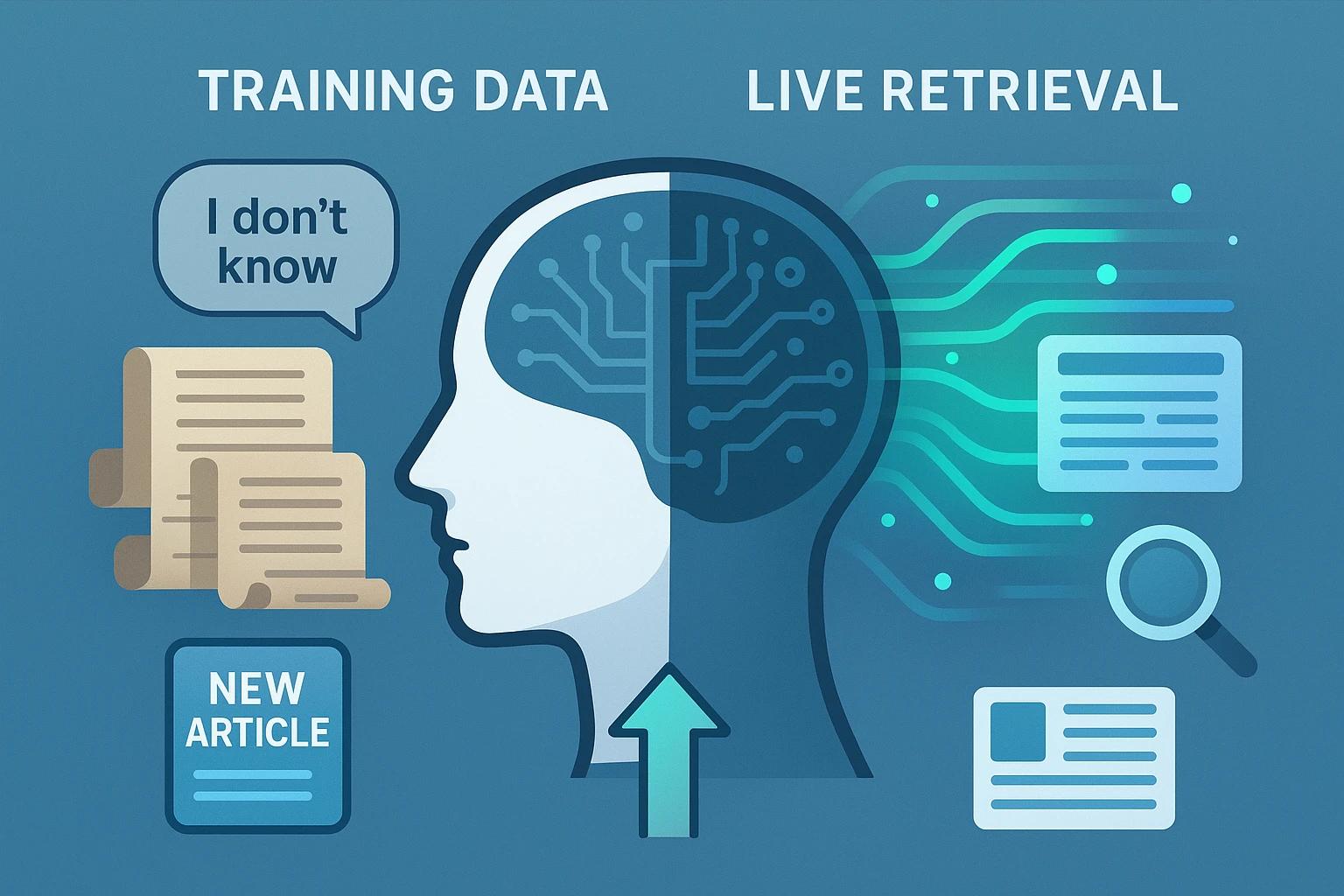
Training Data vs Live Retrieval in AI Answers
Learn why some content appears in AI replies and how to optimize for both AI memory and live retrieval.

How to Write Content for Concise AI Answers
Learn a simple checklist to create clear content that AI models choose for direct, concise answers.

What Makes a Webpage Citable by AI
Learn the key trust signals and content traits that make webpages trusted and cited by AI search engines.