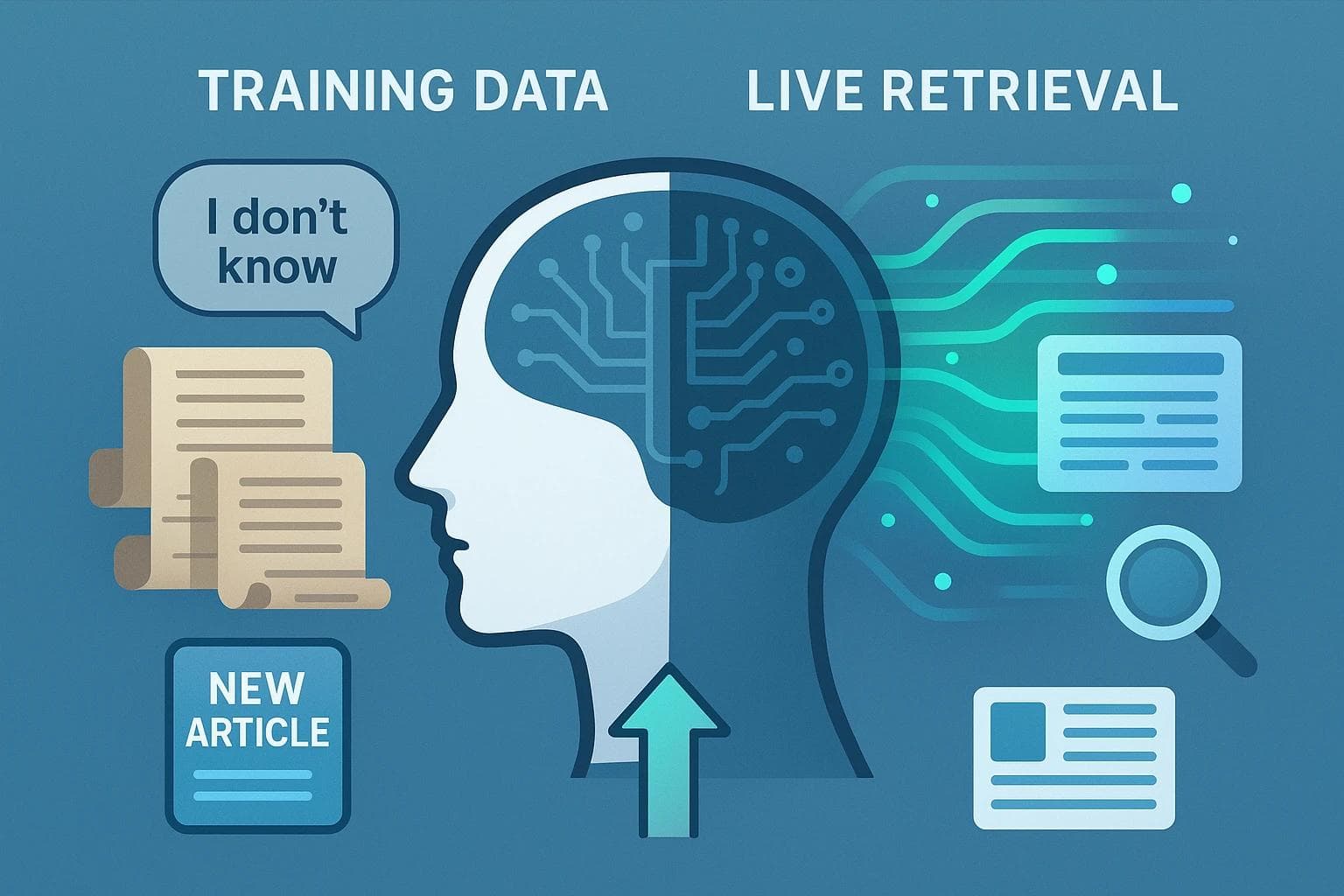
Training Data vs. Live Retrieval: Why Your Content Isn't in AI Answers (And How to Fix It)
You just published a timely, well-researched article. It’s exactly what your audience needs, and it’s fresher than anything your competitors have put out. You head over to ChatGPT or Gemini to see how it might be used in an answer, and you ask a relevant question.
The AI responds… by citing your competitor’s article from six months ago. Or worse, it gives a generic answer, completely ignoring your new, definitive resource.
If this sounds familiar, you’re not alone. It’s a common frustration for marketers in the age of AI, and it stems from a fundamental misunderstanding of how these models access information. The reason your content gets overlooked isn’t about luck; it’s about the two distinct ways an AI finds its answers: by remembering what it was taught, or by looking up new information on the spot.
Understanding this difference is the first step toward building a content strategy that doesn't just rank in Google, but gets cited in AI.

The AI's Two Brains: Memory vs. Research Assistant
To make this simple, let’s use an analogy. Think of an AI model like a brilliant, well-read expert. This expert has two ways of answering your questions.
1. The AI's "Memory" (Training Data)
The first way is by recalling information from its vast internal library—everything it learned during its "education." This is its training data.
This data is a colossal collection of text and information from the internet, books, and other sources, compiled up to a specific point in time (a "cutoff date"). When you ask a question like "What were the major themes of Renaissance art?", the AI can confidently answer from this deep, static knowledge base. It’s fast, comprehensive, and forms the foundation of its "worldview."
- What it is: A massive, fixed dataset used to train the model.
- Key Trait: Static and has a knowledge cutoff date.
- Best for: General knowledge, historical facts, and established concepts.
- Your Goal: To become part of this foundational knowledge for the long term. This is about establishing timeless authority.
2. The AI's "Research Assistant" (Live Retrieval)
But what happens when you ask, "What were the top tech headlines this morning?" or "What are the features of the new iPhone?" The AI's "memory" is out of date.
This is where it turns to its second brain: its on-demand Research Assistant. This process is often called live retrieval or Retrieval-Augmented Generation (RAG). The AI uses tools—like web browsers, plugins, or API connections—to go out and find current, real-time information to answer your query. It then synthesizes this fresh data into a coherent response.
- What it is: A dynamic process of fetching real-time information.
- Key Trait: Active, current, and context-specific.
- Best for: Breaking news, recent events, specific product details, and time-sensitive queries.
- Your Goal: To have content that is easily discoverable and understandable for these real-time lookups. This is about immediate relevance.
So, when your content is ignored, it’s often because the AI either relied on its older, static "memory" or its "research assistant" couldn't find or understand your new content effectively during a live search. The key to winning in this new era is optimizing for both.

How to Get Your Content into AI Answers: A Two-Part Strategy
Your content strategy can no longer be a "publish and pray" model. It needs to be a deliberate effort to influence both the AI's long-term memory and its short-term research. This is the core of Answer Engine Optimization (AEO).
Part 1: Optimizing for the AI's Memory (Long-Term Authority)
Getting into an AI's training data is the ultimate long game. It cements your brand as a foundational source of knowledge for future model versions. While you can't force your way in, you can dramatically increase your chances.
- Build Unshakeable E-E-A-T: Expertise, Experience, Authoritativeness, and Trustworthiness are more important than ever. AI models are trained on data that is widely cited and respected. Focus on creating definitive, original content that others will want to reference.
- Publish Evergreen Content: Create comprehensive guides, studies, and foundational resources that will remain relevant for years. This kind of content has a longer shelf life and a higher probability of being included in future training corpora.
- Aim for Authoritative Mentions: Secure links and mentions from high-authority sites like industry publications and Wikipedia. These sources are heavily weighted in training datasets.
Part 2: Optimizing for the AI's Research Assistant (Real-Time Visibility)
This is where you can see results much faster. When an AI performs a live retrieval, it acts like a super-fast, super-literal researcher. Your job is to make your content as easy as possible for it to find, parse, and cite.
- Structure for Extraction: AI's don't "read" content like humans; they extract it. Use clear, hierarchical headings (H1, H2, H3), bullet points, numbered lists, and Q&A formats. Breaking content into logical "chunks" makes it easy for the AI to grab the exact snippet it needs. This is why understanding the impact of heading structure on AI extractability is more critical than ever.
- Embrace Semantic Richness: Use natural language and answer questions directly. Think about the specific questions your audience asks and structure your content to answer them explicitly.
- Maintain Technical SEO Hygiene: Your site must be easily crawlable and indexable. Fast page speed, clean code, and a logical site structure are non-negotiable. If the AI's web browser can't access your content quickly, it will move on.
- Use Schema Markup: Schema tells search engines and AI what your data means. Product schema, FAQ schema, and article schema give the AI explicit context, making your information more likely to be used accurately in answers.
By focusing on both long-term authority and real-time clarity, you create a holistic AEO strategy that ensures you're visible today and foundational tomorrow.

The Future is Now: From Search Engine to Answer Engine
The shift from people clicking through ten blue links to getting a single, synthesized answer is already here. Being invisible in these AI replies is the new "not being on the first page of Google."
For years, marketers have focused on SEO—optimizing for search engines. Now, we must evolve to AEO—optimizing for answer engines. This means creating content with a dual purpose: to serve the human reader and to be perfectly structured for AI consumption.
Your publishing cadence, your content freshness, and the clarity of your information architecture are no longer just "best practices." They are the determining factors in whether your brand becomes a cited authority in the AI era or a forgotten relic in its training data.
Frequently Asked Questions (FAQ)
What is the basic difference between AI training data and live retrieval?
Think of it like an expert's knowledge. Training data is their deep, foundational "memory" from all the books they've read up to a certain point. Live retrieval is when they use their phone to look up today's news because their memory is out of date.
Why does my content appear in some AI answers but not others?
This depends on the user's query. If the question is general or historical, the AI might rely on its training data (its "memory"). If your content wasn't part of that data, it won't be mentioned. If the question is about a recent event, the AI will use live retrieval. Your content might not appear if it's not structured clearly or if a competitor's page was easier for the AI to parse.
How can I make my content more visible to AI search engines?
Focus on a two-part AEO strategy. For the long-term, build authority with high-quality, evergreen content (optimizing for training data). For immediate results, structure your content for easy extraction using clear headings, lists, and schema markup, and ensure your site is technically sound (optimizing for live retrieval).
Does my website's publishing frequency matter for AI?
Absolutely. A consistent publishing cadence and regular content updates signal to both traditional search engines and AI retrieval systems that your site is a fresh, authoritative source of information. This improves your chances of being surfaced in live lookups and increases the likelihood of your content being included in future training datasets.

Roald
Founder Fonzy — Obsessed with scaling organic traffic. Writing about the intersection of SEO, AI, and product growth.
Stop writing content.
Start growing traffic.
You just read about the strategy. Now let Fonzy execute it for you. Get 30 SEO-optimized articles published to your site in the next 10 minutes.
No credit card required for demo. Cancel anytime.
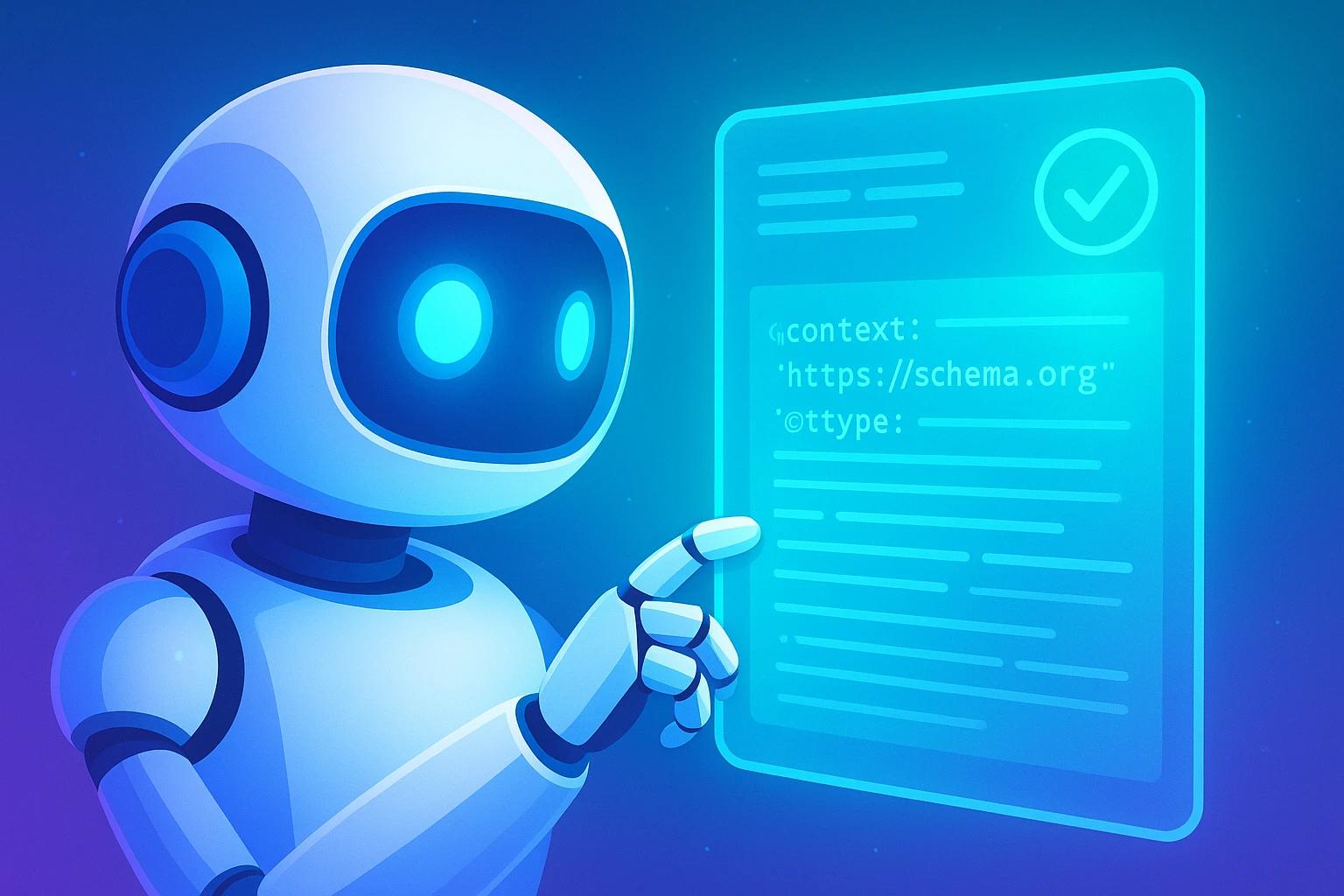
Structured Data and Schema Basics for AI Extraction
Learn how structured data and schema make your content easy for AI to find and cite with clear, simple labeling.
How to Write Content for Concise AI Answers
Learn a simple checklist to create clear content that AI models choose for direct, concise answers.
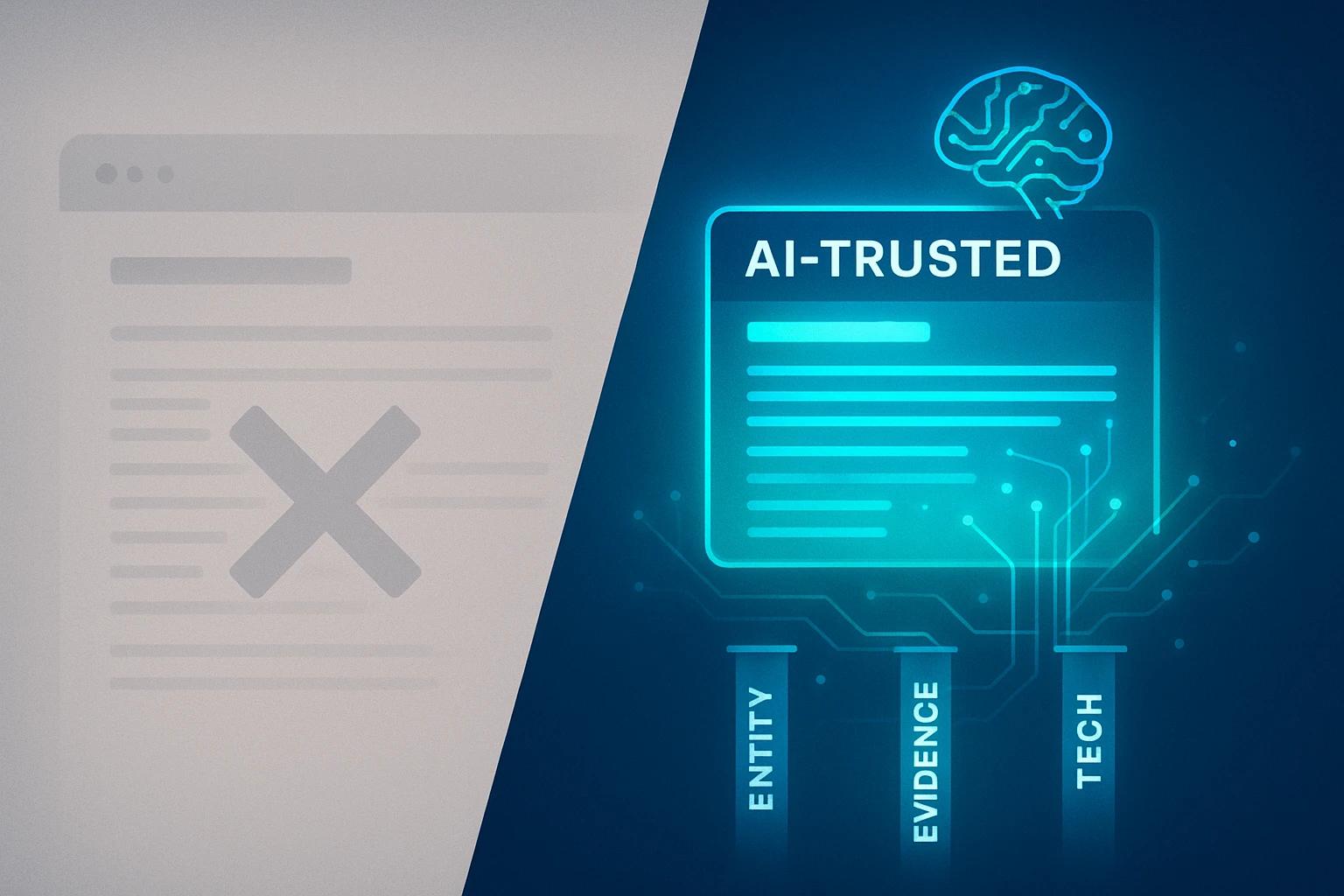
What Makes a Webpage Citable by AI
Learn the key trust signals and content traits that make webpages trusted and cited by AI search engines.