Low-Effort Ways to Test if AI Assistants Cite Your Site

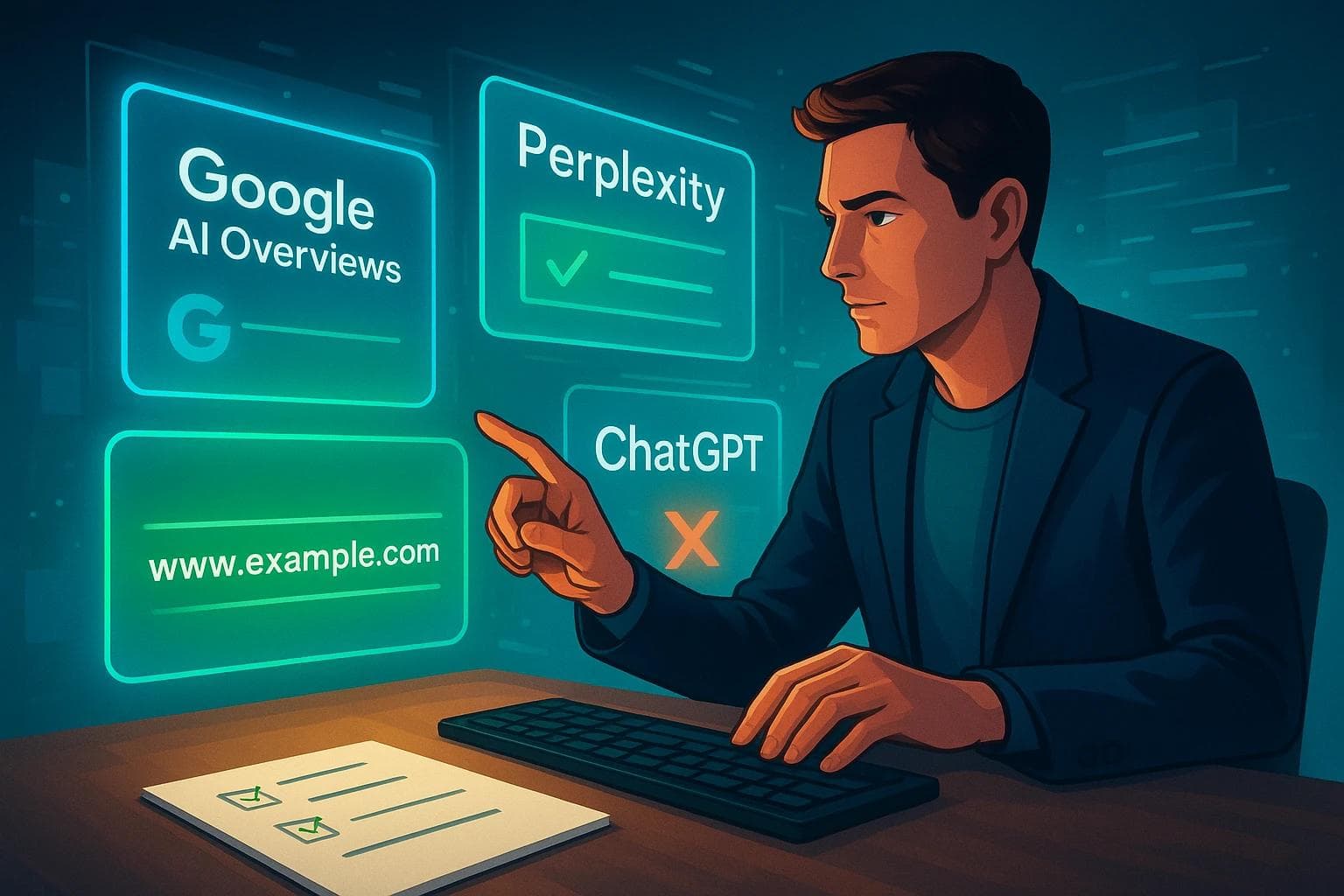
Are AI Assistants Citing Your Website? A 4-Step Test You Can Do Today
You’ve poured countless hours into creating fantastic content for your website. You've researched keywords, crafted compelling articles, and built a resource you're proud of. But lately, you've noticed a change. Fewer people are clicking through from Google, even when you know your content is the perfect answer to their query.
What’s happening? Often, the answer lies in the new gatekeepers of information: AI assistants.
Tools like Google’s AI Overviews, Perplexity, and ChatGPT are no longer just sending users to a list of blue links. They’re summarizing the answer directly. For businesses, this is both a massive threat and a huge opportunity. If the AI cites your site as a source, you get a high-intent click from a user who sees you as an authority. If it doesn’t—or worse, if it cites your competitor—you become invisible.
The good news is you don’t need expensive tools or a data science degree to figure out where you stand. You can run a simple, low-effort diagnostic test right now to see if AI assistants are finding and citing your content.
The New Rules of Getting Found Online
Before we jump into the test, let's quickly cover two concepts that are crucial to understanding this new world.
What's the Difference Between an AI Citation and a Mention?
Think of it like a research paper. A citation is a direct link to your website, like a footnote, that the AI uses to back up its claims. It’s a stamp of authority and the primary way you’ll get referral traffic from an AI-generated answer.
A mention, on the other hand, is when the AI names your brand or product without a direct link. While it doesn't drive immediate traffic, it's still incredibly valuable for building brand awareness and establishing your "share of voice" in the AI ecosystem. Seeing your name pop up repeatedly positions you as a leader in your niche.
Why You Have to Test and Verify
It's tempting to think of AI as a flawless, all-knowing oracle. It's not. Think of it more like a brilliant but sometimes overconfident research assistant who occasionally makes things up.
This phenomenon is called "AI hallucination," where an AI model presents false information as fact, sometimes even inventing sources that don't exist. Research from institutions like Columbia Journalism Review has shown that even the best AI search engines struggle with accurately citing sources. That’s why you can’t just assume your content will be found and credited correctly. You have to test, verify, and see what the AI is actually telling users about your area of expertise.
Your 4-Step Plan to Test for AI Citations
This simple testing plan is designed to give you a clear, empirical baseline of your current AI visibility. Grab a coffee, open a blank spreadsheet, and let's get started.
Step 1: Pick Your AI "Testing Labs"
Not all AI assistants are the same. They use different models and data sources, so a query on one might yield a completely different result on another. For a good baseline, we recommend testing across these four free and readily available platforms:
- Google AI Overviews: The most important one for many businesses. You may need to opt into Google's Search Labs to see it consistently.
- Perplexity: A popular AI-native search engine that is excellent at citing its sources.
- ChatGPT (Free Version): The most well-known AI assistant, used by millions.
- Microsoft Copilot: Microsoft’s AI assistant, integrated into Bing search.
Step 2: Craft Your "Citation Probes"
The key to a good test is a good set of questions, or "prompts." You want to ask the kind of questions your ideal customers are asking—the ones your website is built to answer. Start with 5-10 prompts across three main categories:
Definitional Queries: These are "what is" questions about core topics in your industry.
Step 3: Run the Test and Log Your Findings
This is the most important part. You need to be systematic. For each prompt you crafted in Step 2, do the following:
- Open one of the AI assistants from Step 1.
- Copy and paste your prompt.
- Read the AI's generated answer carefully.
- Record the results in a simple spreadsheet.
Your spreadsheet should have columns like this:
AI AssistantPrompt UsedMy Site Cited? (Y/N)URL CitedCompetitor Cited? (Y/N)Competitor URLNotes/ObservationsPerplexity"How to repot a…"N-Ycompetitor.com/repotAnswer focused on soil. My article doesn't mention soil type.Google AIO"What is drip coffee?"Ymysite.com/drip-guideN-Cited my definition paragraph directly.
This log is your diagnostic data. It moves you from guessing to knowing.
Step 4: Analyze Your Diagnostic Data for Patterns
After you've run your 5-10 prompts across a few AI labs, take a step back and look at your log. This is where the "aha moments" happen. Ask yourself:
- Are there topic gaps? "It looks like Perplexity always cites my competitor for pricing guides, but Google cites me for beginner guides. Maybe my pricing content is weak."
- Are there platform preferences? "ChatGPT never seems to find my site, but Copilot cites my blog posts all the time."
- Is my content format working? "The AI always pulls from my articles that have bulleted lists and a 'Key Takeaways' section at the top."
- Are there any hallucinations? "Google's AI Overview mentioned my company's founding date but got it wrong by two years, even though the correct date is on my About page."
This analysis transforms a simple log into a powerful strategic tool. You now have empirical evidence of your strengths and, more importantly, the specific gaps you need to fill.
From Data to Action: What Do Your Test Results Mean?
This low-effort test gives you a starting point. Your next steps depend entirely on what you discovered.
If You're Getting Cited…
Fantastic! You're already on the right track. Look at the content that's getting cited and ask why. Is it well-structured? Does it contain unique data? Is it written clearly and concisely? Double down on creating more content that follows this successful formula. These are early signs that you're creating what some experts call a "Citation Capsule"—a piece of content perfectly formatted for AI consumption.
If You're Not Getting Cited…
Don't panic. This is an opportunity. Your diagnostic log is your treasure map. The patterns you identified point directly to what you need to fix.
- If a competitor is consistently cited, analyze their page. What are they doing that you aren't? Do they have better-structured data, more expert authors, or clearer definitions?
- If the AI struggles to answer a question you know you've covered, your content might not be clear enough. You may need to improve its structure with clear headings, lists, and summary paragraphs. This is the foundation of
[automated GEO tactics].
When Does Manual Testing Stop Being "Low-Effort"?
If you found this 15-minute test insightful, you've probably already realized its limitation: scale. Testing 10 prompts is easy. Testing the 500 keywords that drive your business is a full-time job.
This is the point where you graduate from manual diagnostics to a more scalable strategy. Once you're consistently tracking dozens of keywords across multiple AI platforms, the manual spreadsheet becomes a bottleneck. The goal then shifts from "Am I being cited?" to "How can I build a system to improve my citation rate and [drive organic traffic]?" That's when businesses often begin exploring platforms that offer [automated content and SEO plans] to close the gaps they've identified.
Your AI Citation Questions, Answered
What exactly are AI assistant citations?
They are source links provided by an AI assistant within or alongside its generated answer, crediting the original website where it found the information.
How do AI assistants choose which sources to cite?
It's complex, but it boils down to a mix of factors similar to traditional SEO, often referred to as E-E-A-T: Experience, Expertise, Authoritativeness, and Trustworthiness. The AI looks for clear, well-structured, factually accurate content from sources that have demonstrated authority in a specific niche.
What's the difference between AEO and GEO?
AEO (Answer Engine Optimization) and GEO (Generative Engine Optimization) are two sides of the same coin. Both refer to the practice of optimizing your digital content to be found, understood, and cited by AI-driven answer engines.
Can I get penalized for trying to "trick" the AI?
Yes. Just like with traditional SEO, attempts to manipulate rankings with low-quality or deceptive content will likely lead to your site being ignored or downranked by AI models over time. The best strategy is to create genuinely helpful, authoritative content for humans that is also easy for AI to understand.
Start Your First Test Today
The shift to an AI-first search landscape can feel intimidating, but you are not powerless. You don't need to wait for an expert or invest in complex software to understand your place in this new world.
By running this simple, low-effort test, you can gather the diagnostic data needed to build a smarter content strategy. You can move from hoping you'll be found to knowing exactly where you stand and what to do next. The journey to [Get found in Google and AI answers, automatically] starts with a single question—and now you have the tools to go find the answer.
Roald
Founder Fonzy — Obsessed with scaling organic traffic. Writing about the intersection of SEO, AI, and product growth.
Stop writing content.
Start growing traffic.
You just read about the strategy. Now let Fonzy execute it for you. Get 30 SEO-optimized articles published to your site in the next 10 minutes.
No credit card required for demo. Cancel anytime.
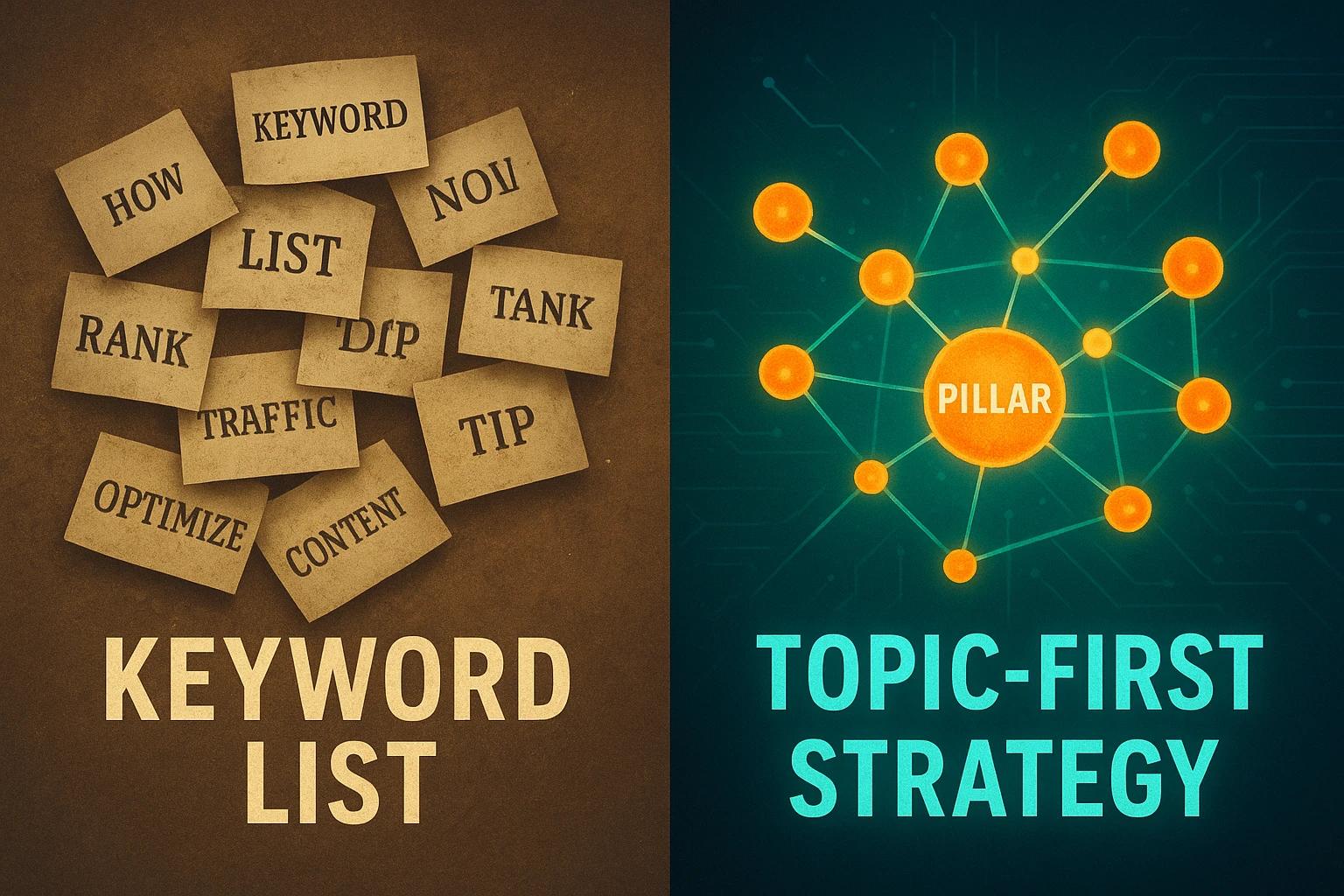
Topic-First Content Strategy for AI-Driven Search
Discover why focusing on topics over keywords drives SEO success in AI-powered search environments.
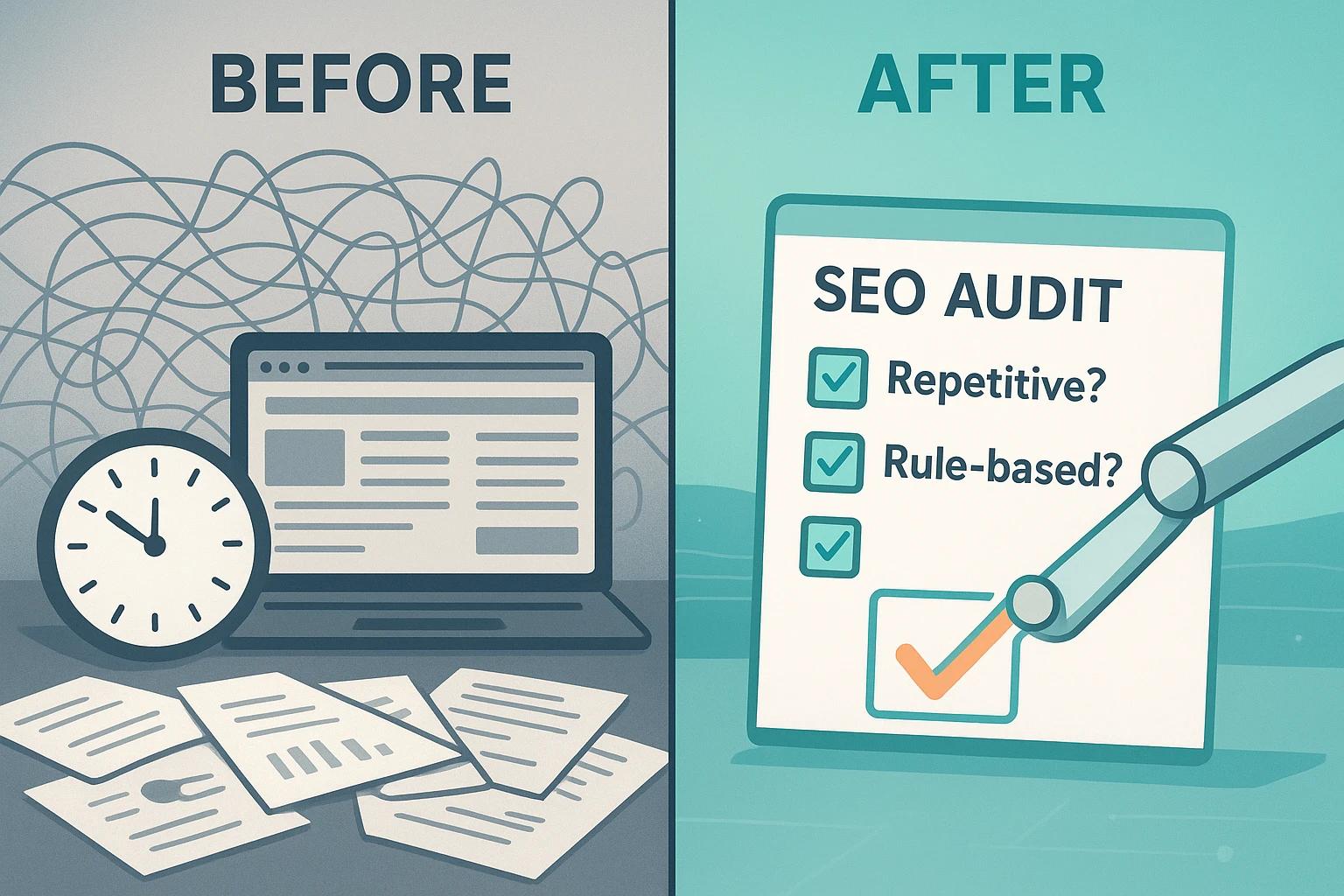
How to Audit SEO for Automation Opportunities
Discover a simple non-technical checklist to identify SEO tasks you can automate and save time for strategic work.
5 Signs Your Content Workflow Is Blocking Growth
Discover common content workflow problems slowing your growth and how automation can help improve efficiency and results.