Topical Authority: How to Build the Content That AI Overviews Actually Trust
You’ve probably seen it by now. You ask Google a question, and instead of a list of blue links, you get a full-blown summary at the top of the page—an AI Overview. Sometimes, it’s incredibly helpful. Other times, it confidently tells you to put glue on your pizza.
This is the new frontier of search. While Google works out the kinks, a bigger question emerges for anyone creating content: In a world of AI-generated answers, how do you become the trusted source the AI quotes, not the one it misinterprets?
The answer isn’t about gaming an algorithm; it’s about proving your expertise so clearly that both humans and AI recognize you as the authority. It’s about building something called topical authority, and it’s the key to not just surviving, but thriving in the age of AI search.
What is Topical Authority? The Expert on the Block Principle
Imagine two websites trying to rank for "cold brew coffee."
- Website A has one blog post: "How to Make Cold Brew." It’s a good article, but it stands alone.
- Website B has a central, in-depth guide: "The Ultimate Guide to Cold Brew Coffee." But it also has articles on "The Best Beans for Cold Brew," "Cold Brew vs. Iced Coffee: What's the Difference?," "Top 5 Cold Brew Makers of 2024," and "How to Fix Bitter Cold Brew." All these smaller articles link back to the main guide.
Which website seems like the real coffee expert?
It’s Website B, hands down. That, in a nutshell, is topical authority. It’s not just about having one great article; it’s about creating a comprehensive ecosystem of content that covers a subject from every angle. You’re not just answering one question; you’re proving to search engines that you are the go-to resource for the entire topic.
This is different from Domain Authority (DA), which is a broader score of your entire website’s reputation. Topical authority is specific. You could have a low DA but be the undisputed authority on raising betta fish, and Google will recognize that.
The Blueprint: Pillar Pages and Topic Clusters
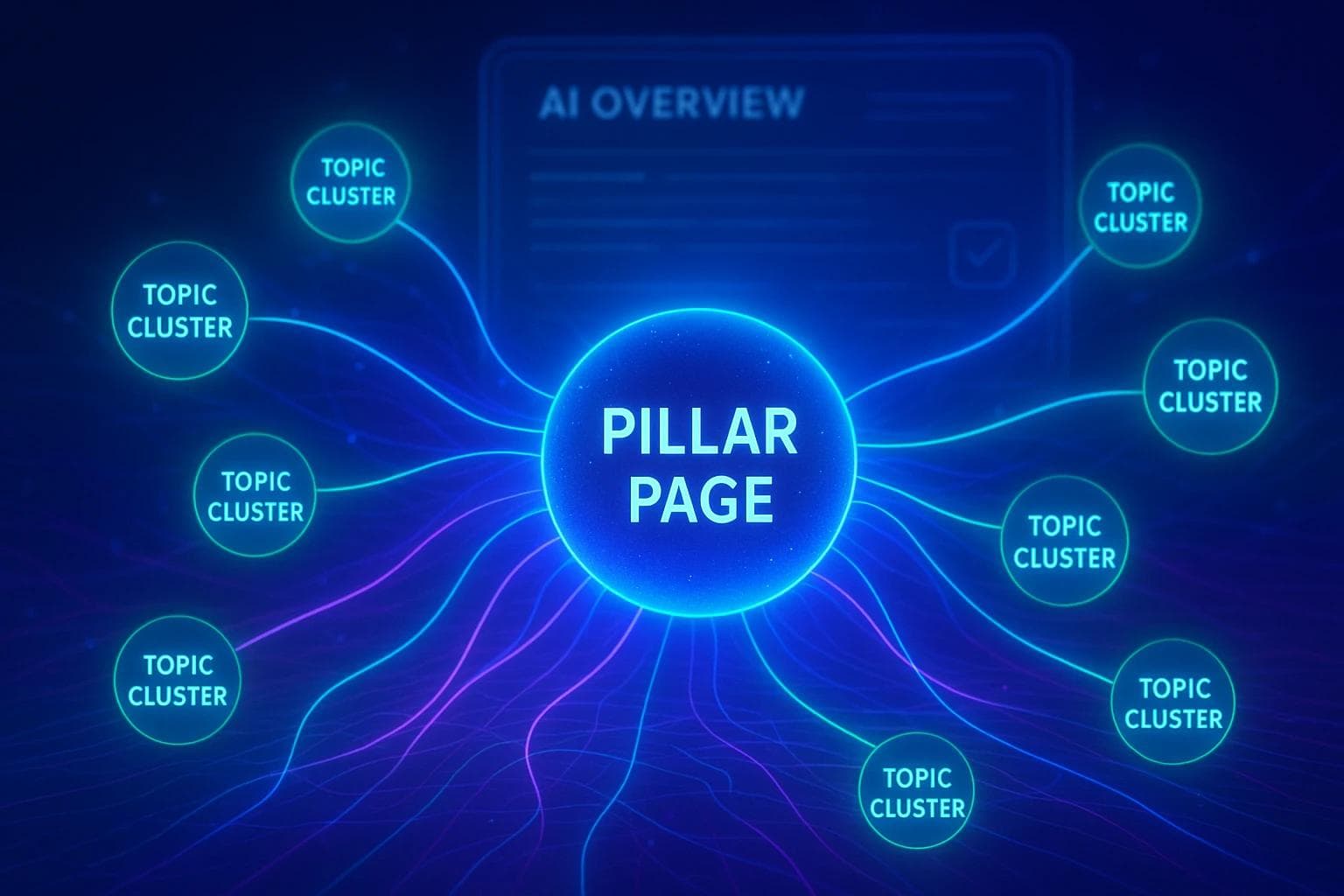
The strategy behind building topical authority is called the "topic cluster" model. It sounds technical, but it’s as simple as organizing a library.
- Pillar Page: This is your big, definitive guide—the main "book" on the topic (like Website B's "Ultimate Guide to Cold Brew"). It covers the topic broadly and links out to more specific sub-topics.
- Topic Clusters: These are the shorter, more focused articles that dive deep into one specific aspect of your main topic (e.g., "Best Beans," "Fixing Bitterness"). Each of these cluster pages links back to the central pillar page.
This structure does two incredible things:
- For Humans: It creates a seamless learning experience. Readers can start with the big guide and then dive deeper into the areas that interest them most.
- For AI and Search Engines: It creates a clear, logical map of your expertise. And this map is drawn with one of the most powerful tools in SEO: internal links.
Why Internal Links Are More Than Just Blue Text
At its simplest, an internal link is just a link from one page on your website to another. But strategically, they are the threads that weave your individual articles into a tapestry of authority.
When you link your "Best Beans" article back to your "Ultimate Guide," you’re sending a powerful signal that says, "Hey Google, these two pages are related. The guide provides the overview, and this article provides the specific details. Together, they form a complete picture."
As noted by the experts at Yoast, these internal links act as crucial "context signals." They aren’t just for navigation; they are for creating understanding.
Building a "Context Map" for AI
Think of it this way: when an AI system like the one powering Google’s Overviews "reads" your website, it doesn’t just read one page at a time. It follows the links to understand the relationships between pages. A strong internal linking structure creates a "context map" that the AI can easily follow.
When your pages are organized in a pillar-and-cluster model, the AI sees:
- A central hub of knowledge (the pillar).
- Supporting pages that prove your depth of knowledge (the clusters).
- Intentional links that confirm the relationship between them.
This interconnected structure is one of the strongest indicators of E-E-A-T (Experience, Expertise, Authoritativeness, and Trustworthiness). You’re not just claiming to be an expert; you’re demonstrating it through a well-organized body of work. This is fundamental to optimizing your content for search engines in today's landscape.
From Ranking to Recommending: How AI Decides Who to Trust
The old SEO game was about ranking #1. The new game is about being the source an AI trusts enough to cite in its summary. Poorly structured or isolated content is a major reason AI Overviews make mistakes—the AI can't establish context, so it pulls a random fact and gets it wrong.
By building topical authority with a smart internal linking strategy, you are giving the AI exactly what it needs to trust your content.
The Signals of Trust AI Overviews are Looking For
Your content architecture sends direct signals that build credibility. Think of it like an AI's trust scorecard for your website.
- Comprehensiveness (The Pillar Page): Your pillar page acts as proof that you have covered a topic from A to Z. It’s a massive trust signal that tells the AI this is a definitive source.
- Interconnectedness (The Links): Your internal links show that you haven't just written about a topic, you've explored its nuances and the relationships between its sub-topics. This demonstrates true expertise.
- Consistency (The Anchor Text): The clickable text you use for links (like
cold brew makers) should be descriptive. Consistent and relevant anchor text reinforces to the AI what each linked page is about, making your context map even clearer. - Clarity (The Structure): A well-organized site with clear pillar pages and clusters is easy for an AI to parse and understand. This clean structure is a sign of quality, much like a well-formatted research paper.
When AI Overviews find a website that has this deep, interconnected, and well-organized content, it’s far more likely to use that site as a primary source for its summaries. Why? Because the structure itself validates the content's trustworthiness. This is the foundation of modern, AI-driven SEO.
Your First Steps to Building AI Trust: A Mini-Audit
You don’t need to be an SEO wizard to start building topical authority. You can begin right now by looking at your existing content with fresh eyes.
- Identify Your Core Topic: What is the one thing you want to be known for? If you're a leadership coach, maybe it's "building resilient teams." If you're a local bakery, it could be "sourdough bread."
- Find Your Pillar: Look through your existing articles. Do you have a big, comprehensive piece that could serve as your pillar page? If not, that’s your first writing assignment!
- Connect the Dots: Make a list of your other articles that relate to that core topic. Go into each one and find a natural place to link back to your main pillar page.
- Look for Orphans: An "orphan page" is an article on your site that has no internal links pointing to it. It’s floating alone, disconnected from your context map. Find these pages and link them to relevant articles or your pillar page.
Simply organizing what you already have can make a massive difference in how search engines—and their AI counterparts—perceive your expertise. This strategic thinking is the first step in developing comprehensive content plans that get results.
Your Questions Answered: Topical Authority & AI
What's the difference between topical authority and domain authority?
Domain authority is a general score for your whole website's credibility, influenced by things like backlinks from other sites. Topical authority is niche-specific; it’s your website’s recognized expertise on a particular subject. You can build high topical authority even if your overall domain authority isn't massive.
How many articles do I need for a topic cluster?
There's no magic number, but a good starting point is 5-10 cluster articles supporting one pillar page. The goal is to comprehensively cover the most important sub-topics and questions your audience has about the main subject.
Is this different from regular SEO?
Not really—it is modern, regular SEO. For years, Google has been moving toward rewarding deep expertise (think algorithm updates like Panda and the Helpful Content Update). Building topical authority aligns perfectly with this. The rise of AI Overviews just makes this structured approach more critical than ever.
Will this guarantee I get cited in an AI Overview?
Nothing is guaranteed in the world of search. However, building strong topical authority is the single best strategy to position your content as the most credible, reliable, and contextually complete source available. It dramatically increases your chances of being seen as the authority worth citing.
Building for the Future of Search
The internet is getting noisier every day. AI search is both a symptom of that noise and an attempt to cut through it. The winning strategy isn't to create more content, but to create more connected and authoritative content.
By focusing on a pillar-and-cluster strategy, you’re not just organizing your website—you’re building a library of expertise. You're creating a resource so helpful and well-structured that both your human audience and the AI systems trying to serve them can’t help but see you as the definitive answer. And in the future of search, being the trusted answer is everything.

Roald
Founder Fonzy — Obsessed with scaling organic traffic. Writing about the intersection of SEO, AI, and product growth.
Stop writing content.
Start growing traffic.
You just read about the strategy. Now let Fonzy execute it for you. Get 30 SEO-optimized articles published to your site in the next 10 minutes.
No credit card required for demo. Cancel anytime.
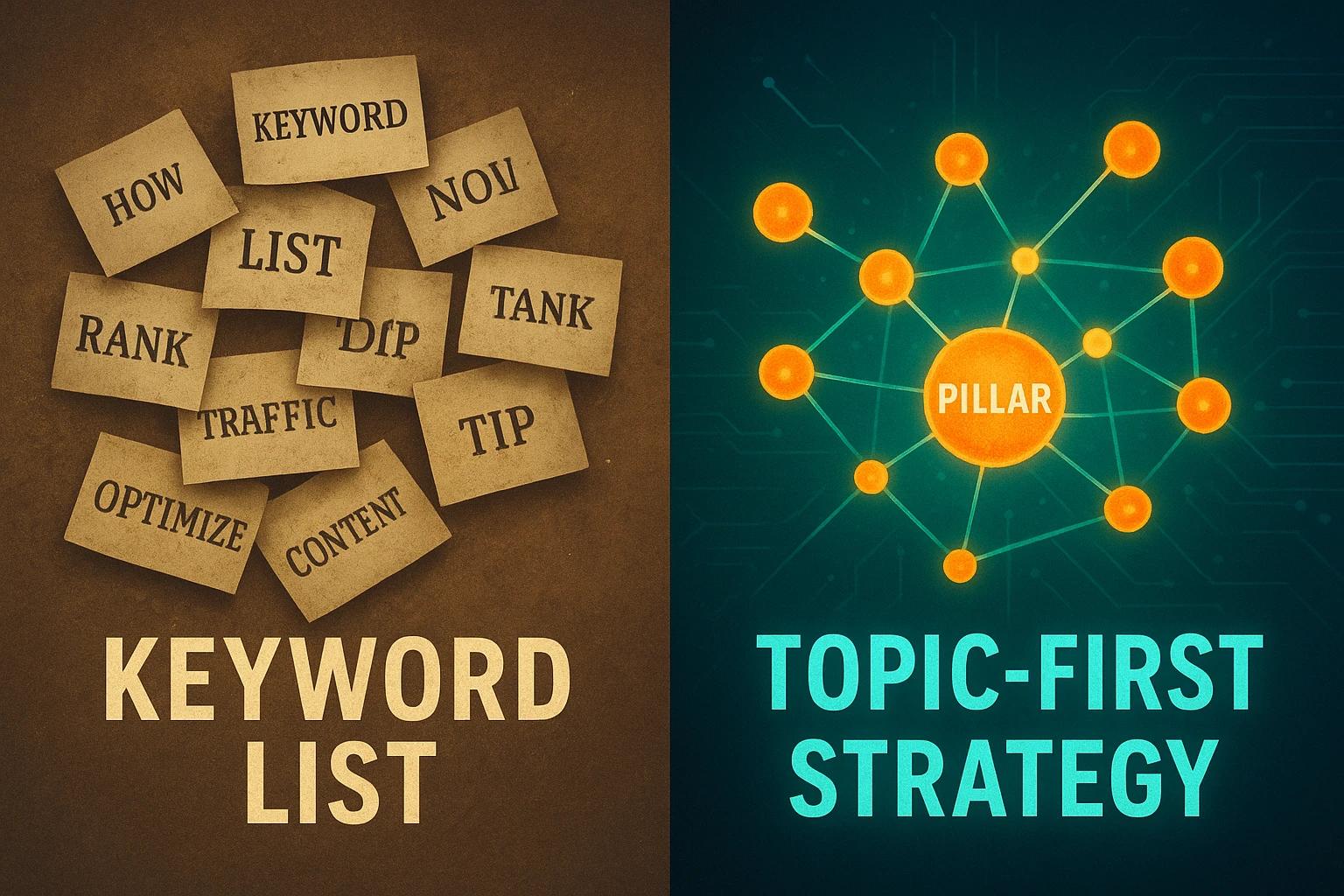
Topic-First Content Strategy for AI-Driven Search
Discover why focusing on topics over keywords drives SEO success in AI-powered search environments.
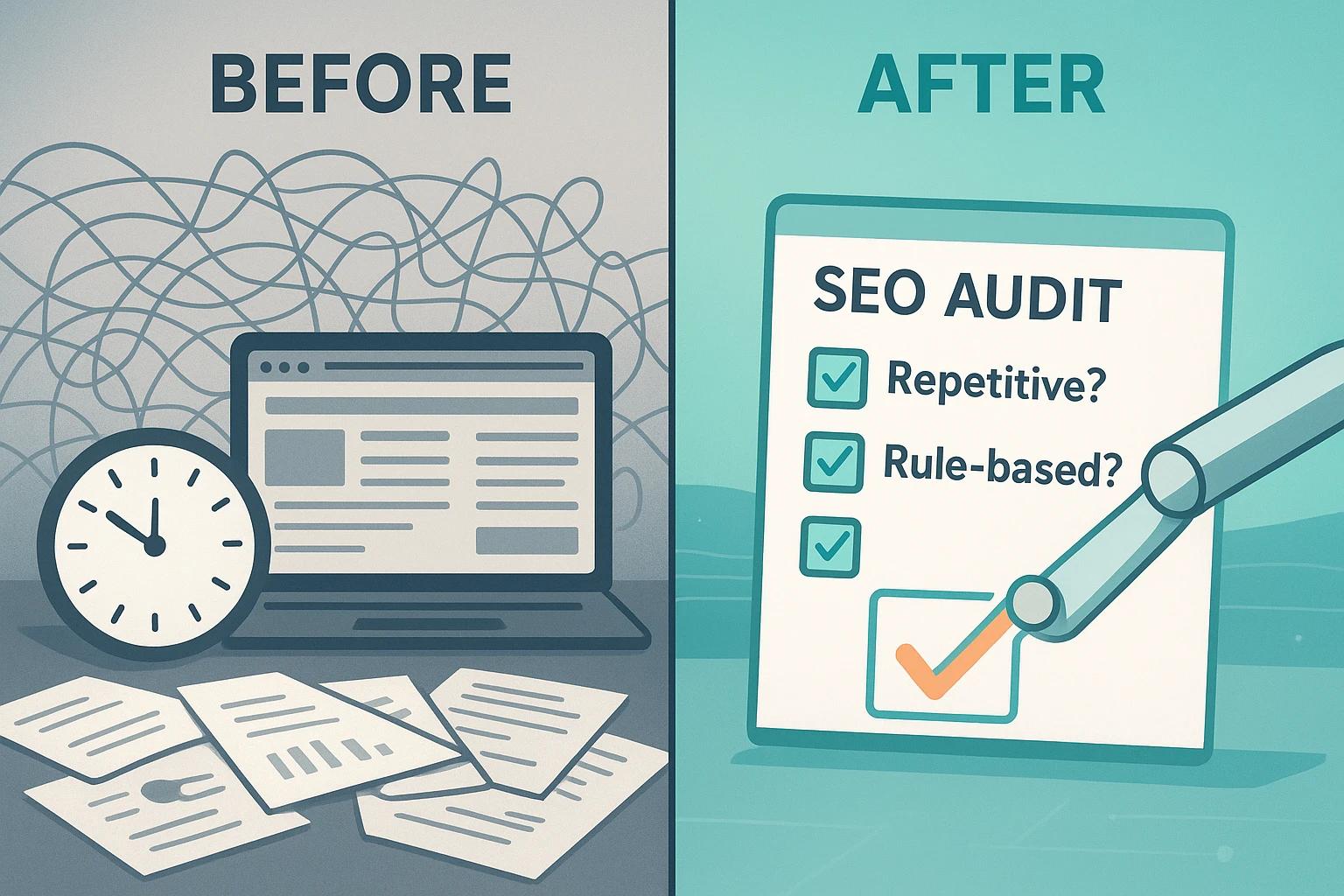
How to Audit SEO for Automation Opportunities
Discover a simple non-technical checklist to identify SEO tasks you can automate and save time for strategic work.

5 Signs Your Content Workflow Is Blocking Growth
Discover common content workflow problems slowing your growth and how automation can help improve efficiency and results.