What Do Small Business Owners Really Mean by "SEO"? (It's Not What You Think)
If you’re a small business owner, you’ve probably heard the acronym "SEO" a thousand times. It’s often thrown around in meetings as a sort of digital magic wand. "We need to do some SEO," someone says, and everyone nods, even if they’re not entirely sure what it means.
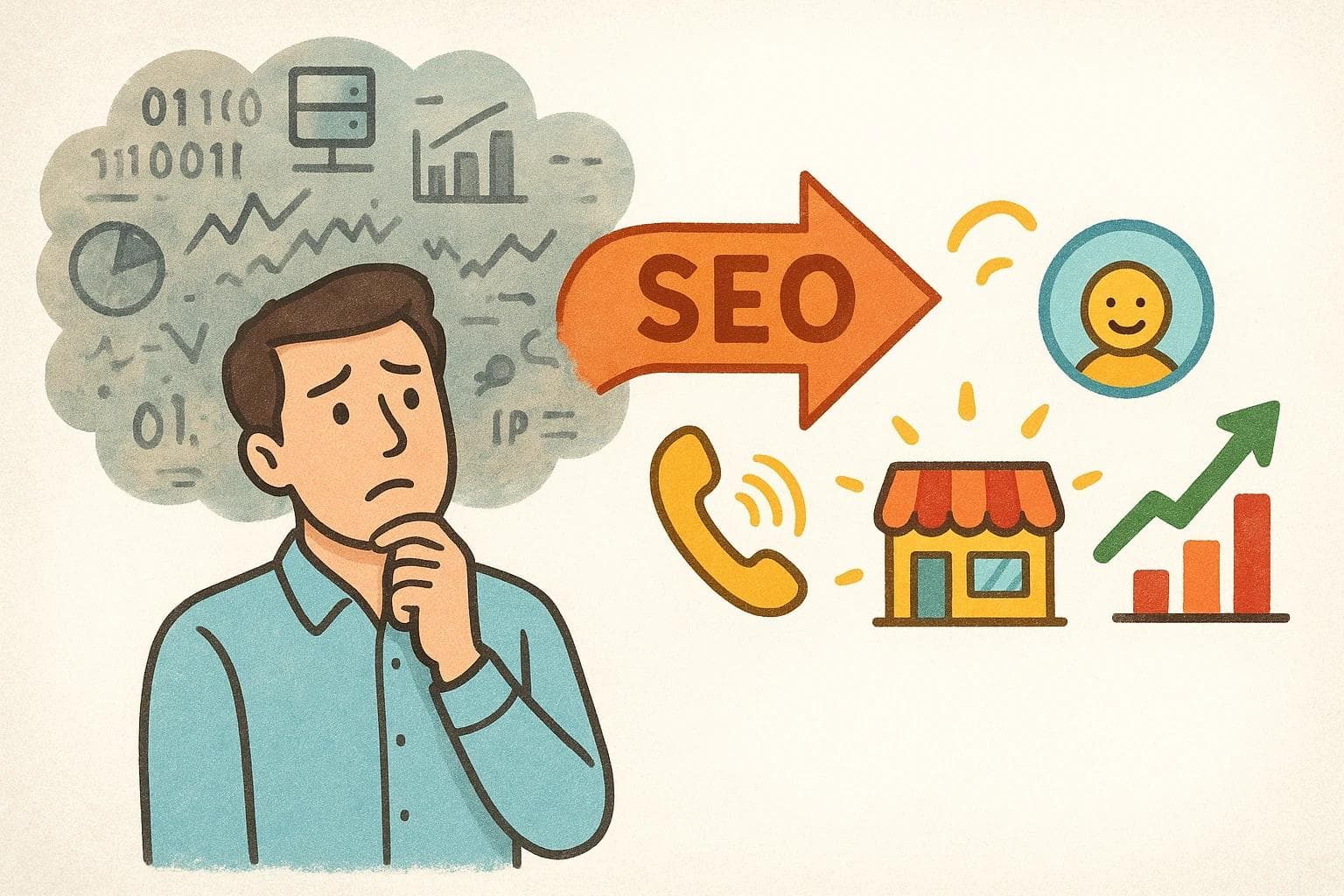
Here’s the secret: When a business owner says they need "SEO," they're almost never talking about algorithms, backlinks, or canonical tags. They're using technical shorthand to express a much more fundamental, human need.
What they really mean is:
- "How do I get my phone to ring with new customers?"
- "How do people who need my services find me instead of my competitor down the street?"
- "How can I get a steady stream of leads without paying for every single click?"
In short, "I need SEO" is code for "I need my business to be visible, attract the right people, and grow." It’s not about appeasing a machine; it's about connecting with customers. This guide will translate the jargon and show you how to think about SEO as what it truly is: a powerful system for sustainable business growth.

The Translation: From SEO Jargon to Business Growth
Let’s reframe the entire conversation. Instead of thinking about SEO as a list of technical tasks, think of it as the engine that delivers three core business outcomes.
Outcome 1: Visibility (Getting Found)
This is the most basic goal. Visibility simply means that when a potential customer searches for a product, service, or solution you offer, your business appears as a relevant option. It’s the digital equivalent of having a storefront on a busy street instead of a back alley.
- Without SEO: You’re essentially invisible. Customers might not know you exist, even if you’re the perfect fit for their needs.
- With SEO: You show up on the map—literally, in the case of local search—at the exact moment a customer is looking for you.
Outcome 2: Leads (Attracting the Right People)
Visibility is great, but it’s not enough. You don’t want just any traffic; you want traffic from people who are likely to become customers. This is where SEO gets smarter. It’s about attracting qualified leads—people whose problems you can solve.
- Without SEO: You might get random website visits that never turn into anything.
- With SEO: You attract people searching with intent, like "emergency plumber near me" or "best accountant for small business," signaling they are much further along in their buying journey.
Outcome 3: Customers (Driving Revenue)
This is the bottom line. The ultimate goal of SEO is to convert that visibility and those qualified leads into paying customers. A strong SEO strategy doesn’t just bring people to your site; it guides them toward taking action—making a purchase, filling out a form, or picking up the phone. It’s a direct contributor to your revenue.
How Search Engines Work (Without the Headache)
To understand how SEO achieves these outcomes, you need a basic picture of how search engines like Google operate. Imagine the internet is a colossal, ever-growing library, and Google is the world’s most efficient librarian.
- Crawling: The librarian constantly sends out little robotic helpers (crawlers) to discover every book (webpage) in the library.
- Indexing: Once a book is found, the librarian reads it, understands what it’s about, and files it away in a massive catalog (the index).
- Ranking: When you ask the librarian a question (perform a search), they instantly scan their entire catalog to find the most helpful, relevant, and trustworthy books and present you with a ranked list.
Your job isn't to trick the librarian. It’s to make your "book"—your website—so clear, helpful, and authoritative that the librarian has no choice but to recommend it to anyone asking the right questions.

The SEO System: Your Blueprint for Sustainable Growth
Many business owners make the mistake of treating SEO like a checklist of disconnected tasks. The reality is that effective SEO is a system where each part supports the others to create a powerful growth engine. Here are the core pillars of that system.
Understanding Your Customers (Keywords)
This isn’t about stuffing technical terms into your website. It’s about deeply understanding the language your customers use. Are they searching for a "charcuterie board" or a "cheese platter for a party"? The difference in language reveals a different need. Good keyword research is simply market research that helps you align your message with your customer’s mindset.
Becoming the Expert (Content)
Content is how you prove to both search engines and customers that you are a knowledgeable authority. This isn’t just about blog posts. It’s about creating genuinely helpful service pages, product descriptions, guides, and FAQs that answer your customers’ most pressing questions. When you become their go-to resource, you build trust that directly leads to sales.
Dominating Your Local Market (Local SEO)
For any business with a physical location or service area, this is critical. Local SEO ensures you appear in "near me" searches and on Google Maps. It goes beyond just setting up a Google Business Profile; it involves gathering positive reviews, ensuring your business information is consistent across the web, and creating content relevant to your local community.
A Strong Foundation (Technical Health)
You wouldn’t want customers to visit a store with a broken door or flickering lights. The same goes for your website. Technical SEO ensures your site is fast, secure (HTTPS), easy to use on mobile phones, and simple for search engines to understand. It’s the foundation of user experience that keeps visitors from getting frustrated and leaving.
Building Authority (Trust Signals)
In the digital world, trust is built through signals. When another reputable website links to yours, it’s like a vote of confidence or a referral. These "backlinks," along with mentions of your brand on social media or in the news, tell search engines that you are a credible and important player in your industry.

Putting It All Together: Your SEO Action Plan
Knowing the components is one thing; making them work for your business is another. This is where you shift from understanding concepts to thinking strategically.
Measuring What Matters: From Clicks to Customers
One of the biggest frustrations for business owners is not knowing if their SEO efforts are actually working. The key is to stop focusing on "vanity metrics" like your ranking for one specific keyword. Instead, measure what directly impacts your business:
- How many new leads came from organic search this month?
- What is the conversion rate of visitors from Google?
- How much revenue can be attributed to your SEO efforts?
Tracking these metrics connects your SEO system directly to your bottom line, finally answering the question, "Is this worth it?"
SEO in the Age of AI: A New Playing Field
Search is changing. With the rise of AI-powered summaries (like Google's AI Overviews) and answer engines, just "ranking" isn't enough. Your content now needs to be so clear and well-organized that an AI can understand it and use it to answer a user's question directly. This means providing direct answers, using clear headings, and structuring your pages logically. To rank in these new answer engines, the structure of your content is more important than ever. Understanding what’s the impact of heading structure on AI extractability can give you a significant edge.
Frequently Asked Questions (The SEO Questions Every Business Owner Asks)
These are some of the most common questions we hear from entrepreneurs just starting their SEO journey.
How long does SEO take to work?
This is the most frequent question, and the honest answer is: it depends. SEO is a long-term strategy, not a quick fix. You can often see some initial movement in 3-6 months, but significant, lasting results that transform a business typically take 6-12 months of consistent effort. Think of it like planting a tree, not flipping a light switch.
Is SEO worth it for a small business?
Absolutely. While paid ads provide instant visibility, you pay for every single click, and the traffic stops the moment you turn off your budget. SEO is an investment in a long-term asset. The work you do today can continue bringing in qualified leads and customers for years to come, often with a much higher return on investment over time.
What are the most common SEO mistakes to avoid?
- Expecting Overnight Results: Getting discouraged and giving up after a month or two.
- Focusing on Jargon, Not Customers: Chasing algorithm changes instead of focusing on creating helpful content for your audience.
- Ignoring Local SEO: Forgetting that your most valuable customers are often right in your neighborhood.
- Not Tracking Business Goals: Measuring rankings instead of leads and sales.
Do I need to be a technical expert to do SEO?
No. While there is a technical side to SEO, the foundational principles are rooted in business and marketing fundamentals. Understanding your customer, creating valuable content, and building a good reputation are at the heart of any successful SEO strategy. You don’t need to be a coder to succeed.
Your Next Step: From Learning to Doing
Hopefully, you now see "SEO" in a new light. It's not a mysterious black box of technical tricks; it's the strategic process of making sure your business connects with the people who are actively looking for you. It's the system that turns online searches into real-world customers.
Your journey doesn't end here. The best way to start is to stop thinking like a marketer and start thinking like your customer. Ask yourself: What are the top five questions a new customer asks me? Now, go look at your website. Does it answer those questions clearly and comprehensively?
Starting there will put you on a more powerful path to growth than any piece of technical jargon ever could.

Roald
Founder Fonzy — Obsessed with scaling organic traffic. Writing about the intersection of SEO, AI, and product growth.
Stop writing content.
Start growing traffic.
You just read about the strategy. Now let Fonzy execute it for you. Get 30 SEO-optimized articles published to your site in the next 10 minutes.
No credit card required for demo. Cancel anytime.
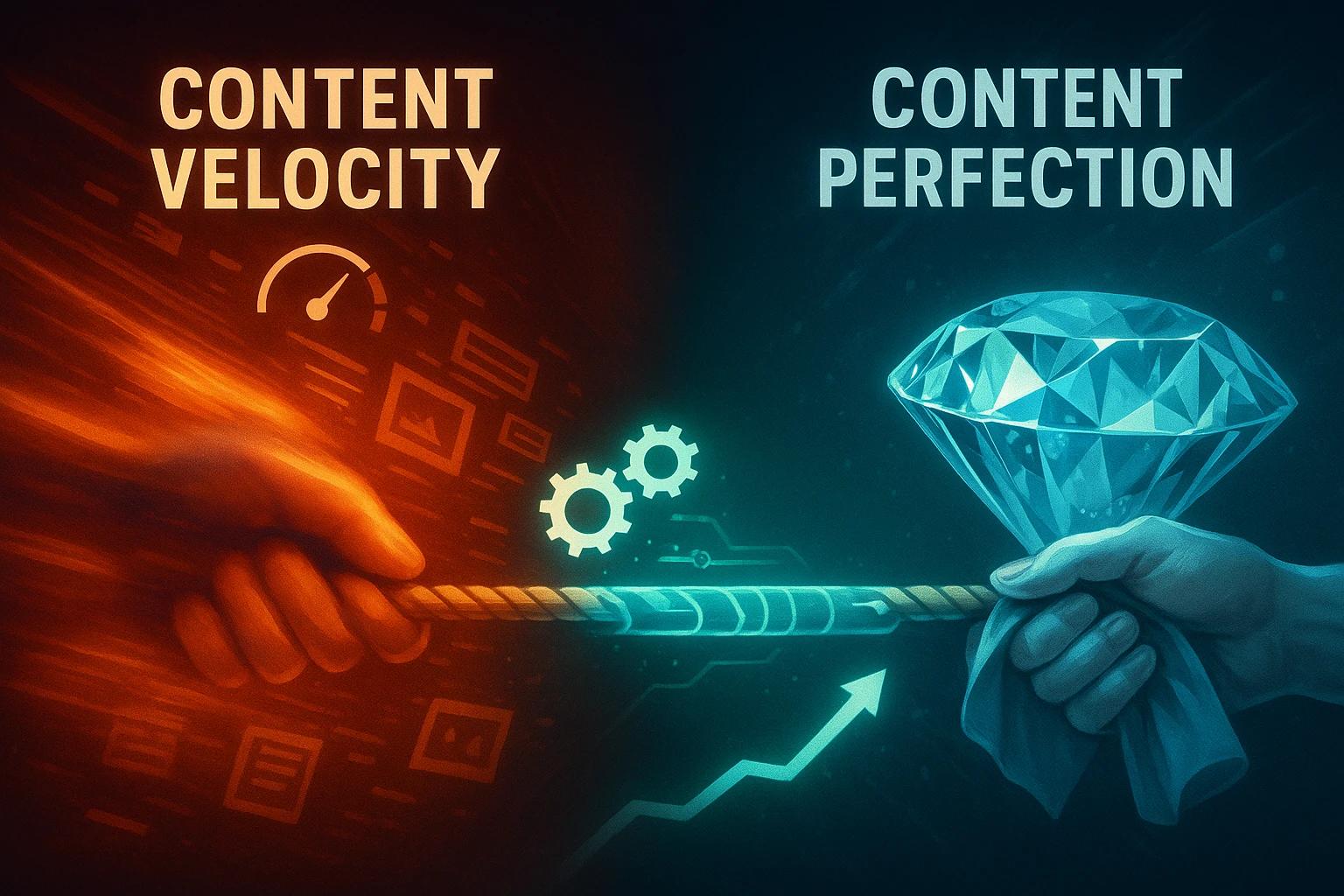
How Content Frequency Affects SEO Rankings and What to Prioritize
Explore how balancing content speed and quality impacts SEO and learn when to focus on velocity or perfection.
5 Signs Your Content Strategy is Losing Customers
Discover key signs your content strategy is stuck and quietly losing customers before it impacts your growth.
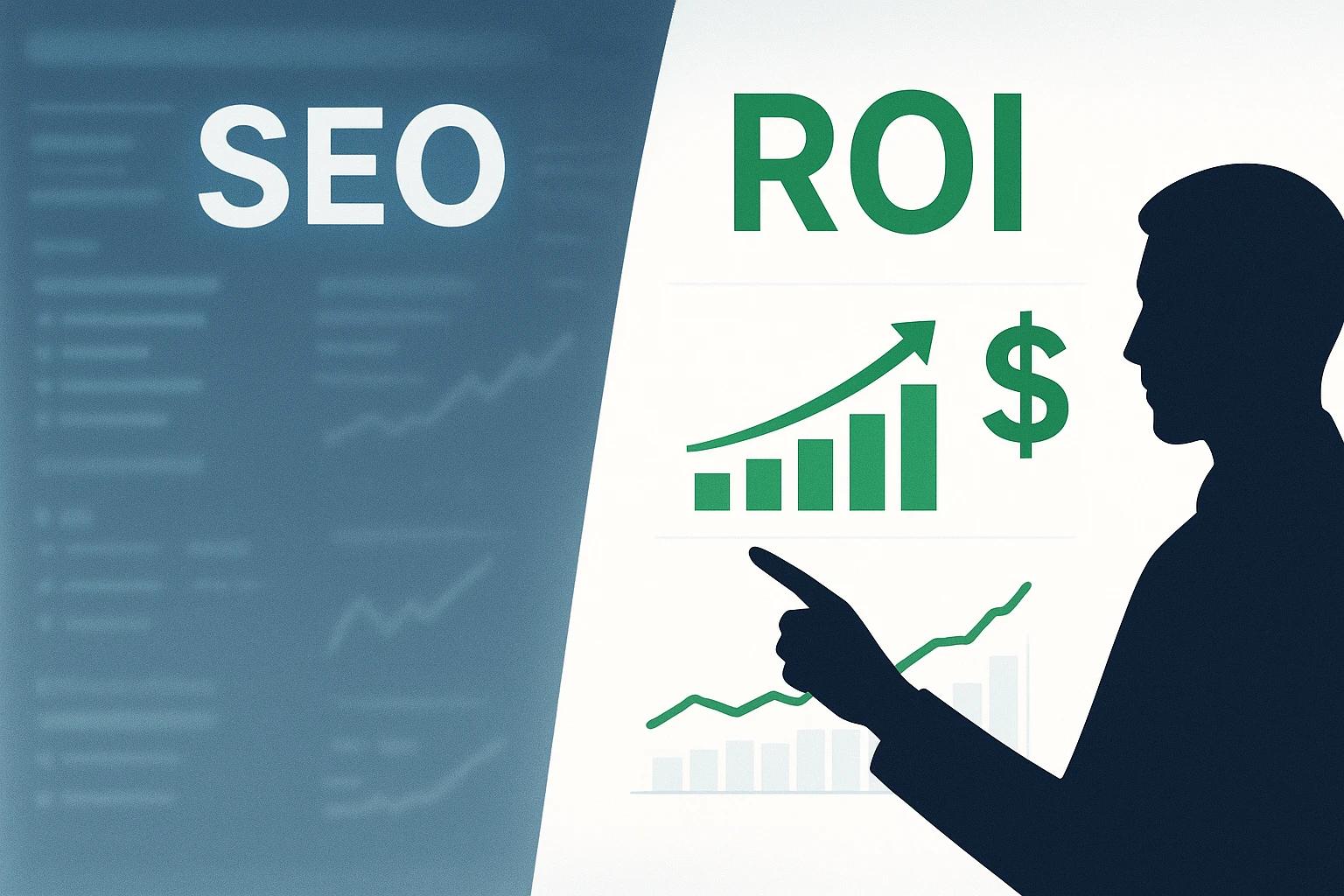
How to Measure SEO ROI with Business Metrics
Learn simple ways to measure SEO ROI focusing on leads, conversions, cost, and customer value beyond keywords and rankings.