How to Write Answer-Ready Paragraphs with Clear Claims and Evidence

The Anatomy of an Answer-Ready Paragraph: Get Your Content Featured in AI Answers
Ever ask Google a question and get a perfect, concise answer right at the top of the page, neatly summarized by AI? You probably read it, got what you needed, and moved on. But have you ever stopped to wonder, how did my competitor’s content get chosen for that spot?
It wasn’t luck. It was structure.
In a world where readers and AI assistants are both scanning for the quickest, most credible answer, the way you structure your paragraphs matters more than ever. The old rules of long, winding explanations are fading. Today, clarity and authority are king, and they are built with a specific type of writing: the answer-ready paragraph. This simple framework is your key to not just writing better, but to becoming the definitive answer.

Why This Matters: The New Rules of Getting Found Online
Before we dive into the "how," let's talk about the "why." You're no longer just writing for human eyes. You're also writing for systems like Google's AI Overviews and other answer engines. These systems are designed to do one thing: find the most direct and trustworthy answer to a user's question and present it clearly.
They don't have time to read your 2,000-word article to hunt for a conclusion. They scan for signals of authority. An answer-ready paragraph sends all the right signals:
- Credibility: It shows you've done your research.
- Extractability: Its concise structure is easy for AI to pull out and feature.
- User Trust: It gives readers a fast, reliable answer, establishing you as a go-to resource.
By mastering this structure, you're not just improving your writing; you're fundamentally aligning your content with how information is discovered and consumed today.
The Core Formula: Deconstructing the Answer-Ready Paragraph
Think of the perfect answer-ready paragraph as a three-part recipe for trust and clarity. It’s simple, repeatable, and incredibly effective.
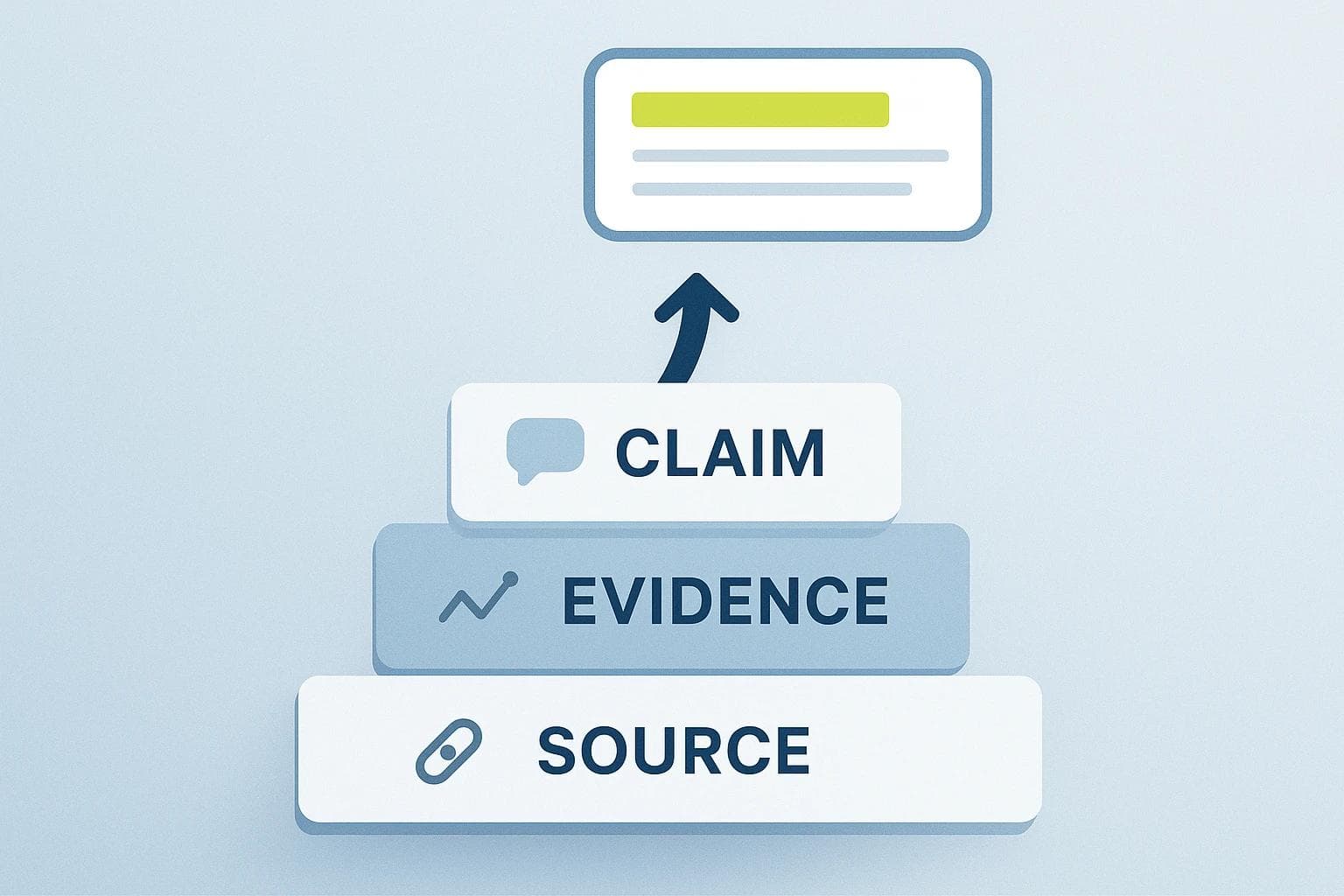
The formula is: Concise Claim + Supporting Evidence + Clear Source Signal.
Let’s break down each ingredient.
Part 1: Crafting a Crystal-Clear Claim
This is the most important part of your paragraph. Your claim is the direct, no-fluff answer to the user's question. As the experts at ClearWriter advise, you should always aim to "start with a question and answer it immediately."
A great claim is:
- Direct: It doesn’t beat around the bush. It leads with the conclusion.
- Specific: It avoids vague language. Instead of "it can be helpful," say "it improves X by Y%."
- Unambiguous: It can only be interpreted one way.
Example:
- Weak Claim: Using standing desks might be good for you in some ways.
- Strong Claim: Regularly using a standing desk can significantly reduce back pain for office workers.
Your claim is the foundation. If it's weak or unclear, the rest of the paragraph will crumble.
Part 2: Selecting Powerful, Bite-Sized Evidence
Once you've made your claim, you have to back it up. But this isn't about dumping all the data you have. The goal is to provide one potent piece of evidence that directly supports your claim. Ask yourself the question Newcastle University encourages its writers to ask: "How do you know that?"
Your evidence should be:
- Relevant: It must directly prove the claim you just made.
- Brief: A single statistic, a key finding, or a direct fact is often enough. You don't need a long quote.
- Interpreted: Don't just drop a statistic and walk away. The best writers use a simple "Introduce → Cite → Interpret" mini-formula. Briefly explain what the evidence means in the context of your claim.
Example (building on the strong claim):
Regularly using a standing desk can significantly reduce back pain for office workers. In fact, a 2018 study found that participants who used sit-stand desks reported a 54% reduction in upper back and neck pain.
Notice we didn't include the entire study methodology. We pulled the single most compelling statistic that proves our point.
Part 3: Mastering the Subtle Art of Source Signals
The final ingredient is the source signal. This is how you tell your reader (and AI) where your evidence comes from. It’s your citation, your proof of work, and the element that transforms a simple statement into an authoritative answer.
As detailed in resources from Idaho Pressbooks on signal phrases, these are more than just footnotes. They are phrases that smoothly integrate your source into the sentence.
A great source signal:
- Builds Credibility: Citing a reputable source (like a study, a government agency, or an industry expert) instantly boosts your authority.
- Is Unobtrusive: It flows naturally with the sentence.
- Provides a Path: It links to the source, allowing curious readers to dig deeper and validating your information for search engines.
Example (completing the paragraph):
Regularly using a standing desk can significantly reduce back pain for office workers. In fact, a 2018 study published by the CDC found that participants who used sit-stand desks reported a 54% reduction in upper back and neck pain (CDC).
This final version is a perfect, self-contained, answer-ready paragraph. It’s clear, proven, and credible.

Common Mistakes and Quick Fixes
Transitioning to this style of writing can take practice. Here are a few common pitfalls and how to correct them, inspired by the diagnostic approach of writing tools like Thesify.
Mistake 1: The Vague Claim. Your paragraph starts with fuzzy words like "might," "could," or "seems to."
Mistake 2: The "Data Dump." You drop a quote or statistic into the paragraph without any context or explanation. The evidence is there, but you haven't connected it to your claim.
- Fix: Add a short phrase that explains why the evidence matters. Use connectors like "This shows that…" or "This finding suggests…"
Mistake 3: The Ghost Source. You provide evidence but don't say where it came from, or you just vaguely mention "studies show."
- Fix: Always include a clear signal phrase and a link to the original source. Name the institution, publication, or expert. It's the fastest way to build trust.

Frequently Asked Questions
What's the ideal length for an answer-ready paragraph?
Aim for conciseness. Typically, 2-4 sentences is the sweet spot. The goal is to deliver a complete, evidence-backed answer quickly, not to write a mini-essay.
Can I use this for any type of content?
Absolutely. While it’s perfect for blog posts and articles, this structure is also highly effective for website copy, FAQ pages, and even social media posts where you need to establish authority quickly.
How is this different from a normal paragraph?
A "normal" paragraph might explore an idea, tell a story, or transition between topics. An answer-ready paragraph has one specific job: to deliver a definitive, evidence-backed answer to a real or anticipated question. It's structured for impact and clarity above all else.
Why are source links so important?
Links are the currency of credibility online. For a human reader, a link proves you've done your homework. For an AI, it's a verifiable signal that your information is trustworthy, which significantly increases the chance of your content being featured as a definitive answer.
Your Next Step: From a Single Paragraph to a Full Strategy
Mastering the answer-ready paragraph is the first step toward building a truly authoritative presence online. You now have the building block for creating content that both users and search engines love.
But how do you scale this? Imagine your entire website filled with these powerful, concise answers, all working together to establish you as the leading voice in your field. When you're ready to move from crafting a single paragraph to building a comprehensive content engine, the next step is learning to integrate these principles into a sitewide SEO and content plan. By strategically deploying answer-ready content across your site, you create a network of authority that drives consistent organic growth and solidifies your place at the top of search results.
Roald
Founder Fonzy — Obsessed with scaling organic traffic. Writing about the intersection of SEO, AI, and product growth.
Stop writing content.
Start growing traffic.
You just read about the strategy. Now let Fonzy execute it for you. Get 30 SEO-optimized articles published to your site in the next 10 minutes.
No credit card required for demo. Cancel anytime.
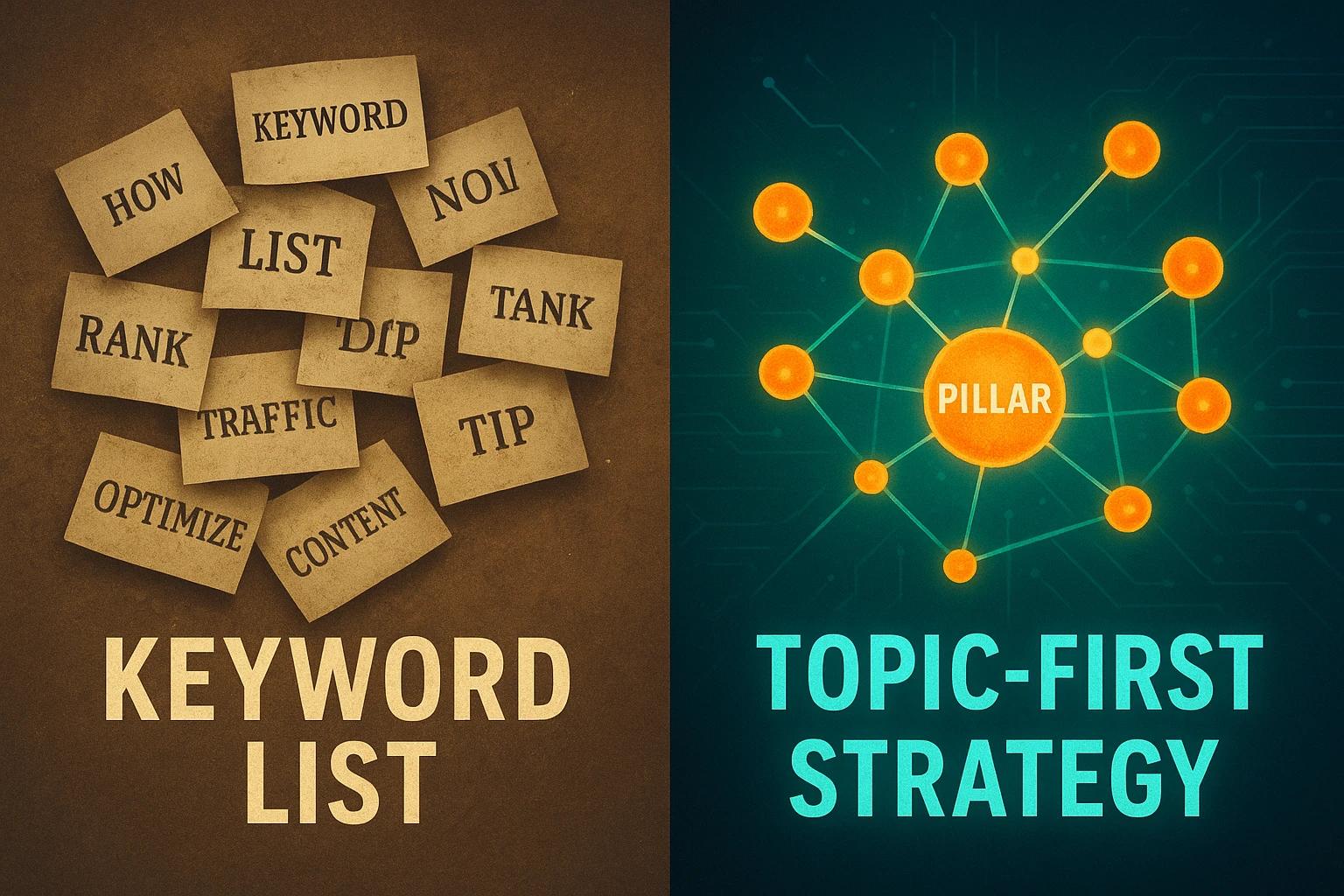
Topic-First Content Strategy for AI-Driven Search
Discover why focusing on topics over keywords drives SEO success in AI-powered search environments.
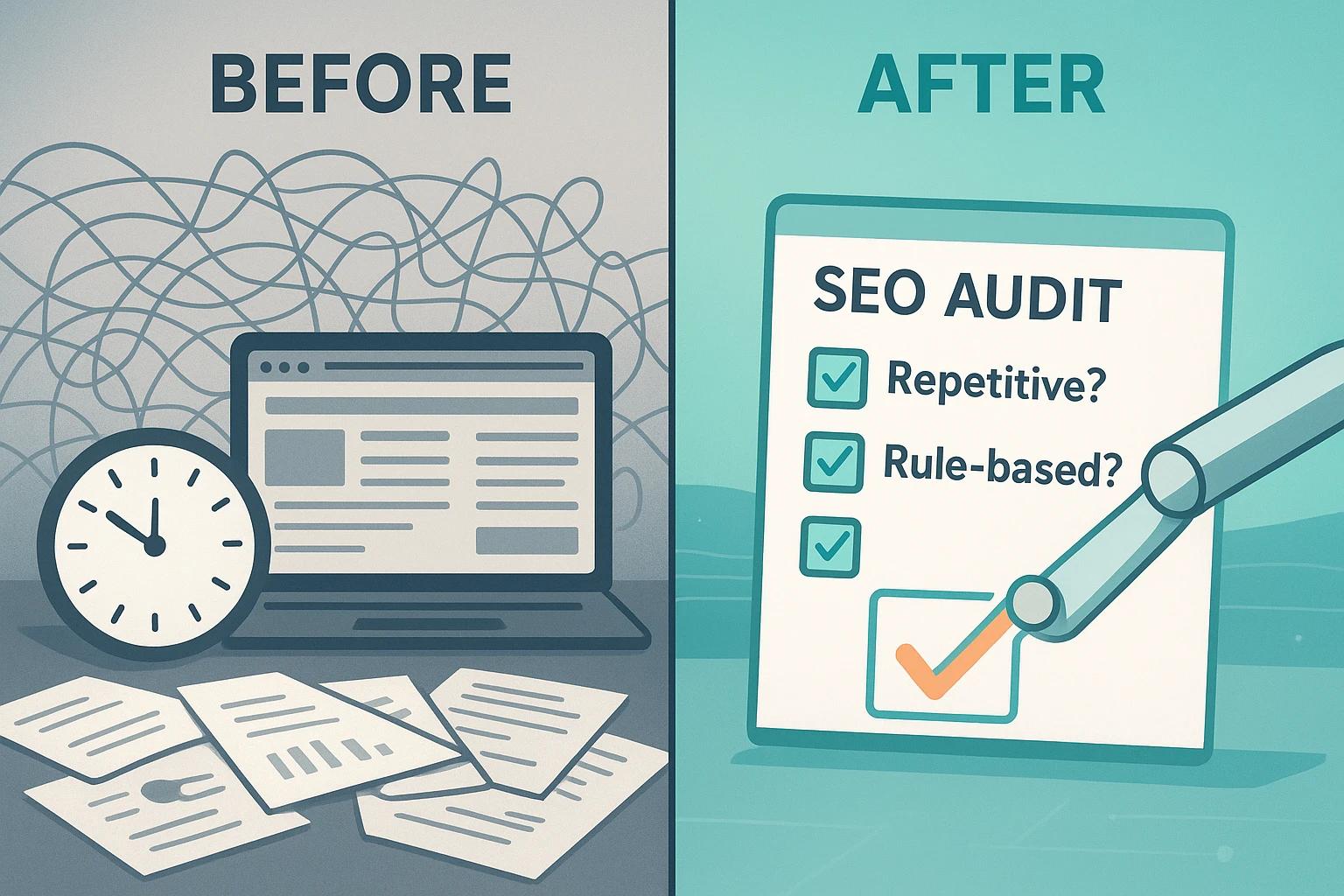
How to Audit SEO for Automation Opportunities
Discover a simple non-technical checklist to identify SEO tasks you can automate and save time for strategic work.
5 Signs Your Content Workflow Is Blocking Growth
Discover common content workflow problems slowing your growth and how automation can help improve efficiency and results.